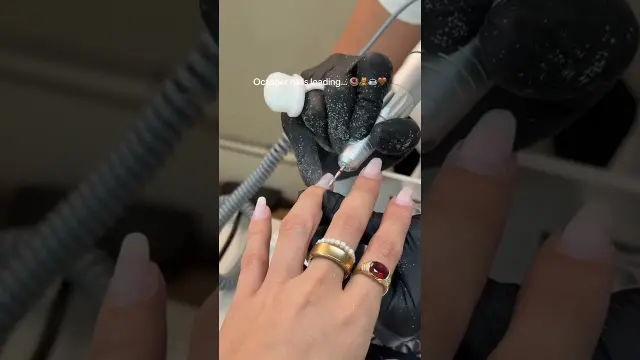
 Chocolate Glazed Donut Fall Nails
#Glazed Donut Nails
1 ideas
Chocolate Glazed Donut Fall Nails
Get new #Glazed Donut Nails ideas by email
Every Thursday: the week's best ideas, with the newest from #Glazed Donut Nails.
Related tags
Glazed Donut Nails: The Soft Pearlescent Manicure
Glazed donut nails are a manicure style built on one idea: the nail should look softly luminous rather than flatly painted, like the thin sugar glaze on a donut catching the light. The effect comes from a sheer or milky base colour, usually nude, blush or cream, covered with a very fine pearlescent powder that shifts slightly as your hand moves. Nothing about the finish is loud. It reads as polish that happens to be lit from underneath.
Where the look comes from
The technique grew out of chrome and pearl powder nail art, which has long been used in salon work to create mirror, metallic and "velvet" effects. Where classic chrome gives a hard, reflective surface, the glazed version uses a paler, more finely milled pigment applied sparingly, so the shine stays diffused. The name itself is descriptive rather than technical — it caught on because the finish genuinely resembles icing.
The main variations
Read more
The formula stays the same; only the colours change. A milky white or pale pink base gives the brightest, most classic glow. Warm beige and caramel bases read softer and more neutral, while deeper shades such as plum, mocha or dusty rose turn the same powder into something richer. You can also shift the powder itself: white and iridescent pigments stay cool and glassy, while gold or champagne tones warm the whole manicure. Some people add a single accent nail or a thin line of glitter, though the purest version keeps every nail identical.
How it is done
The powder sits on top of cured gel, so the sequence matters. After the base colour is cured, a no-wipe top coat goes on and is cured too. That kind of top coat is formulated to finish without a sticky inhibition layer, which is exactly what the powder needs: a dry, glossy surface for the pigment to grip. The powder is then dabbed on with a small applicator, brushed evenly with a soft, dry brush, and finally sealed under a clear top coat. Applied too heavily, the powder turns chalky or streaky; applied in thin passes, it stays smooth. A similar effect can be approximated with pearl-finish lacquer or a sheer shimmer topper, though the depth is gentler and it wears off sooner.
Practical advice for beginners
- Keep the base colour opaque enough to hide the free edge but thin enough to let light through.
- Prepare the cuticle area properly; unevenness shows up more under a glossy finish.
- Use the powder in small amounts and build up, rather than trying to fix a heavy layer.
- Brush downward and outward so the sheen follows the length of the nail.
- Cap the free edge with top coat to slow chipping.
- If you are working with gel and a UV or LED lamp, follow the manufacturer's curing times exactly and take a break if your skin reacts.
Making it last
Sealing is everything. A glazed finish that is only partly covered will dull within days as the powder wears away at the tips. Avoid soaking your hands and use cuticle oil on the skin around the nail rather than over the surface. When it is time to remove gel, have it soaked off gently instead of prised away, so the nail plate stays intact. Done carefully, the look is quiet, wearable and easy to repeat.
#Glazed Donut Nails: frequently asked questions
What exactly are glazed donut nails, and what makes them different from ordinary polish?
They are a manicure finish designed to look softly lit from beneath instead of flatly painted, inspired by the thin sugar glaze on a donut. The shine comes from a sheer, milky base colour topped with a very fine pearlescent powder that shifts gently as your hand moves. It sits somewhere between chrome and plain polish, diffused rather than mirror-hard.
What do I need to try glazed donut nails at home?
At the simplest level, a sheer nude, blush or cream base colour, a pearlescent powder and a soft dry brush for spreading it. If you are working with gel, you also need a no-wipe top coat, a small applicator for dabbing the pigment, a clear sealing top coat and a UV or LED lamp. A pearl-finish lacquer or shimmer topper can stand in for the powder if you would rather skip gel entirely.
Which colour combination should I pick?
The classic look comes from a milky white or pale pink base, which gives the brightest, glassiest glow. Warm beige and caramel bases feel softer and more neutral, while deeper tones such as plum, mocha or dusty rose make the same powder read richer and more evening-appropriate. The powder matters too: white and iridescent pigments stay cool, whereas gold or champagne warms the whole manicure.
How do I stop the glaze from dulling after a few days?
Sealing is the part that decides how long the look lasts, so make sure the powder is fully covered with clear top coat, including a cap along the free edge. Keep your hands out of long soaks, and put cuticle oil on the skin around the nail rather than across the glossy surface. When it is time to remove gel, have it soaked off gently instead of picked or prised away.
What do beginners usually get wrong?
The most common slip is applying the powder too heavily, which leaves it chalky or streaky rather than luminous. Thin passes built up gradually stay smooth, and brushing downward and outward helps the sheen follow the length of the nail. Uneven cuticle prep also shows up much more under a glossy finish, so that step is worth slowing down for.
Is this style only for everyday wear, or can it work for a special occasion?
It is versatile because the recipe never changes, only the palette, so the same technique carries from everyday to dressed-up. Warmer, deeper shades and a champagne or gold powder suit evenings and colder months, while milky neutrals feel fresh for daytime and weddings. A single accent nail or a fine line of glitter adds interest without breaking the soft, quiet effect.
Videos come from YouTube and posts from Instagram; titles and summaries are our own. All rights belong to their creators.