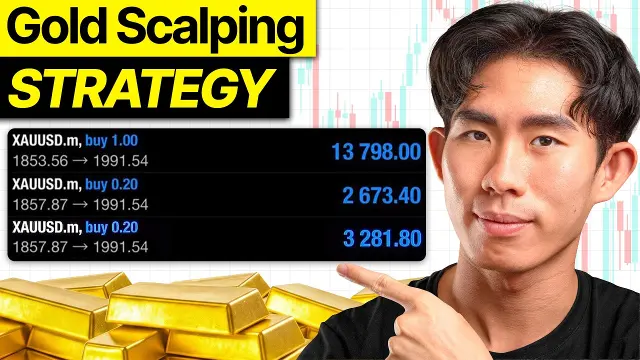
 Gold Scalping System for Beginners Building to Advanced
#Gold Trading
1 ideas
Gold Scalping System for Beginners Building to Advanced
Get new #Gold Trading ideas by email
Every Thursday: the week's best ideas, with the newest from #Gold Trading.
Related tags
Gold Trading: A Beginner's Guide to the Gold Market
Gold has been traded, hoarded and argued over for thousands of years. Today it sits in an unusual place: part currency, part commodity, part insurance against uncertainty. That combination is exactly why so many people are drawn to trading it, and why it deserves a calm, unhurried look before you put anything at stake.
What Gold Trading Actually Means
Trading gold does not necessarily mean holding metal. You can buy physical bars and coins, but most trading happens on paper: futures contracts, spot contracts that track the price of an ounce, exchange-traded funds backed by metal in a vault, and contracts for difference that let you speculate on the price without owning anything. Each form has its own costs, hours and risks. Ownership gives you an asset you can touch; derivatives give you exposure with far less capital, and far more ways to lose it.
Why Gold Behaves the Way It Does
Read more
Gold pays no interest and no dividend, so its price is shaped by what people expect from everything else. It has traditionally been seen as a store of value when confidence in currencies or markets falls. It often reacts to the direction of the US dollar, to interest rates — holding gold is less appealing when safe assets yield more — to inflation expectations, to buying by central banks and to geopolitical fear. Sentiment matters too: gold can move sharply on emotion alone, which is why it attracts both long-term holders and short-term speculators.
The Main Styles of Trading
- Scalping: many small trades over minutes, aiming for tiny moves.
- Day trading: positions opened and closed within the same session.
- Swing trading: holding for days or weeks, following larger moves.
- Position trading: a long-term view, closer to investing than to trading.
Scalping is the least forgiving of the styles. It demands speed, discipline and low costs, and beginners are usually better served by slower timeframes where mistakes have room to be corrected.
What Beginners Should Know
Learn first, trade second. Understand how the instrument you choose actually works, including leverage, margin and how losses can grow beyond what you intended. Practise on a demo account until the mechanics feel ordinary. Risk only a small fraction of your capital on any single idea, use stop losses before you need them, and keep a written journal of every trade — not to admire the winners, but to find the pattern in your mistakes.
Be sceptical of anyone promising reliable returns, signals or "systems" for a fee. Nobody can predict a market consistently, and gold's safe-haven reputation describes its long history, not a guarantee about tomorrow. Trade money you can afford to lose, on a schedule that doesn't cost you your sleep.
#Gold Trading: frequently asked questions
Does trading gold mean I have to buy physical bars or coins?
Not at all. Physical metal is only one route; much of the market runs on paper instruments such as futures, spot contracts, exchange-traded funds backed by vaulted metal, and contracts for difference. Each carries its own costs, trading hours and risks, and the paper forms give you exposure to the price without ever taking delivery of anything.
Which style of gold trading is most realistic for a beginner?
The slower styles — swing trading over days or weeks, or position trading with a long-term view — leave room to correct mistakes and don't demand instant reactions. Scalping, with its rapid-fire small trades, is the least forgiving and rewards speed, discipline and very low costs, which most newcomers don't yet have. Starting slowly lets you learn the mechanics before speed becomes a factor.
Why does the gold price move so much when gold pays no interest or dividend?
Because gold produces no income, its price reflects what people expect from everything else — the direction of the US dollar, interest rates, inflation expectations, central bank buying and geopolitical fear. It has long been treated as a store of value when confidence in currencies or markets weakens. Sentiment plays a part too, so prices can swing sharply on emotion alone.
What should someone do before placing a first gold trade?
Understand the specific instrument first — how leverage and margin work, and how losses can grow larger than intended. Practising on a demo account until the mechanics feel routine is the usual next step. Beyond that, the habits that matter are limiting how much capital any single idea can put at risk, setting stop losses in advance, and keeping a written journal of every trade.
What mistakes do new gold traders most often make?
Jumping into fast timeframes before the basics are solid, risking too much on one idea, and trading without stop losses are the recurring ones. Another is paying for signals or 'systems' that promise reliable returns — nobody predicts a market consistently, and gold's safe-haven reputation describes its history rather than guaranteeing tomorrow. Trading money you can't afford to lose, or on a schedule that costs you sleep, tends to compound all of these.
Is gold trading the same as investing in gold?
They overlap but aren't identical. Buying metal or a metal-backed fund is ownership of an asset you hold through time, while derivatives let you speculate on price direction with far less capital and far more ways to lose it. Position trading sits closest to investing, whereas scalping and day trading are short-horizon speculation.
Videos come from YouTube and posts from Instagram; titles and summaries are our own. All rights belong to their creators.