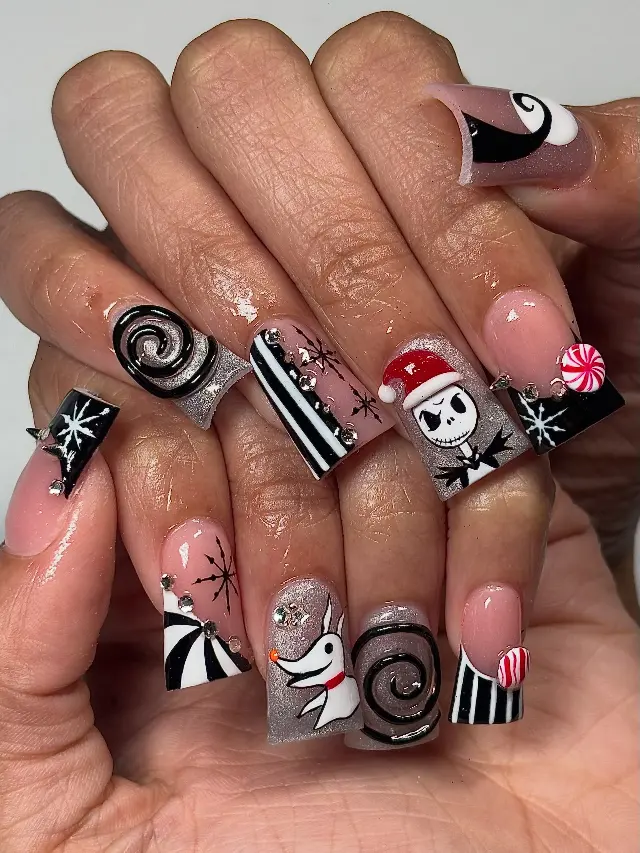
 Christmas Nail Art Inspired by The Nightmare Before Christmas
#Goth Nails
1 ideas
Christmas Nail Art Inspired by The Nightmare Before Christmas
Get new #Goth Nails ideas by email
Every Thursday: the week's best ideas, with the newest from #Goth Nails.
Related tags
Goth Nails: A Guide to Dark Nail Art, Styles and Techniques
Goth nails are dark, deliberate and unapologetic. The look sits at the meeting point of the goth subculture and the wider world of nail art: deep blacks, bruised purples, oxblood reds and cold metallics, often paired with shapes that feel sharp or elongated. It is less a single design than an attitude, and that is exactly why it has stayed interesting for so long.
Where it comes from
The goth scene grew out of the late-seventies and eighties post-punk landscape in Britain, borrowing from Victorian mourning dress, romantic literature, horror cinema and a general affection for the macabre. Black clothing and pale skin were the visual signature, and nails followed: short and black for some, long and pointed for others. Over the decades the look has absorbed influences from punk, metal, drag and alternative fashion, so what counts as goth nail art today is broad and generous.
The main styles
Read more
- Classic black: a glossy, well-shaped black nail is the foundation of the whole genre. Matte black reads softer and more modern; gloss feels more dramatic.
- Vampy tones: oxblood, burgundy, deep plum, forest or midnight green, and near-black navy. These work especially well if pure black feels too stark against your skin.
- Romantic goth: lace patterns, fine filigree, tiny crosses, roses, moon phases, and delicate stamping over dark bases. Think Victorian rather than horror.
- Horror and macabre: spiderwebs, dripping blood effects, bats, coffins, ouija motifs and skeletal details, usually kept to one or two accent nails.
- Metallic and textured: silver and gunmetal chrome, mirror powders, magnetic velvet finishes, and crackle or flake effects that give black some depth.
- Mixed finishes: matte nails with a single glossy detail, or the reverse, which adds contrast without extra colour.
Shapes lean towards almond, stiletto, coffin or a clean square. Length is entirely personal; the drama comes from the finish and the detail as much as from the extension.
What beginners should know
Start with a good base coat. Dark pigments can stain the nail plate, and a base coat is the simplest way to prevent it. Apply colour in thin layers rather than one thick coat: two or three thin passes dry faster and look smoother than a single heavy one. A ridge-filling base helps if your nails are uneven.
Matte topcoat changes a design completely and is worth experimenting with, but note that it shows surface texture more than gloss does, so keep the layers beneath it smooth. Fine detail is easier with a small brush or a stamping plate than with the polish brush itself, and cleanup with a small flat brush dipped in remover tidies the edges considerably.
Keep your cuticles moisturised and avoid peeling off dark polish, which takes layers of the nail surface with it. Soak or use remover, then give your nails a break between sets now and then.
Practical notes
Dark nails show chips quickly, so a topcoat refresh every few days extends wear. If you work with your hands or need something subtle for a formal setting, keep the colour deep and the finish glossy, and leave the art to one nail. Goth style rewards restraint as much as excess: one strong element usually reads better than five.
#Goth Nails: frequently asked questions
How do I get started with goth nails if I've never tried dark polish before?
Begin with a well-shaped, glossy black or a deep vampy tone like oxblood or plum, since these carry the whole look on their own without any art. Paint in thin layers instead of one heavy coat so the finish dries smooth and even. Once that feels comfortable, add detail such as a single accent nail, a matte topcoat, or a small lace stamp.
What do I actually need to create goth nail art at home?
A ridge-filling base coat, a dark polish or two, a glossy topcoat and a matte topcoat will cover most of the style. For detail work, a small brush or a stamping plate is far easier to control than the polish brush, and a flat brush dipped in remover tidies edges. Keeping cuticles moisturised is the other essential part of the routine.
Which goth nail style should I choose?
Let the setting and your own taste decide: classic black or mixed matte-and-gloss finishes read as modern and restrained, while romantic goth with lace, filigree or moon phases suits something softer and more Victorian. If you want drama, horror motifs like spiderwebs or dripping effects work best kept to a single accent nail rather than spread across the whole hand. Deep greens, burgundies and near-black navy are good alternatives if pure black feels too stark against your skin.
How do I make dark polish last and keep my nails healthy?
Dark shades show chips quickly, so refreshing the topcoat every few days makes a real difference to wear time. Never peel the polish off, because it lifts layers of the nail surface with it — soak it off or use remover instead, and give your nails a rest between sets. A base coat underneath is the simplest protection against dark pigment staining the nail plate.
Any goth nail ideas for a specific occasion or holiday?
Goth style adapts well to seasonal looks — a Nightmare Before Christmas-inspired set, for instance, pairs black and bone tones with striped or spiral details and a single character accent. For a formal or work setting, keep the colour deep and the finish glossy and put the art on just one nail. For a night out, chrome, mirror powder or velvet magnetic finishes give black far more depth.
What are the most common mistakes people make with goth nails?
The usual ones are applying the colour too thickly, skipping a base coat, and layering too many ideas onto a single hand — one strong element almost always reads better than several competing ones. Another is expecting matte topcoat to hide texture, when in fact it emphasises every ridge, so the layers beneath need to be smooth. Finally, peeling polish off instead of removing it properly damages the nail over time.
Videos come from YouTube and posts from Instagram; titles and summaries are our own. All rights belong to their creators.