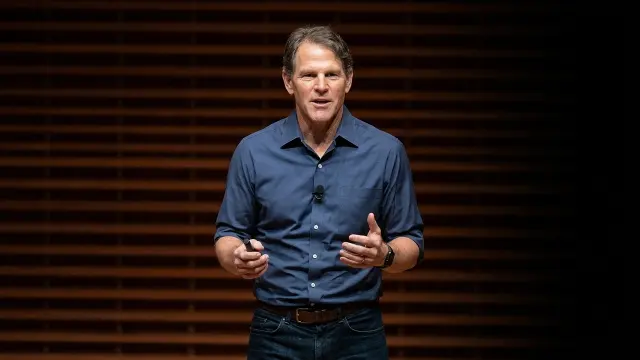
 Graham Weaver's Last Lecture on Winning Without Crushing Your Soul
#Graduation Speech
1 ideas
Graham Weaver's Last Lecture on Winning Without Crushing Your Soul
Get new #Graduation Speech ideas by email
Every Thursday: the week's best ideas, with the newest from #Graduation Speech.
Related tags
How to Write a Graduation Speech People Actually Remember
A graduation speech is the address given at the end of a course of study, usually as part of a ceremony where students formally leave one stage of education and move into the next. In many countries the occasion is called commencement, a word that carries its own small argument: that the ceremony marks a beginning rather than an ending. The tradition reaches back to the earliest universities, where a senior figure would speak to the assembled scholars, and the shape of it has barely changed since. Someone stands up, a room full of people who have worked hard falls quiet, and for a few minutes everyone is asked to think about what just happened and what comes next.
The kinds of speech you might be asked to give
- The student address, often given by a valedictorian or class representative, which speaks from inside the experience and can be personal, funny and specific.
- The guest address, given by someone invited from outside, which usually trades on perspective: what the speaker wishes they had known.
- The farewell speech at a smaller gathering, a class dinner or a final assembly, which is warmer and more intimate than a formal ceremony allows.
- The short address to a club, a team, a training programme or a family milestone, where the same instincts apply at a smaller scale.
What a good one actually does
Read more
It names the shared experience without listing it. Everyone in the room already knows about the exams and the late nights, so the speaker's job is to find the small, particular detail that makes the crowd laugh in recognition. It thanks the people who made the day possible, and it does so by name where it can. It offers one idea rather than five. And it ends on purpose, on a line the speaker has chosen, rather than trailing off into another thank-you.
If you are writing your first one
Start by writing down three memories that only your year group would recognise. Choose the one that still makes you feel something. Build the speech around the single thought that memory suggests, and let the thanks and the congratulations sit around it rather than competing with it.
Read it aloud, timing yourself. Spoken words are shorter than written ones, and a sentence that looks elegant on the page can be impossible to say. Cut anything you stumble over rather than practising it until it works.
Keep it brief. A short speech that lands is remembered far longer than a thorough one that doesn't, and the audience is on your side from the first sentence. Speak slowly, look up at the end of each line, and trust that the room wants you to do well.
Finally, keep a copy. Graduation speeches are the kind of thing people rediscover years later, and reading your own words back is a strange and generous gift to your future self.
#Graduation Speech: frequently asked questions
How should I start a graduation speech?
Open with a small, specific moment your listeners would recognise rather than a broad statement about the future. A single shared detail, such as a running joke or a room everyone remembers, gets attention faster than a formal greeting. Once the room is with you, you can widen out to the idea the speech is built on.
What does a graduation speech actually need to include?
At minimum it needs one clear idea, genuine thanks to the people who made the day possible, and a deliberate closing line. Naming the shared experience is useful, but pick a particular detail instead of cataloguing everything the group went through. Keep congratulations present without letting them crowd out the main thought.
Which type of graduation speech should I choose?
It depends on who you are in the room: a student speaker talks from inside the experience and can be personal and funny, while an invited guest draws on perspective and hindsight. Smaller farewell gatherings allow a warmer, more intimate tone than a formal ceremony. The same instincts work scaled down for a team, club or family milestone.
How can I practise and prepare without overdoing it?
Write it, then read it aloud with a clock running, because spoken sentences are shorter than written ones. Cut anything you stumble over rather than drilling it until it works. A short speech delivered slowly and with your eyes up beats a long one rehearsed to perfection.
What are the most common mistakes in a graduation speech?
The usual ones are listing shared memories instead of choosing one, offering several ideas at once, and thanking people in a vague, general way. Another frequent slip is ending by trailing off into an extra thank-you rather than landing on a line you chose. Trying to sound impressive also tends to flatten the warmth the audience is hoping for.
Is it worth keeping a copy of the speech afterwards?
Yes, and it costs nothing to do. People often rediscover these words years later, and reading back what you thought on that day is a strange and generous gift to your future self. Save the final version rather than your notes, so the wording matches what the room actually heard.
Videos come from YouTube and posts from Instagram; titles and summaries are our own. All rights belong to their creators.