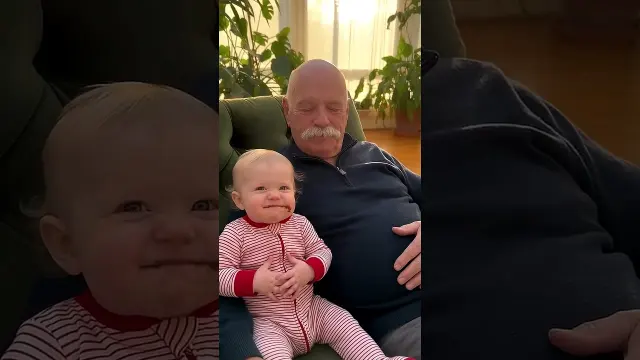
 Baby Perfectly Copying Grandpa Eating Chocolate
#Grandpa
2 ideas
Baby Perfectly Copying Grandpa Eating Chocolate
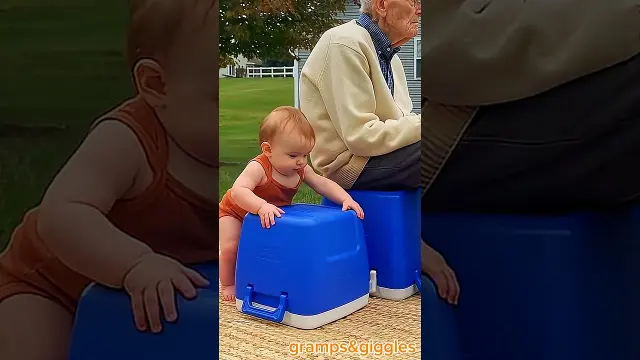 Baby Copying Grandpa Stretching His Back
Get new #Grandpa ideas by email
Every Thursday: the week's best ideas, with the newest from #Grandpa.
Related tags
Grandpa: The Quiet Heart of Family Life
A grandpa is a father's father or a mother's father, and in many families the word carries a warmth that no other title quite matches. It is the informal, affectionate word, the one children reach for long before they ever say "grandfather," and most languages have their own rounded, child-shaped version of it. Whatever the word, the figure behind it tends to be someone unburdened of the daily work of parenting and free to simply enjoy the child.
A role that keeps changing
Grandfathering is not one fixed job. In some families the grandpa is the storyteller, keeper of names, dates and old jokes. In others he is the practical one, the person who fixes a bicycle, teaches a knot, or quietly shows up when something needs moving. Some grandfathers live in the same house and share everyday life; others arrive for holidays and Sundays. None of these is the better version. What children remember is rarely the grand gesture. It is the repeated one: the walk to the same corner, the chocolate shared in secret, the way he stretches and groans when he stands up.
The many shapes of a grandfather
Read more
- The steady presence: available, unhurried, reliably there.
- The family historian: photographs, recipes, stories about people no longer alive.
- The teacher of hands: gardening, woodwork, cooking, fishing, a card game.
- The playful one: silly voices, invented games, a willingness to be ridiculous.
- The distant but devoted grandpa: letters, calls, voice notes, visits planned well ahead.
What actually gets passed down
Long before a child understands the stories, they absorb the mannerisms. Children copy the way a grandpa eats, sighs, laughs or stretches his back, and they do it with total seriousness. This is how traditions survive — not through instruction but through imitation. If you want to hand something on, use it in front of the child rather than explaining it: cook the dish, speak the old language, sing the song badly, plant the seed.
Practical, gentle beginnings
Let the child set the pace. Some children take to a grandpa immediately; others need many small visits before they settle. Ask the parents what soothes and what frightens, and follow their routines rather than inventing your own. Keep visits short at first and end them while everyone is still happy. Offer help specifically, not vaguely — a school pickup, a batch of soup, an hour of babysitting — and let the parents decide. If your health limits what you can do, say so plainly; children cope well with honesty and adapt happily to a slower version of an outing.
When distance is part of the story
Geography does not have to decide the relationship. Regular, predictable contact matters more than long, occasional ones: a short call at the same time each week, a posted drawing, a recorded message, a shared book read over video. Keep a small box of things to show on the next visit. Children measure closeness in repetition, not distance.
Worth keeping
Photographs of a grandpa doing ordinary things — making tea, dozing off, holding a baby — become the most treasured images in a family archive years later. Take them, and ask someone to take them of you. Record his voice if you can. The everyday is what will be missed.
#Grandpa: frequently asked questions
How do I start building a bond with a grandchild?
Let the child set the pace rather than expecting instant closeness — some children warm up right away, others need many small visits before they relax. Ask the parents what soothes the child and what frightens them, and follow the routines already in place instead of inventing your own. Keep the first visits short and end them while everyone is still happy.
Which kind of grandpa should I be?
There is no single better version. Some grandfathers are the steady, unhurried presence; others are the family historian with the photographs and old stories, the one who teaches gardening or a card game, the playful one, or the devoted grandpa who lives far away and stays close through calls and letters. Pick what genuinely fits your temperament and circumstances and let it grow from there.
What if my grandchildren live far away?
Geography does not have to decide the relationship. Short, predictable contact does more than long, occasional visits — a call at the same time each week, a drawing sent in the post, a story read together over video. Keep a small box of things to show on the next visit, since children measure closeness in repetition rather than in distance.
What can I actually pass on to my grandchildren?
Long before a child understands the stories, they absorb the mannerisms — the way you laugh, sigh, stretch or eat. So use what you want to hand down in front of them rather than explaining it: cook the dish, speak the old language, sing the song badly, plant the seed together. Traditions survive through imitation far more than through instruction.
What are common mistakes to avoid?
One is stepping over the parents' routines and doing things your own way; another is offering help so vaguely that it is hard to accept. Be specific instead — a school pickup, a batch of soup, an hour of company — and let the parents decide. If your health limits what you can do, say so plainly; children cope well with honesty and adapt happily to a slower outing.
How do I care for the relationship over the years?
The repeated small thing is what stays with children, not the grand gesture: the walk to the same corner, the shared chocolate, the joke told again. Photographs of ordinary moments — making tea, dozing off, holding a baby — become the most treasured images in a family archive later on. Ask someone to take those pictures of you too, and record your voice if you can.
Videos come from YouTube and posts from Instagram; titles and summaries are our own. All rights belong to their creators.