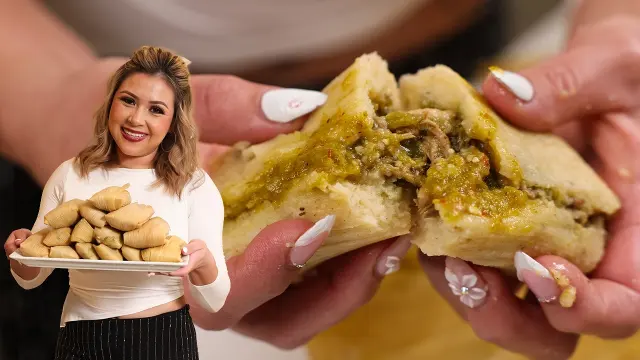
 Green Chile Tamales Explained Step by Step for Beginners
#Green Chile
1 ideas
Green Chile Tamales Explained Step by Step for Beginners
Get new #Green Chile ideas by email
Every Thursday: the week's best ideas, with the newest from #Green Chile.
Related tags
Green Chile: A Beginner's Guide to Roasting, Cooking and Storing
Green chile is simply the unripe fruit of a chile pepper plant, picked while it is still green and before it turns red. That early harvest gives it a grassy, bright flavour and a firmer flesh than its mature counterpart. The same pepper can therefore appear on your table twice in a year: first as green chile, later as red. In the kitchen the term usually points to the long, thick-walled varieties grown in the southwestern United States and northern Mexico, mild to moderately hot, with enough flesh to roast and peel.
Where it comes from
Chile peppers are native to the Americas and have been cultivated for a very long time in what is now Mexico and the southwestern United States. Green chile as a dish and a habit — roasted in batches, peeled, frozen, spooned over everything — belongs above all to New Mexican and Mexican home cooking, where it sits alongside corn, beans, squash and pork as a staple rather than a novelty.
What it is used for
Read more
Green chile works as a vegetable, a seasoning and a sauce all at once. Roasted and chopped, it goes into stews, soups, egg dishes, beans and corn dishes, tamales, casseroles and sandwiches. Blended with onion, garlic and a little stock, it becomes the base of green chile sauce, which in turn becomes chile verde when pork is braised in it. It also pairs well with cheese, potatoes, chicken and mild white fish, and a spoonful stirred into a plain soup or a bowl of beans will do more than most spices.
The main kinds
The peppers sold as green chile vary enormously in heat, even within the same variety, so treat every batch as a surprise. Broadly, the long mild peppers are used for stuffing and for generous chopping, while smaller, hotter types are used sparingly for punch. Some are grown for their flavour rather than their fire, and some are deliberately bred hot. When buying, ask about heat level if you can, or taste a sliver before you commit a whole pot to it.
Roasting and peeling
Roasting is the classic preparation because it loosens the skin and deepens the flavour. The peppers are blistered over a flame, on a grill or under a hot broiler until the skin blackens and lifts, then steamed in a covered bowl or a bag so the skin loosens further, then peeled. Wear gloves if you are handling a lot of them, and keep your hands away from your face.
Practical tips for beginners
Taste as you go: heat levels are unpredictable, and a sauce that is too hot cannot be undone. Add green chile toward the end of cooking if you want its fresh flavour to survive, or early if you want it to melt into the dish. Roasted and peeled chile freezes beautifully in small portions, so a big batch in season can carry you for months. And remember that the heat lives in the pith and seeds as much as the flesh, so remove them for a gentler result.
Once you have roasted a tray and frozen it in handfuls, green chile stops being a special ingredient and becomes an ordinary habit — which is exactly how it is used in the places that love it most.
#Green Chile: frequently asked questions
How do I get started with green chile if I have never cooked with it?
Start small: buy a few peppers, roast them until the skin blisters and lifts, then steam them in a covered bowl and peel. Taste a sliver before you commit a whole pot, since heat varies from batch to batch.
What do I need on hand to roast and peel green chile at home?
A heat source you can blister the skins with — a grill, a flame, or a hot broiler — plus a covered bowl or bag for steaming and a pair of gloves if you are handling a large batch. Keep your hands away from your face while you work.
Which kind of green chile should I choose?
The long, thick-walled peppers are the ones to pick for stuffing or generous chopping, while smaller, hotter types are best used sparingly for punch. Ask about the heat level when you buy, or taste a piece first, because peppers sold under the same name can vary enormously.
How should I store green chile so it keeps?
Roasted and peeled chile freezes beautifully in small portions, so a big batch made in season can carry you for months. Pack it in handfuls rather than one solid block, so you can pull out just what a dish needs.
What are good ways to use green chile beyond a bowl of stew?
It works as a vegetable, a seasoning and a sauce at once — stirred into eggs, beans, corn dishes, tamales, casseroles and sandwiches, or blended with onion, garlic and a little stock to make a green sauce for braising. It also pairs well with cheese, potatoes, chicken and mild white fish, and a spoonful lifted into a plain soup does more than most spices.
What mistakes should I avoid?
The most common one is adding too much heat too early — a sauce that turns out too hot cannot be undone, so taste as you go. Remember that the fire lives in the pith and seeds as much as the flesh, so remove them for a gentler result, and add the chile late if you want its fresh flavour to survive cooking.
Videos come from YouTube and posts from Instagram; titles and summaries are our own. All rights belong to their creators.