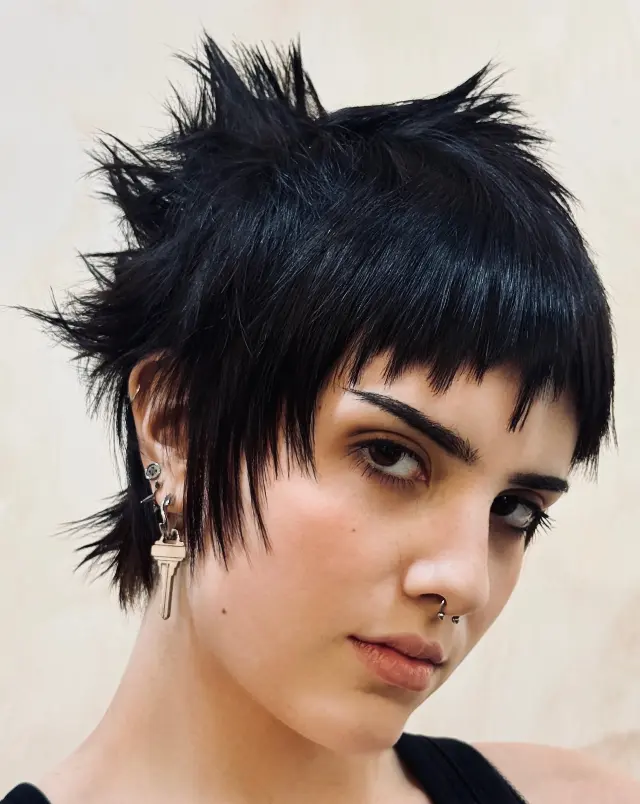
 Signature layered cut presented by a hair education studio
#Hair Education
1 ideas
Signature layered cut presented by a hair education studio
Get new #Hair Education ideas by email
Every Thursday: the week's best ideas, with the newest from #Hair Education.
Related tags
Hair Education: A Guide to Learning the Craft of Hair
Hair education is the structured learning behind professional hair work: the study of how hair behaves, and the practice of cutting, colouring, styling and caring for it. It is what separates a hobby from a craft, and it exists in many forms — formal beauty schools, salon apprenticeships, short courses, and the ongoing training that working stylists return to throughout their careers. If you are curious about the field, whether as a future professional or simply as someone who wants to understand their own hair, it helps to know what the learning actually involves.
What hair education covers
At its foundation sits hair science. You learn that a strand has layers — the cuticle on the outside, the cortex beneath it, and in many hairs a soft core called the medulla — and that the cortex holds the pigment and the bonds that give hair its shape. You learn how water, heat, and chemical products affect those bonds, and why some treatments change hair permanently while others wash out. This understanding is not academic decoration; it is what lets a professional predict an outcome instead of guessing at it.
On top of that come the practical disciplines: cutting, which is about sectioning, tension, angles and the geometry of how hair falls; colouring, which involves mixing, development and the relationship between underlying pigment and the result; and styling, including blow-drying, setting and finishing. Most programmes also teach scalp and hair care, client consultation, hygiene and salon safety.
Read more
Ways to learn
- Formal study at a beauty or cosmetology school, usually combining classroom theory with supervised practice on mannequins and, later, real clients.
- Apprenticeship in a salon, where you assist experienced stylists and learn on the floor over months or years.
- Short specialised courses for people already working, often focused on a single skill such as a particular cutting approach or a colour technique.
- Independent learning through books, videos and practice, which builds familiarity but cannot replace hands-on correction from a teacher.
What beginners should know
Expect the beginning to feel clumsy. Hair work is physical and repetitive, and precision comes from repetition long before it comes from confidence. Learn the vocabulary early — it makes every lesson easier to follow. Practise on mannequins as much as you can, and keep notes on what you tried and what happened, because patterns only become visible when you write them down.
Take consultation seriously. Listening to what someone wants, and being honest about what their hair can reasonably do, is a skill as learnable as any cut. And treat hygiene and product safety as non-negotiable from day one.
Above all, understand that hair education does not end with a certificate. Hair changes with care, health and time, and the people who stay good at this work are the ones who keep learning, keep practising, and stay curious about the next head of hair in the chair.
#Hair Education: frequently asked questions
How do I start learning about hair with no experience at all?
Start with the science underneath the craft: how a strand is built, what the outer cuticle and inner cortex do, and how water, heat and chemical products change the bonds inside it. Once that makes sense, move to hands-on practice on mannequins, because hair work is physical and repetitive and your hands learn far slower than your head. Learning the vocabulary early also makes every later lesson easier to follow.
Can I teach myself from books and videos instead of enrolling somewhere?
Independent study is a genuine help — it builds familiarity with terms, tools and techniques before you ever touch a real head of hair. What it cannot do is correct you, and small errors in tension, sectioning or angle are exactly the things a teacher catches in person. Treat self-directed learning as a supplement to supervised practice rather than a replacement for it.
Which route suits me: formal school, a salon apprenticeship, or a short course?
It depends on what you want and how you prefer to learn: school gives structured theory plus supervised practice, an apprenticeship puts you on the salon floor assisting experienced stylists, and short courses sharpen one specific skill for people already working. Many people mix them over time rather than choosing once. If you are unsure, the deciding factor is usually how much guided feedback you need before practising independently.
What mistakes do beginners make most often?
Rushing toward precision before repetition has built it, and treating consultation as a formality instead of a real skill — listening to what someone wants and being honest about what their hair can reasonably do matters as much as any cut. Skipping notes is another common one, since patterns in what worked and what failed only become visible when you write them down. Treating hygiene and product safety as optional is the most serious mistake of all.
Does learning stop once training is finished?
No — hair changes with care, health and time, and the techniques that serve you well now will not cover everything you meet later. The people who stay good at this work keep practising, keep watching other stylists, and stay curious about the next head of hair in the chair. Ongoing training is part of the job, not an add-on to it.
Videos come from YouTube and posts from Instagram; titles and summaries are our own. All rights belong to their creators.