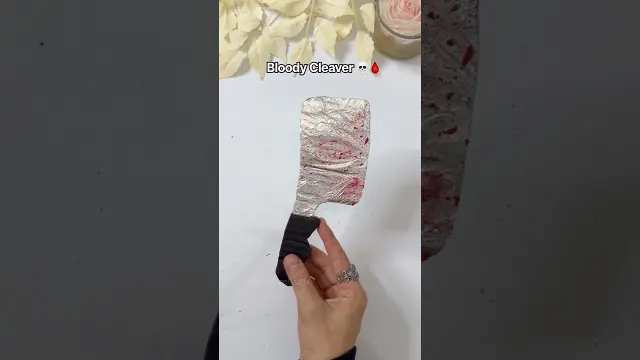
 Easy DIY Halloween Bloody Cleaver Prop
#Halloween Props
1 ideas
Easy DIY Halloween Bloody Cleaver Prop
Get new #Halloween Props ideas by email
Every Thursday: the week's best ideas, with the newest from #Halloween Props.
Related tags
Halloween Props: A Guide to Decorating with Character
A Halloween prop is any object built or bought to set a scene rather than simply sit on a shelf. A single carved pumpkin is decoration; a gravestone half-sunk in the grass, a figure leaning out of a lit window, a cauldron with something bubbling inside is a prop. The difference is purpose: props are meant to be walked past, discovered and reacted to, which is why they tend to be larger than ordinary decor and often placed where people will not see them all at once.
The tradition has deep roots. Long before shop-bought decorations, households marked the turn of autumn with what they had to hand: root vegetables hollowed out and lit from within, straw figures, bundles of dried corn and wood. Those early objects were scraps made meaningful, and that instinct survives in modern prop-making, where the best results often come from cardboard, foam, fabric and old clothes rather than expensive kits.
The main kinds
Props fall into a few loose families. Static props stay still and rely on silhouette and detail: gravestones, arches, scarecrows, hanging bats, skeletons arranged in a scene. Moving props introduce a mechanism, from a simple swinging ghost on a string to figures that turn, rise or reach when someone approaches. Animatronics push that further with sound and light, and they are the most demanding to build, power and weatherproof. Lighting and atmosphere props sit alongside all of these: projectors, coloured bulbs, fake fog and shadows cast through windows. Lighting is often the single cheapest way to make an ordinary scene feel convincing.
Read more
Techniques worth knowing
Most homemade props are built from a lightweight frame covered in something shapable. Foam insulation board, carved and heat-shaped, can look like stone when painted with layered greys and brushed with watered-down dark paint in the crevices. Papier-mâché over a wire or cardboard armature suits masks, skulls and organic shapes. Fabric stiffened with glue or starch gives you draped forms and ghosts. Whatever the material, texture painting matters more than shape: props read as convincing because of grime, uneven colour and shadow, not because of fine detail.
If you are just starting
Build one focal prop rather than many small ones; a single strong silhouette at the end of a path does more work than a scattered collection. Think about the viewing distance and build for it. Check the weather in your area and choose materials accordingly, or place delicate pieces under cover. Secure anything that could topple, keep cables and power sources out of walkways, and avoid open flames or anything that could fall onto a path. Consider how you will store a prop before you build it, and how it will come apart. Keep the frightening parts in mind if small children will be visiting: a well-placed silly detail gives them somewhere to look.
#Halloween Props: frequently asked questions
What actually counts as a Halloween prop, as opposed to regular decoration?
A prop is built to set a scene you walk past and react to, rather than to sit quietly on a shelf. That is why props tend to be bigger, placed at a distance from the viewer, and often revealed a bit at a time along a path or in a window.
How do I start making props if I have never built anything before?
Pick one focal prop instead of a scattered collection, and build it for the distance people will actually view it from. Simple materials like cardboard, foam board, fabric and old clothes go a long way, and you can add detail later once the silhouette works. Plan how it will come apart and where it will live in the off-season before you begin.
Which kind of prop should I choose: static, moving or animatronic?
Static props depend on silhouette and surface detail, so they are the easiest to make convincing and the simplest to store. Moving props add a mechanism for surprise, while animatronics bring sound and light but demand far more work to build, power and weatherproof. Many people start static and add one simple moving element once the scene reads well.
What makes a homemade prop look believable?
Texture painting does more work than precise shaping: grime, uneven colour and dark washes settled into crevices sell the material far better than fine detail. Layering greys and brushing watered-down dark paint into recesses is what turns carved foam into something that reads as stone.
How should I care for props so they survive the season and beyond?
Check your local weather and match materials to it, or move delicate pieces under cover. Secure anything that could topple, keep cables and power sources clear of walkways, and avoid open flames or anything that might fall onto a path. Building props so they dismantle cleanly makes storage much easier.
What are the most common mistakes people make with Halloween props?
Spreading effort across many small pieces instead of one strong focal point is the usual one, along with building for close viewing when guests will see the prop from far away. Forgetting to plan storage and safe cable routing causes trouble later, and it is easy to overlook younger visitors. A small silly detail somewhere in the scene gives nervous children a friendly place to look.
Videos come from YouTube and posts from Instagram; titles and summaries are our own. All rights belong to their creators.