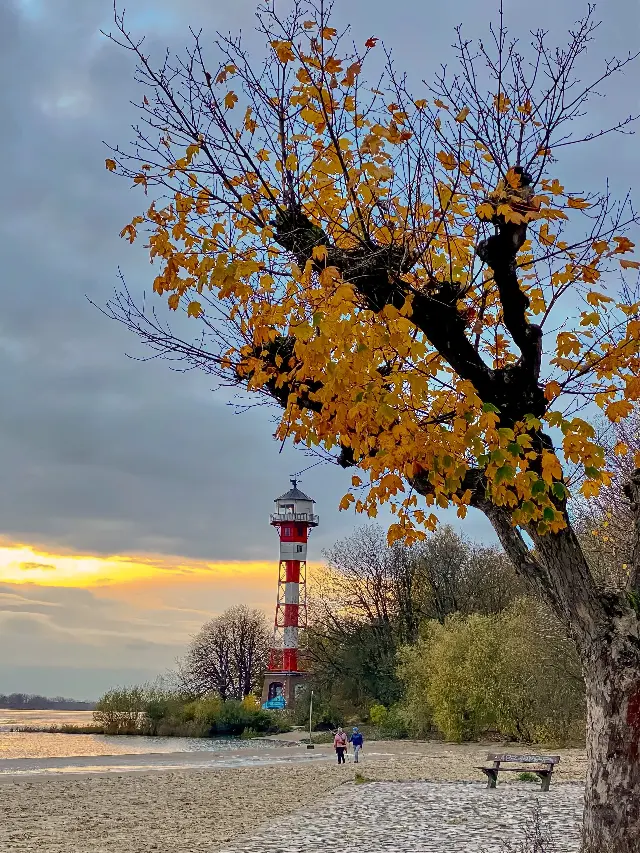
 Exploring the historic Wittenbergen lighthouse in Hamburg
#Hamburg
1 ideas
Exploring the historic Wittenbergen lighthouse in Hamburg
Get new #Hamburg ideas by email
Every Thursday: the week's best ideas, with the newest from #Hamburg.
Related tags
Hamburg: A Guide to the Harbor City on the Elbe
Hamburg sits in northern Germany where the Elbe widens on its way to the North Sea. It is a city-state and one of Germany's largest cities, but what shapes it most is water: the river, the harbor, two lakes in the middle of town, and a dense network of canals crossed by more bridges than anywhere else in Europe. That geography explains much of the city's character — its trade, its architecture, its weather, and its unhurried northern temperament.
A harbor city first
The port is the heart of Hamburg and has been for centuries. It is a working harbor, not a museum piece: container terminals, cranes, and ships from around the world occupy the southern bank of the Elbe, and boat tours leave from the Landungsbrücken to show visitors the docks, the old warehouses, and the shipyards. Because it is a tidal harbor, large vessels depend on the rhythm of the river, and watching the water rise and fall is part of everyday life here.
Brick, water, and the Speicherstadt
Read more
The Speicherstadt, a district of tall red-brick warehouses built on oak piles between the canals, is the city's most distinctive landscape. It was once a free-trade zone where goods were stored without customs duty; today the same buildings hold museums, offices, and apartments. Next to it, HafenCity has grown on former dockland, mixing new architecture with the old harbor edges. Walking between the two gives a compact lesson in how Hamburg has remade itself without abandoning its past.
Neighborhoods worth knowing
Hamburg is a patchwork of very different quarters. Around the Alster, the two inner lakes, you find calm promenades, sailing boats, and the elegant streets of Harvestehude and Rotherbaum. St. Pauli, next to the harbor, is livelier and rougher, known for the Reeperbahn and for a strong local identity. Ottensen and Sternschanze are full of small shops, cafés, and street art. Blankenese, out along the Elbe, feels almost like a fishing village, with stairways winding down the bluff toward the water and lighthouses marking the river's edge.
What to know before you go
Hamburg's weather is changeable — wind and rain arrive quickly, so a waterproof layer is more useful than an umbrella. Public transport is extensive, and most of the center is best explored on foot or by bicycle. The Fischmarkt on Sunday mornings is a tradition, though it starts very early. If you want to understand the city, do two things: take a harbor boat, and simply walk along the water without a plan.
Living with the tide
What makes Hamburg memorable is not a single sight but a habit of mind: the sense that the river is always present, that the city has been rebuilt more than once, and that its identity comes from movement — ships, water, trade, and people arriving from everywhere.
#Hamburg: frequently asked questions
What is the best way to get a first feel for Hamburg?
Start on the water: a harbor boat trip from the Landungsbrücken shows you the working docks, the old warehouse blocks and the shipyards in one sweep. Then walk the canals between the brick warehouses and the newer dockland quarter next door, where old and new sit side by side. The city explains itself through its water rather than through any single landmark.
What should I pack for Hamburg's weather?
Expect changeable conditions — wind and rain can arrive with little warning even on a bright morning. A waterproof outer layer serves you far better than an umbrella, which the wind tends to ruin. Comfortable shoes matter too, since much of the center is best covered on foot.
Which part of Hamburg should I choose as a base?
It depends on the mood you want: the streets around the inner lakes are calm and elegant, while the quarter next to the harbor is livelier and rougher, with a strong local character. The neighborhoods farther west are full of small shops, cafés and street art, and the riverside village at the city's edge feels almost like a fishing hamlet.
How do I get around Hamburg without a car?
Public transport reaches essentially everywhere you would want to go, and it is the easy way to cover longer distances. For the center, walking and cycling are the pleasant options, and a bicycle lets you follow the water from one quarter to the next. Boat services along the river double as transport and as sightseeing.
What do first-time visitors usually get wrong in Hamburg?
The commonest mistake is treating the harbor as a backdrop and skipping the boat trip, which is the one thing that makes the city's geography click. Another is over-scheduling: the pleasure here comes from walking along the water without a plan and letting the tide set the pace. Visitors also underestimate the wind and dress too lightly for it.
Any ideas for a slow day in Hamburg?
Walk a stretch of the waterfront aimlessly, cross a few of the canal bridges, and stop wherever the view opens up. Add an early Sunday stroll along the fish market quay for a slice of local tradition, then retreat to a café in one of the western quarters. Finish by the lakes at dusk, when the promenades and sailing boats turn quiet.
Videos come from YouTube and posts from Instagram; titles and summaries are our own. All rights belong to their creators.