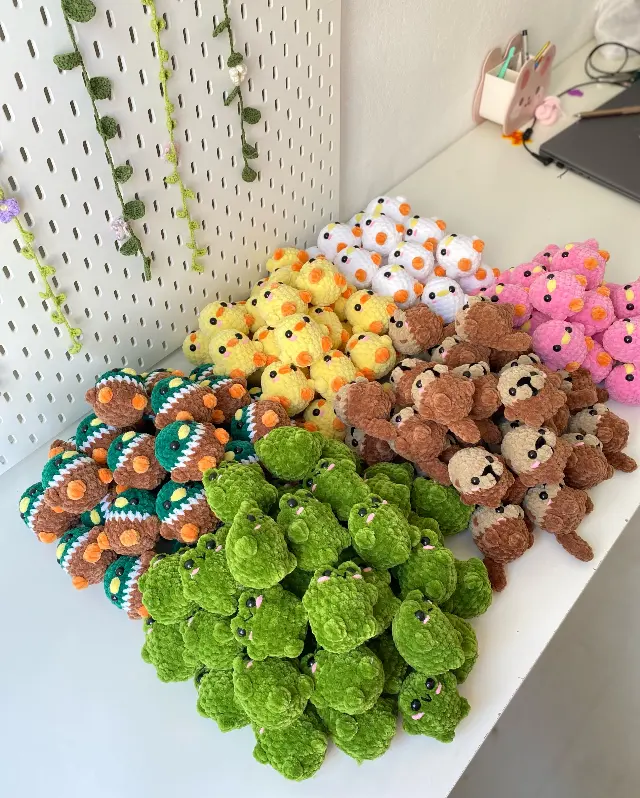
 Bulk Order of Handmade Amigurumi Toys
#Handmade Business
2 ideas
Bulk Order of Handmade Amigurumi Toys
Get new #Handmade Business ideas by email
Every Thursday: the week's best ideas, with the newest from #Handmade Business.
Related tags
Starting a Handmade Business: A Practical Guide
A handmade business is exactly what it sounds like: a small enterprise built on things you make yourself, whether that is knitting, sewing, pottery, jewellery, woodwork, soap, paper craft or something else entirely. It sits somewhere between a hobby and a company, and many of them begin by accident — a few requests from friends, a first market stall, a photograph that catches someone's eye. What changes the moment it becomes a business is that the making has to meet a schedule, a price and someone else's expectations.
What makes it different from a hobby
Hobby crafting is answerable only to your own curiosity. A business has customers, deadlines and money moving in both directions. That means thinking about three things at once: what you make, how long it takes, and what someone will pay for it. Keeping a simple record of hours and material costs for a few pieces teaches you more than any advice, because it turns vague feelings about value into numbers you can work with.
Pricing without undervaluing yourself
Read more
The most common beginner's mistake is charging only for materials. A workable price covers the materials, the time you spent making it, a share of the indirect costs (packaging, tools, electricity, market fees, listing fees, delivery) and a small margin so the business can grow. Handmade work carries a real cost that factory items do not, and it is fair to price accordingly. If you also sell wholesale, remember that a reseller needs room to add their own margin.
Where to sell
Broadly, there are three routes. Selling directly, through markets, fairs, open studios or your own online shop, gives you the full price and the conversation with the customer. Selling through shops, galleries or stockists means lower margins but steadier volume and less of your own time spent selling. Taking commissions and custom orders brings in work you know is wanted, though it needs clear agreements about size, timing and changes. Many makers combine all three, and adjust as they learn which suits them.
Making production manageable
Handmade does not have to mean one-off. Making in small batches — several of the same item at once — saves setting-up time and keeps quality consistent. Keep a simple plan of what needs to be finished each week, build in slack for the pieces that always take longer than expected, and be honest with buyers about timelines. A realistic delivery date kept is worth more than a fast one missed.
The parts that are not making
Photographs, written descriptions and packaging carry much of the impression your work makes before anyone touches it. Natural light and a plain background do a great deal. Say what the item is made of, how it should be cared for, and what makes it what it is. Keep customer messages tidy and answer questions plainly.
Finally, check what registering a small business, keeping records and paying tax require where you live; the rules differ widely and it is worth knowing them early. And protect the making itself: the craft is what brought you here, so leave room in the week for the work that still feels like play.
#Handmade Business: frequently asked questions
How do I know when my crafting has turned into a real business rather than a hobby?
The shift happens when other people's expectations start shaping what you make — a customer waiting on an order, a stall booked for a date, money going out for materials that has to come back in. A hobby answers only to your own curiosity, while a business answers to a schedule and a price. One practical sign is that you can no longer decide on a whim to stop halfway through a piece.
What do I actually need in place before I start selling my work?
At the very least you need a clear idea of what you make, how long each piece takes, and what it costs you in materials, so that you are not guessing when someone asks. Alongside that, decide how you will be paid and how you will hand the work over, and keep a simple record of orders and expenses from the beginning. It is also worth finding out early what your local area requires of small sellers, since the rules vary a great deal from place to place.
Which selling route suits a maker best — markets, shops, or custom orders?
There is no single right answer, because each route trades effort against return in a different way. Selling directly, whether at a fair or through your own shop, keeps the full price and puts you face to face with the buyer, while selling through stockists brings steadier volume at a smaller margin, and commissions give you work you already know is wanted. Most makers end up doing a bit of each and quietly dropping whichever one drains them.
How should I price a handmade piece so I am not underselling myself?
Start from everything the item genuinely costs you: the materials, the hours of work, and a share of the smaller outgoings like packaging, tools, stall charges and delivery. Adding a modest amount on top is not greed — it is what lets you keep making and replace worn-out equipment. Charging for materials alone is the classic beginner's trap, and it is fair to remember that handmade work carries costs a factory item never does.
What are the most common mistakes new handmade sellers make?
Underpricing comes up again and again, usually because the maker counts materials and forgets their own time. Promising delivery dates that were never realistic is another, and it damages trust far more than a slower, honest timeline would. A quieter mistake is letting the making side crowd out everything else — the photographs, descriptions and packaging that shape what people think of the work before they ever touch it.
How should I look after handmade items, and what should I tell buyers about care?
Care depends entirely on the material, so follow what suits the fibre, clay, wood or finish rather than a single rule — gentle handling, sensible storage and keeping pieces out of prolonged harsh sunlight cover most cases. What matters most is telling the buyer plainly, in the listing and on a note tucked in with the parcel, what the piece is made of and how to keep it looking right. Clear care information prevents disappointment and often brings the same customer back.
Videos come from YouTube and posts from Instagram; titles and summaries are our own. All rights belong to their creators.