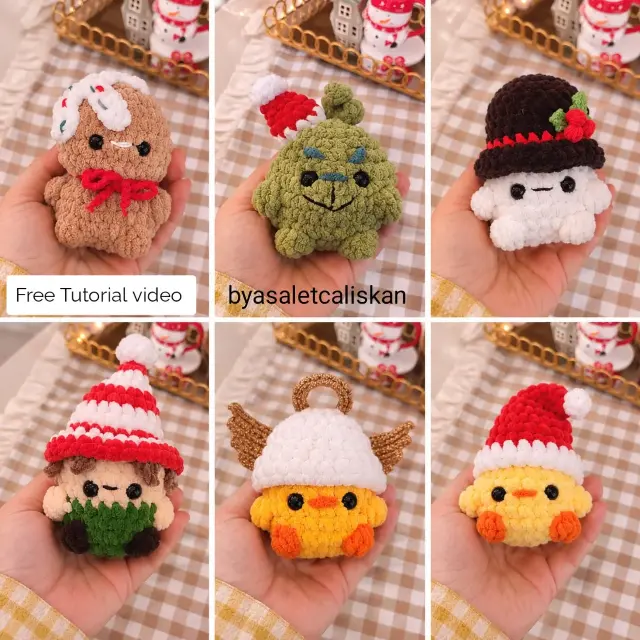
 Handmade Christmas Amigurumi Collection with Free Tutorials
#Handmade Gifts
5 ideas
Handmade Christmas Amigurumi Collection with Free Tutorials
Get new #Handmade Gifts ideas by email
Every Thursday: the week's best ideas, with the newest from #Handmade Gifts.
Related tags
Handmade Gifts: A Guide to Giving Something You Made
A handmade gift is any present made by the person giving it rather than bought ready-made. The idea is simple and very old: long before shops existed, people gave each other things they had woven, carved, baked, sewn or grown. What has changed is the meaning. When almost anything can be ordered in a few clicks, a gift that someone spent hours shaping with their own hands carries a different kind of weight — it says that your time was worth giving away.
What counts as handmade
The range is wider than most people expect. Textile crafts cover knitting, crochet, embroidery, quilting and sewing. Paper and print work includes bookbinding, card making, calligraphy and block printing. There is woodwork, pottery, jewellery making, candle and soap making, and the whole kitchen side of things — jams, preserves, spice blends, baked goods. Some gifts are made entirely from scratch; others are assembled from bought components, which is fine, as long as the thought and the work are yours.
Choosing the right project
Read more
The most common mistake for beginners is starting with something too ambitious. A first quilt can take months; a first pair of knitted socks involves several techniques at once. Pick a project that matches both your current skill and the time you realistically have. Small and well-finished almost always beats large and half-done.
Think about the recipient before the craft. A gift works best when it suits the person's home, habits or tastes rather than your own enthusiasm for a technique. Something consumable is a safe choice if you are unsure — a jar of preserves or a batch of biscuits asks nothing of the receiver and creates no clutter.
Beginner-friendly starting points
- Simple sewn items such as tote bags, bowl cozies, aprons or lavender sachets, which use straight seams and a few basic skills.
- Knitted or crocheted scarves, dishcloths and hats, which need only a couple of stitch patterns repeated often enough to become comfortable.
- Baked goods and preserves, where a reliable recipe and careful packaging do most of the work.
- Cards, journals and printed items, which need little equipment and can be made in an evening.
- Candles or simple bath items, if you follow safety guidance on wax, wicks and containers.
Practical tips
Start early. Handmade work expands to fill the time available, and rushed finishing shows. Make a practice piece first so that the gift itself is your second attempt, not your first.
Choose materials you trust, especially for anything that will touch skin or hold food. If you are giving something to a child, avoid small detachable parts, long cords and anything that could break into sharp pieces.
Keep a record as you work — a note of the yarn, the fabric, the recipe, the dimensions — so that a request for "another one" is not a puzzle later.
Finally, present it plainly. A handwritten note explaining what it is and how to look after it turns a nice object into a real gift, and it is the part most people remember.
The honest limits
Handmade gifts go wrong when the maker forgets the recipient. Not everyone wants a knitted item, and a gift that obliges someone to care for it, store it or display it can feel like a burden rather than a kindness. If you are unsure, ask, or make something that can be used up and quietly enjoyed. The best handmade gift is the one that fits the person receiving it, not the one that best shows off the skill of the person making it.
#Handmade Gifts: frequently asked questions
How do I choose a handmade gift project as a beginner?
Start with something that matches your current skills and the time you actually have. Simple sewn items, basic knitting or crochet, baked goods, cards, or a small upcycled project are all good first choices because they are easier to finish well.
What materials do I need to make a handmade gift?
That depends on the craft, but most projects only need a few reliable basics such as fabric, yarn, paper, tools for cutting or stitching, or ingredients for baking and preserves. For anything that will touch skin or food, choose materials you trust and use packaging that suits the finished gift.
What kind of handmade gift should I make for someone?
The best choice depends on the recipient’s habits, home, and taste, not just on the craft you want to try. If you are unsure, a useful or consumable gift such as biscuits, preserves, a candle, or a simple home item is often the safest option.
How can I avoid common mistakes when making a handmade gift?
Do not start with a project that is more ambitious than your skills or schedule allow, because rushed work usually shows. It also helps to make a practice version first, work early, and keep notes so you can repeat the gift later if needed.
How should I care for or present a handmade gift?
A short handwritten note can explain what the item is and how to care for it, which makes the gift feel more thoughtful and useful. Plain, neat packaging is usually enough, especially for handmade items that need special handling or storage.
Videos come from YouTube and posts from Instagram; titles and summaries are our own. All rights belong to their creators.