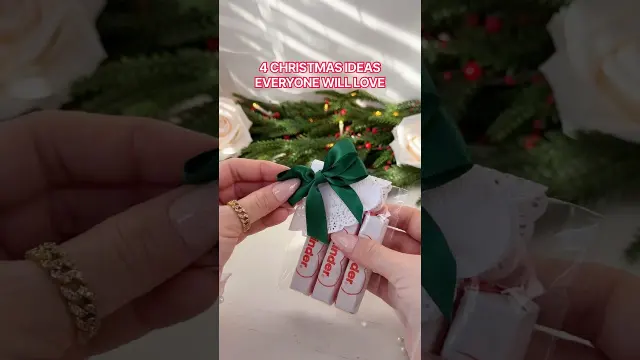
 Four DIY Christmas Gifts That Look Boutique Bought
#Handmade Presents
1 ideas
Four DIY Christmas Gifts That Look Boutique Bought
Get new #Handmade Presents ideas by email
Every Thursday: the week's best ideas, with the newest from #Handmade Presents.
Related tags
Handmade Presents: A Guide to Making Gifts With Meaning
A handmade present is a gift made by the person giving it, rather than bought ready-made. It might be knitted, sewn, baked, painted, carved, or assembled from a few thoughtful materials. What sets it apart is not necessarily skill or expense but intention: someone chose to spend their time on you, and the object carries the trace of that choice.
The idea is older than any shop. People have always made things for the people they care about, and in many traditions a gift made at home was simply what a gift was. What has changed is the balance — readymade goods are now the default, so a handmade present stands out as something deliberately slowed down and personal.
The main kinds
Handmade gifts fall into a few broad families, and each suits a different temperament.
Read more
- Textile crafts — knitting, crochet, embroidery, quilting, sewing. Slow, portable, and forgiving once you know the basics.
- Food and preserves — jams, chutneys, biscuits, spice blends, sweets. Quick to make, always welcome, and easily scaled up for several people.
- Paper and print — bookbinding, letterpress, linocut cards, framed photographs. Good for readers, writers, and anyone who keeps things.
- Wood and home objects — simple shelves, spoons, candle holders, painted boxes. Best attempted with a little guidance and the right tools.
- Bath and body — soaps, balms, bath salts. Approachable, though they require care with ingredients and labelling.
What beginners should know
Start with something you would be happy to use yourself. A first project that fails to hold together teaches more than one that succeeds immediately, but a first project nobody wants to receive discourages.
Choose a craft with a short learning curve if the deadline is close. A jar of well-made preserve or a set of hand-written recipe cards is a genuine gift; a half-finished jumper is not. Be honest about what you can complete comfortably.
Practise on scrap materials first. Most crafts are cheap to rehearse and expensive to redo. Finish matters as much as the making: a neatly wrapped, cleanly labelled present reads as care, while loose ends and smudged edges undo hours of work.
Making it personal
The most successful handmade presents respond to something specific about the recipient: the colour they always wear, the food they ask for, a place they talk about. Personalisation does not require engraving — a chosen shade of yarn, a favourite flavour, a size that actually fits is enough.
Ask before making clothing, food for someone with dietary restrictions, or anything for a household where clutter is a sore point. A gift is for the receiver, not for the maker's pleasure in the making.
Practical tips
- Give yourself more time than you think you need, then double it.
- Keep a small stash of materials so a spare evening can become a gift.
- Make two of something you enjoy; the second is faster and one can keep for later.
- Include care instructions if the item needs them, in a simple handwritten note.
- Wrap it thoughtfully — handmade presents benefit from a little ceremony.
A handmade present rarely competes with a shop-bought one on polish. It competes on a different measure entirely, and usually wins.
#Handmade Presents: frequently asked questions
How do I start making handmade presents if I've never made anything before?
Begin with a craft that gives you a finished object in a single sitting, such as a jar of preserves, a batch of biscuits, or a set of handwritten recipe cards. Practise on scrap materials until the steps feel familiar, then make the real thing. Choosing something you would happily use yourself is the best test of whether it's worth giving.
What materials and tools do I actually need to begin?
Very little beyond what the specific craft demands — yarn and needles, fabric and thread, jars and sugar, paper and a decent pen. Buy basic supplies rather than a full kit, since most crafts are cheap to rehearse and expensive to redo. Keeping a small stash of materials on hand means a spare evening can turn into a present.
Which kind of handmade present should I choose for a particular person?
Match the craft to the recipient's temperament as much as to your own skills: textiles for someone who wears or uses soft things daily, food for anyone who appreciates a good jar, paper and print for readers and keepers, wood and home objects for people who like useful things. Then narrow it with one specific detail — a colour they always wear, a flavour they always ask for, a size that really fits.
How far in advance should I start, and what if I run out of time?
Allow far more time than the project seems to need, then allow more again, because drying, setting, and finishing always take longer than the making. If the deadline is close, switch to something with a short learning curve rather than pushing a slow project to the finish line. An honest, finished small gift beats a half-completed ambitious one.
How should I care for and present a handmade present?
Include simple care instructions in a handwritten note whenever the item needs them — washing, storing, or keeping food fresh. Wrap it thoughtfully, since a clean label and neat wrapping read as care and let the gift arrive with a little ceremony. Loose ends and smudged edges undo hours of work, so finishing deserves the same attention as making.
What are the common mistakes people make with handmade gifts?
The usual ones are starting too late, choosing a craft above the maker's current level, and making what the giver enjoys rather than what the receiver would use. It also pays to ask first before making clothing, food for someone with dietary restrictions, or anything for a household where clutter is unwelcome. Personalisation is a matter of attention, not expense, so a chosen shade or a favourite flavour is usually enough.
Videos come from YouTube and posts from Instagram; titles and summaries are our own. All rights belong to their creators.