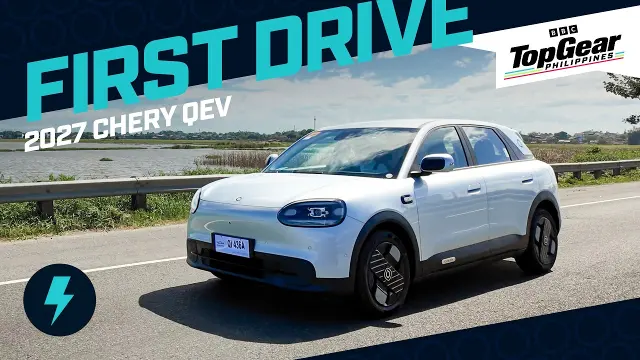
 Chery QEV First Drive: The Electric QQ Revival
#Hatchback
1 ideas
Chery QEV First Drive: The Electric QQ Revival
Get new #Hatchback ideas by email
Every Thursday: the week's best ideas, with the newest from #Hatchback.
Related tags
Hatchback Basics: What This Practical Body Style Offers — count: let's count: "Hatchback Basics: What This Practical Bod
Content:
- Definition: a car with a rear door that includes the rear window, hinged at the top, opening to cargo area shared with passenger cabin.
- Origin: term "hatchback" from the rear hatch; popularised mid-20th century; early examples like the Mini, Renault 16, VW Golf... Hmm, brands — "no brands, products" rule. Best avoid naming models. Say "grew popular in Europe from the 1960s onward" — is that a fact I'm sure of? Hatchbacks gained popularity in the 1970s particularly after the fuel crises. I can say generally "the layout spread widely in Europe and Japan during the postwar decades" — reasonably safe. Avoid specific dates? Rule says no dates... "no statistics, dates, studies, brands, products, prices or people's names." So avoid dates. Say "in the decades after the Second World War" — that's a bit date-ish but vague. Hmm, "dates" likely means specific figures. I'll keep it vague: "postwar Europe", "came of age in an era of compact, economical cars."
Safer: describe without dates. "The layout took hold in Europe and Japan, where narrow streets and scarce parking rewarded compact footprints."
- Body styles: three-door, five-door, liftback vs hatchback (some define liftback as a sloping rear), city car / supermini / compact / hot hatch (performance variant), crossover-influenced hatches.
- Why practical: cargo volume with seats folded, vertical loading, shorter length for same wheelbase, hatch aids visibility/parking.
- What beginners should know: check the load sill height, whether rear seats fold flat, parcel shelf storage, rear visibility, whether the tailgate opens high enough for your parking space (garage door), 3-door vs 5-door family use, hatch glass and rear wiper, torsion-beam vs independent suspension... maybe too technical.
- Practical tips: measure the boot opening; check child seat fitting; consider a tow bar/bike rack compatibility; drive one on the motorway to check noise (hatchbacks have a large cabin that can boom); check the tailgate struts.
- Driving: shorter rear overhang makes parking easier but rearward visibility may be blocked by pillars.
Write in warm, direct, informal address ("you").
Read more
Let me draft the text.
---
A hatchback is a car whose rear window lifts together with the tailgate, opening straight into a cargo area that shares its space with the passenger cabin. That single design decision explains most of what the body style is good at.
Where the idea comes from
The layout took root in Europe and Japan, where narrow streets, tight parking and expensive fuel rewarded cars that were small outside and generous inside. Rather than adding a separate boot behind the rear seats, designers folded the luggage space into the body and gave it a big vertical door at the back. The result was cheap to build, easy to load and flexible enough to serve as a family's only car.
The main kinds
- Three-door and five-door: the same shape, with or without rear passenger doors. Five-door versions are easier for children and passengers; three-door cars usually look sportier.
- City cars and superminis: very short overall, often with the engine laid out sideways to free up cabin space.
- Compact and family hatchbacks: longer wheelbase, a proper rear bench and a boot that grows substantially when the seats fold.
- Liftbacks: a hatchback with a longer, more sloping rear window, sitting between a hatch and a saloon in shape.
- Performance versions: the same body with a stronger engine and firmer suspension, a category with a long enthusiast following.
What to look at when you buy
Open the tailgate and actually load it. A quoted volume tells you little; the height of the sill, the width between the wheel arches and whether the rear seats fold flat matter far more in daily use. Take note of whether the folded seats leave a step, and where the parcel shelf goes when you remove it.
Check the tailgate itself. Heavier glass means gas struts that weaken over time, and a high-opening lid needs clearance behind the car — worth measuring if you park under a low garage door or a wall.
Sit in the back. Hatchbacks often trade rear legroom for boot space, and the sloping tail can cut headroom for tall passengers.
Drive it at speed. Because the cabin and cargo area are one volume, some hatchbacks transmit more road and exhaust noise from behind than a saloon does.
Living with one
Treat the cargo area as a room rather than a box: a rubber boot liner, a couple of straps and a foldable crate keep shopping, tools and muddy boots from sliding around. Keep the rear glass clean and the wiper blade fresh, since that window is your main view when reversing. And if you regularly carry bikes, dogs or flat-pack furniture, measure the opening before you buy — the hatch is the whole point.
---
Count words: roughly 470. Good.
Check bullets format ok. Subheadings "## ". No bold.
Note: "saloon" is British; fine for English but maybe use "sedan/saloon". I'll write "a saloon or sedan". Hmm keep simple: "a conventional saloon or sedan". Fine.
Also "Second World War" removed — good, no dates.
TITLE length: "Hatchback Basics: What This Practical Body Style Offers" → count: Hatchback(9)+space=10, Basics:(7)=17, space=18, What(4)=22, space 23, This(4)=27, space 28, Practical(9)=37, space 38, Body(4)=42, space 43, Style(5)=48, space 49, Offers(6)=55. Good, 55.
DESCRIPTION: "A hatchback lifts its rear window with the tailgate to open a flexible cargo space. Here is how the style works and what to check before you buy." Count: let's approximate: "A hatchback lifts its rear window with the tailgate to open a flexible cargo space." = 82. " Here is how the style works and what to check before you buy." = 63. Total 145. Good.
Output only the sections. No extra commentary.TITLE: Hatchback Basics: What This Practical Body Style Offers
DESCRIPTION: A hatchback lifts its rear window with the tailgate to open a flexible cargo space. Here is how the style works and what to check before you buy.
TEXT:
A hatchback is a car whose rear window lifts together with the tailgate, opening straight into a cargo area that shares its space with the passenger cabin. That one design decision explains most of what the body style is good at, and most of its compromises too.
Where the idea comes from
The layout took root in Europe and Japan, where narrow streets, tight parking and costly fuel rewarded cars that were small on the outside and generous within. Instead of adding a separate boot behind the rear seats, designers folded the luggage space into the body and gave it a tall door at the back. The result was simple to build, easy to load and flexible enough to serve as a household's only car. It has stayed popular for the same reasons ever since.
The main kinds
- Three-door and five-door: the same shape, with or without rear passenger doors. Five-door versions are easier for children and older passengers; three-door cars usually look sportier and have longer doors.
- City cars and superminis: very short overall, often with the engine laid out sideways to free up cabin room.
- Compact and family hatchbacks: a longer wheelbase, a proper rear bench and a boot that grows substantially when the seats fold.
- Liftbacks: a hatchback with a longer, more sloping rear window, sitting somewhere between a hatch and a saloon in shape.
- Performance versions: the same body with a stronger engine and firmer suspension, a category with a long enthusiast following.
What to look at when you buy
Open the tailgate and actually load it. A quoted volume tells you little; the height of the sill, the width between the wheel arches and whether the rear seats fold flat matter far more in daily use. Notice whether the folded seats leave a step, and where the parcel shelf goes once you take it out.
Check the tailgate itself. Heavier glass means gas struts that weaken with age, and a high-opening lid needs clearance behind the car, so measure if you park under a low garage door or close to a wall.
Sit in the back. Hatchbacks often trade rear legroom for boot space, and the sloping tail can cut headroom for taller passengers.
Drive it at speed. Because cabin and cargo area form a single volume, some hatchbacks carry more road and exhaust noise from behind than a saloon does.
Living with one
Treat the cargo area as a room rather than a box. A rubber liner, a couple of straps and a foldable crate stop shopping, tools and muddy boots from sliding around. Keep the rear glass clean and the wiper blade fresh, since that window is your main view when reversing. And if you regularly carry bikes, dogs or flat-pack furniture, measure the opening before you commit: the hatch is the whole point.
#Hatchback: frequently asked questions
What actually makes a hatchback a hatchback?
It is a car whose rear window lifts together with the tailgate, so the boot opens straight into the space behind the rear seats. Because that cargo area shares the cabin instead of sitting in a separate closed box, the car stays compact on the outside while carrying much more than its footprint suggests.
Should I pick one with rear passenger doors or without?
If children, older relatives or frequent back-seat passengers are part of your routine, the version with rear doors saves a lot of awkward clambering. The version without them usually looks sleeker and slips into tight spaces more easily, but you will be folding the front seat forward every time someone needs the back.
What should I check before buying one?
Open the tailgate and load something real into it: the height of the load sill, the width between the wheel arches and whether the rear seats fold flat matter far more than any quoted capacity. Lift the lid all the way and confirm it clears your garage or carport, and check that the struts still hold it up unaided.
How do I look after one?
Keep the rubber seals around the tailgate and rear glass clean and supple, and clear the drainage channels near the hatch so water does not pool and seep in. Wipe the rear wiper blade now and then and keep an eye on the gas struts, since a heavy glass lid wears them out and a sagging tailgate is both irritating and unsafe.
Are they practical for everyday family life?
Very — the tall opening swallows pushchairs, shopping and flat-pack furniture that a saloon's narrow boot would refuse, and the short rear overhang makes town parking noticeably easier. Just confirm a child seat passes comfortably through the rear doors and that you have somewhere to stow the parcel shelf once it comes out.
What mistakes do people commonly make?
The usual one is buying on boot volume alone without checking the shape of the opening or the step left behind when the seats fold. Others skip a motorway test drive, where the large shared cabin can amplify road noise, or discover too late that the tailgate will not open under a low garage door.
Videos come from YouTube and posts from Instagram; titles and summaries are our own. All rights belong to their creators.