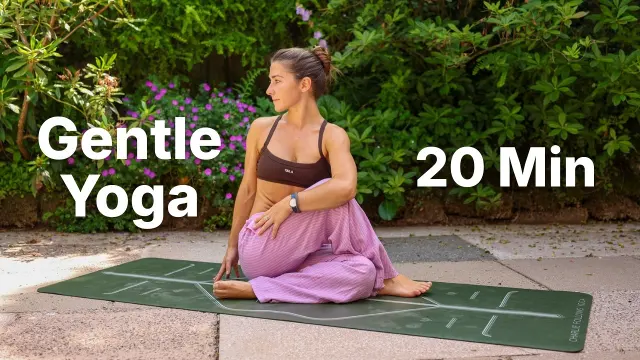
 20 Minute Gentle Yoga Flow and Full Body Reset
#Hip Flexibility
1 ideas
20 Minute Gentle Yoga Flow and Full Body Reset
Get new #Hip Flexibility ideas by email
Every Thursday: the week's best ideas, with the newest from #Hip Flexibility.
Related tags
Hip Flexibility: A Gentle Guide to Opening Your Hips
Hip flexibility is the range of motion available at the hip joint, the ball-and-socket meeting of the thigh bone and the pelvis that lets you step, squat, sit cross-legged and turn. It is shaped by the joint itself, by the muscles that cross it — hip flexors at the front, glutes and hamstrings at the back, adductors on the inner line, and the small deep rotators — and by the connective tissue wrapped around them. When people say their hips feel "tight", they are usually describing a mix of short muscles, weak muscles and a nervous system that has decided a smaller range is safer.
The directions hips move
Hip mobility is not one thing. The joint flexes (knee toward chest), extends (leg back), abducts and adducts (leg out to the side and in), and rotates internally and externally. A person can be loose in one direction and restricted in another — comfortable in a wide squat but unable to rotate out, or free in pigeon pose but stiff going backward. This is why a varied practice serves you better than a single favourite stretch.
Why hips stiffen
Read more
Long hours in a chair, driving, cycling, running and repeated patterns of any kind teach the body to live in a narrow range. Add stress, and muscles around the pelvis often hold on. Stiffness is rarely a sign that you have done something wrong; it is usually a sign that your hips have adapted to what you ask of them, and they will adapt again to something new.
The main approaches
- Static stretching: settling into a position and staying there, breathing slowly, letting the muscle lengthen.
- Dynamic mobility: controlled movement through a range — leg swings, hip circles, moving lunges — which wakes the joint up before effort.
- Yoga: poses such as bound angle, low lunge, lizard and pigeon combine length with breath and attention.
- Contract-and-relax work: gently engaging a muscle before releasing deeper, a technique that uses the nervous system rather than force.
- Foam rolling and massage: useful for preparing tissue and easing sensation, best treated as a warm-up rather than the whole practice.
Starting out
Warm up first — a few minutes of walking or marching in place is enough. Move slowly and never bounce; sharp or pinching sensation is a signal to ease off, while a broad stretch you can breathe through is the right kind of intensity. Props help: a cushion under the sitting bones, a block under the knee, a strap around the foot. Work both sides, even if one is easier, and give the tighter side more time rather than more pressure.
Consistency beats duration. Ten quiet minutes most days will do more than an ambitious hour once a week. Pick two or three positions, stay curious about what you feel, and let the breath set the pace. If a movement brings pain that lingers, radiates, or feels wrong in the joint itself, stop and ask a qualified teacher or health professional rather than pushing through.
#Hip Flexibility: frequently asked questions
How do I start a hip flexibility practice when I'm completely new to it?
Begin with a short warm-up such as walking or marching in place, then settle into a couple of comfortable positions and breathe slowly rather than pushing for depth. Keep sessions brief and frequent, since regular gentle work does more than one long ambitious stretch. Work both sides evenly and treat any sharp or pinching sensation as a cue to back off.
What do I need to practise hip flexibility at home?
Very little beyond floor space and something soft to kneel or sit on. A cushion under the sitting bones, a block under the knee or a strap around the foot can make positions much more accessible, and a wall or chair helps with balance. These props are there to help you relax into a range, not to force it.
Which type of hip mobility work should I choose?
It depends on what you want: dynamic movements like leg swings and moving lunges wake the joint up before activity, while static stretching and yoga poses build length with breath and attention. Contract-and-relax work and foam rolling are useful additions, though rolling is best treated as preparation rather than the whole practice. Because hips can be free in one direction and restricted in another, a varied routine serves you better than repeating one favourite stretch.
What are the most common mistakes people make with hip flexibility?
Bouncing or forcing a stretch, skipping the warm-up, and working only the side that already feels easy are the usual culprits. Another is chasing a single position and neglecting other directions such as rotation or extension. Aim for a broad stretch you can breathe through, and give the tighter side more time rather than more pressure.
How should I look after my hips between sessions?
Notice how much you sit, drive or repeat the same patterns, because hips adapt to whatever you ask of them most often. Breaking up long periods of sitting and adding small bits of movement through the day keeps the range you have built. If a movement brings pain that lingers, radiates or feels wrong in the joint itself, stop and ask a qualified teacher or health professional.
Can I build a short hip-focused routine into a busy day?
Yes, and short and consistent works better than long and occasional. Pick two or three positions, let your breath set the pace, and finish before you feel drained. A gentle flow that moves through several directions is a good way to cover more of the joint in a single sitting.
Videos come from YouTube and posts from Instagram; titles and summaries are our own. All rights belong to their creators.