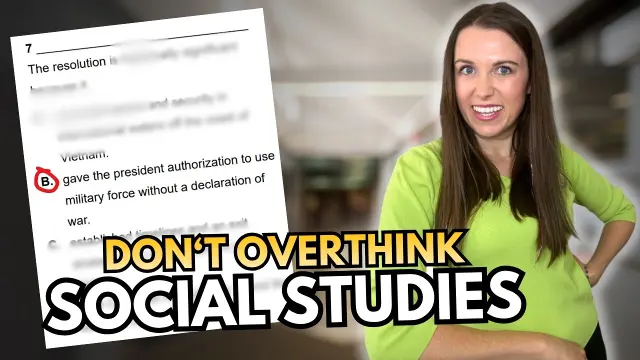
 Step-by-Step Practice for GED and HiSET Social Studies
#HiSET
1 ideas
Step-by-Step Practice for GED and HiSET Social Studies
Get new #HiSET ideas by email
Every Thursday: the week's best ideas, with the newest from #HiSET.
Related tags
HiSET: A Complete Guide to the High School Equivalency Test
If you left high school without a diploma, the HiSET is one of the routes open to you for earning a high school equivalency credential. HiSET stands for High School Equivalency Test. It was developed by the Educational Testing Service as an alternative to the GED, and it is offered in a number of states and jurisdictions, each of which sets its own rules about who may take it and what score counts as passing. The credential you earn is issued by your state, not by the test company, and it is generally accepted by employers, colleges and training programs in much the same way as a diploma.
What the test covers
The HiSET is made up of five separate subtests:
- Language Arts – Reading, which asks you to understand and interpret passages of fiction and nonfiction.
- Language Arts – Writing, which includes multiple-choice questions on grammar, usage and organization, plus an essay you write yourself.
- Mathematics, covering arithmetic, algebra, geometry, data and problem solving, with a calculator permitted on part of the section.
- Science, drawing on life science, earth and space science, and physical science, usually presented through reading, tables and graphs.
- Social Studies, covering history, civics and government, geography and economics.
Read more
Each subtest is scored separately, and most states require you to reach a minimum on every section as well as a satisfactory combined average. The essay is judged on its own scale. Because the standards vary, always check the current requirements for your own state before you register.
Where to begin
Take a practice test before anything else. It tells you which subjects you already handle well and which need real work, and it saves you from studying everything at once. Most people find that they are stronger in some areas than they expected and weaker in one or two specific skills, such as fractions, punctuation or reading charts.
You can usually sit the subtests on different days, so build a schedule around your life rather than trying to do all five in one push. If you are working or caring for family, spreading the sections across several months is a reasonable plan, not a failure.
Practical preparation
Reading widely is the most underrated form of study. Newspaper articles, instructions, recipes, work documents and short stories all build the comprehension you need for the reading, science and social studies sections. For writing, practise short essays with a clear beginning, a few supporting points and a conclusion, and get into the habit of leaving a minute or two to check your own sentences.
For maths, work in small doses and often, and write out each step by hand rather than only reading worked examples. Keep a list of the formulas and rules you keep forgetting, and review that list weekly.
Finally, treat test-day logistics as part of the preparation. Find out where the test centre is, what identification you need and what is allowed in the room, and sleep properly the night before. Being organised removes a surprising amount of the anxiety that has nothing to do with the questions themselves.
#HiSET: frequently asked questions
How do I get started with the HiSET?
Begin by checking the rules for your own state or jurisdiction, since each one decides who may sit the test and what score counts as passing. Then take a practice test before opening a study guide, so you can see which subjects are already solid and which need real work. Register only once you know the requirements that apply to you.
What do I need before I can register?
You will usually need to confirm that you meet your area's age and residency conditions and that you have officially left high school. Expect to show identification at the test centre, so check in advance which documents are accepted and bring the same ones on the day. The rest of the preparation is yours to organise, and a practice test is the only real starting requirement.
Should I take all the sections at once or spread them out?
The sections can normally be scheduled on different days, so building a plan around work or family commitments is entirely reasonable. Many people do better spreading them across several months rather than trying to force everything into one push. Decide based on how much time you can honestly protect for study each week.
What is the best way to prepare for the HiSET?
Read widely and often, since articles, instructions, work documents and stories all build the comprehension the reading, science and social studies sections rely on. For maths, work in short, frequent sessions and write each step out by hand instead of only reading worked examples. Keep a running list of the rules you forget and review it regularly.
How do I know whether I have passed?
Each section is scored separately, and most places require a minimum on every section as well as a satisfactory combined average, with the essay judged on its own scale. Because the thresholds differ from place to place, the only reliable answer comes from your state's current requirements. Check those before you register rather than assuming another state's standards apply to you.
What mistakes should I avoid?
The most common ones are studying everything at once instead of targeting weak skills, and treating test-day logistics as an afterthought. Find out where the centre is, what identification to bring and what is permitted in the room well ahead of time. Skipping a practice test and neglecting sleep the night before are also easy ways to lose ground for reasons that have nothing to do with the questions.
Videos come from YouTube and posts from Instagram; titles and summaries are our own. All rights belong to their creators.