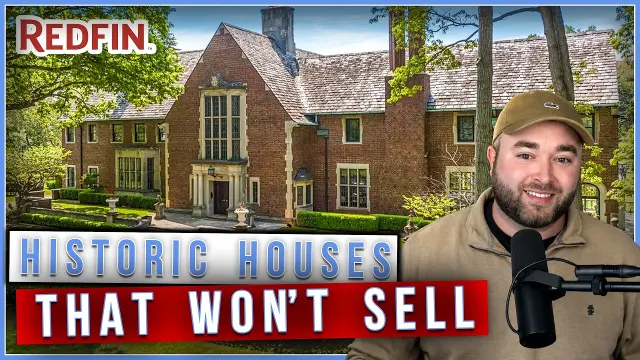
 Architectural Historian Reacts to Unsold Historic Mansions
#Historic Mansions
1 ideas
Architectural Historian Reacts to Unsold Historic Mansions
Get new #Historic Mansions ideas by email
Every Thursday: the week's best ideas, with the newest from #Historic Mansions.
Related tags
Historic Mansions: Grand Homes with Lasting History
Historic mansions are large, often elaborate houses that reflect the taste, status, and craftsmanship of the period in which they were built. They can be found in cities, suburbs, and rural settings, and they often tell the story of a family, a community, or a whole era. Some were built as private residences, while others later became museums, guest houses, event venues, or cultural landmarks.
What makes a mansion historic
A mansion becomes “historic” not just because it is old, but because it has architectural, cultural, or social significance. It may be associated with an important local story, built in a distinctive style, or preserved because it represents a way of life that has largely disappeared. Many historic mansions were designed with formal rooms, grand entrances, tall windows, decorative woodwork, and carefully planned grounds.
These homes often reveal how people lived in earlier times. You may see separate service areas, formal dining rooms, parlors, wraparound porches, servant staircases, or ornate stair halls. Even when the interiors have changed over time, the original structure can still show the values and craftsmanship of its period.
Read more
Common styles you may see
Historic mansions come in many architectural styles, depending on region and era. Some of the most familiar include:
- Georgian and Colonial Revival, with balanced facades and classical details
- Victorian styles, often rich in ornament, color, and varied rooflines
- Neoclassical and Beaux-Arts, inspired by classical European architecture
- Tudor Revival, with steep roofs, decorative timbering, and a storybook feel
- Italianate and other 19th-century styles, with tall windows, brackets, and towers
Each style has its own character, but all tend to emphasize scale, proportion, and detail.
What to notice when you visit or study one
If you enjoy historic mansions, it helps to look beyond the size of the house. Notice the symmetry or asymmetry, the materials used, the shape of the roof, and the decorative features around windows, doors, and ceilings. The layout can also be revealing: grand houses were often designed to impress visitors while keeping everyday work out of sight.
You may also want to observe how the home sits on its land. Formal gardens, carriage drives, terraces, and outbuildings can be part of the original setting and help you understand how the property functioned as a whole.
Preservation and care
Historic mansions require thoughtful preservation. Older homes are often built with materials and methods that need special attention, so repairs should respect the original character whenever possible. Preservation usually means maintaining historic features, using compatible materials, and making changes carefully.
If you live in or admire an older grand home, keep in mind:
- Original details are often worth protecting, even if they seem small
- Routine maintenance is important for roofs, woodwork, windows, and masonry
- Modern updates should be balanced with the home’s historic character
- Alterations are best planned with the whole building in mind
Why they still matter
Historic mansions are more than beautiful houses. They are records of design, workmanship, and social history. Whether preserved as private homes or open to the public, they offer a vivid connection to the past and a reminder that architecture can be both practical and deeply expressive.
Videos come from YouTube and posts from Instagram; titles and summaries are our own. All rights belong to their creators.