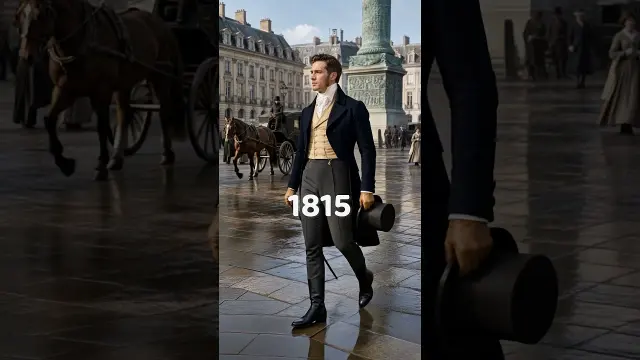
 How Men's Fashion in Paris Changed Across Six Centuries
#Historical Fashion
1 ideas
How Men's Fashion in Paris Changed Across Six Centuries
Get new #Historical Fashion ideas by email
Every Thursday: the week's best ideas, with the newest from #Historical Fashion.
Related tags
A Guide to Historical Fashion
Historical fashion is the study and appreciation of the clothes people wore in earlier periods, from the draped garments of the ancient world to the formal wear of the nineteenth century. It is not simply a list of old costumes. It covers how cloth was made, who could wear which materials, how garments were cut and fastened, and what a person's dress said about their work, wealth, and place in society.
Why clothing changed
For most of history, dress followed the available materials rather than individual taste. Linen, wool, silk, and later cotton each came with their own working methods and costs, and a garment's shape was often dictated by the width of the loom that produced the cloth. Trade routes, agriculture, and craft technique shaped what was possible long before style entered the picture.
Change also came from practical pressures: climate, labour, movement, hygiene, and the requirements of religion and ritual. Sumptuary laws in various places regulated what certain classes were permitted to wear, which tells us that clothing was never only decorative. It was a system of visible signals, and reading it correctly is much of the pleasure of studying it.
Read more
Main periods and styles
Broad labels help beginners find their way, though every period contained enormous regional and social variety.
- Ancient and classical dress: draped, largely unstitched garments shaped by pins, belts, and folds.
- Medieval dress: layers of tunic and hose, with tailoring slowly emerging in Europe.
- Renaissance and early modern: structured bodices, expanded silhouettes, and a growing taste for ornament.
- The long eighteenth and nineteenth centuries: rapid changes in men's tailoring, women's skirt shapes, and the rise of ready-made clothing.
Within each, the differences between a farm worker's clothes and a courtier's were greater than the differences between neighbouring decades.
What beginners should know
Getting started is easier when you focus on construction rather than on names. Learn a few fundamentals of hand sewing, and you will begin to understand why historical garments behave the way they do: why seams sit where they sit, why fastenings appear where they appear, why a bodice is stiffened at all. Reading surviving garments, portraits, and pattern books together gives a far clearer picture than any single source.
Two habits of mind are worth cultivating. First, beware of the word "authentic" used as a sales promise; historical dress varied enormously and few confident generalisations survive contact with real examples. Second, distinguish between what we can document and what we can only reasonably infer. Good historical fashion writing says which is which.
Practical tips
If you are making or studying historical clothing, start with a simple, well-documented garment and work outward from it. Choose natural fibres where you can, since they behave as historical cloth did. Fit your clothes to your own measurements rather than forcing a period silhouette where it does not belong, and wear what you make enough to learn how it moves.
Most of all, treat the field as a study rather than a costume party. The people who wore these clothes lived in them: they worked, ate, grieved, and celebrated in them. Understanding that everyday reality is what turns an interesting shape into a genuine understanding of the past.
#Historical Fashion: frequently asked questions
How should a complete beginner start learning about historical fashion?
Start with construction rather than with period names. Learn a few fundamentals of hand sewing, then look at surviving garments, portraits, and pattern books side by side, since no single source gives a clear picture on its own. Once you understand why seams, fastenings, and stiffening sit where they do, the labels and timelines become much easier to hold onto.
What materials and tools do I actually need to make historical clothing?
Choose natural fibres where you can, because they drape, stretch, and wear the way historical cloth did. Begin with a simple, well-documented garment and let your skills grow outward from it rather than starting with the most elaborate shape you admire. Ordinary hand-sewing tools will carry you a long way before anything specialised is needed.
Which period or style should I choose to focus on?
Pick whatever genuinely holds your attention, then narrow it to one documented garment rather than a whole era. Broad labels are useful for finding your way, but every period contained enormous regional and social variety, and the difference between a labourer's clothes and a courtier's was often greater than the difference between neighbouring decades. Fit the clothes to your own measurements instead of forcing a silhouette that does not suit you.
How do I care for historical-style garments once they are finished?
Natural fibres reward gentle handling, so wash sparingly and store pieces flat or well supported so the weight of the cloth does not pull the shape out. The best care, though, is use: wear what you make enough to learn how it moves, where it strains, and what needs reinforcing. That everyday familiarity is also what teaches you how the original wearers lived in their clothes.
What mistakes do people new to historical fashion make most often?
The commonest is trusting the word "authentic" as a sales promise, when historical dress varied so widely that few confident generalisations survive contact with real examples. Another is blurring what can be documented with what can only be reasonably inferred, which makes it hard to judge a source. And treating the field as a costume party misses the point, since the people who wore these clothes worked, ate, grieved, and celebrated in them.
How can I use historical fashion for an occasion or event?
Choose one well-documented garment suited to the setting and build the rest of the outfit around it, rather than assembling a mixture of decades. Keep to natural fibres and a fit based on your own measurements so the result reads as clothing someone could live in, not a stiff reproduction. Wearing it beforehand to test movement and comfort will do more for how it looks on the day than any last adjustment.
Videos come from YouTube and posts from Instagram; titles and summaries are our own. All rights belong to their creators.