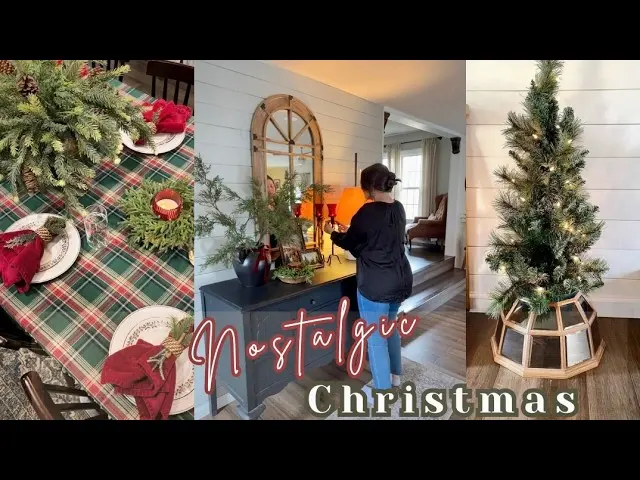
 Thrifted and Antique Christmas Decorating Ideas
#Holiday Inspo
1 ideas
Thrifted and Antique Christmas Decorating Ideas
Get new #Holiday Inspo ideas by email
Every Thursday: the week's best ideas, with the newest from #Holiday Inspo.
Related tags
Holiday Inspiration: Ideas for a Warm, Personal Celebration
Holiday inspiration is the practice of gathering ideas for the season and shaping them into something that suits your own home, budget and family. It is less about copying a particular look than about collecting what moves you — a colour, a smell, a table setting, a way of wrapping a gift — and letting those pieces grow into a celebration that feels like yours. The idea has always existed informally, passed between neighbours and relatives; the modern habit of saving images and clippings simply gives it a place to live.
Where the ideas come from
Most holiday inspiration has humble roots. Handmade ornaments, paper garlands, candles in windows and greenery brought indoors are older than any shop display. Folk traditions vary enormously from country to country — straw stars in one place, gingerbread in another, a particular shape of wreath or a certain way of setting the table — and each carries a story. Learning where a custom comes from often makes it more meaningful to keep, and gives you permission to adapt it rather than reproduce it exactly.
Main directions
Read more
Broadly, holiday styling falls into a few moods. Traditional inspiration leans on evergreen boughs, red and gold, tartan, candlelight and inherited decorations. Natural and rustic inspiration works with bare branches, dried citrus, linen, wooden bowls and foraged finds. Minimal inspiration uses one motif repeated quietly — a single colour, white lights, an unadorned wreath. Nostalgic or vintage inspiration draws on second-hand ornaments, old glass baubles and hand-me-down decorations, which is why thrifted and antique pieces sit so comfortably within it. None of these is better; the point is to recognise which one makes you feel at home.
Working with what you have
Start with what you already own rather than with a shopping list. Unpack the decorations first and notice which ones you actually look forward to seeing. Then choose one area to concentrate on — a mantel, a doorway, a table, a windowsill — because a single well-dressed corner reads more strongly than a little of everything everywhere. Lighting does much of the work: warm, low light flatters almost any arrangement, and a few well-placed candles or a string of small lights can carry a room.
Practical tips for beginners
- Choose a limited palette of two or three colours and stay with it; it makes mismatched pieces look deliberate.
- Group odd numbers of objects and vary their heights so an arrangement feels relaxed rather than staged.
- Mix textures: greenery, glass, wood, wool and paper together feel richer than any one material alone.
- Bring the outdoors in cheaply with clippings, cones, dried fruit or branches.
- Leave some surfaces empty. Space is what lets decoration breathe.
- Involve others. Children's handmade ornaments and a shared afternoon of making are usually remembered longer than anything bought.
Above all, treat inspiration as a starting point, not a standard to meet. A celebration that reflects the people in it — their humour, their food, their slightly crooked decorations — will always feel warmer than one assembled to look perfect.
#Holiday Inspo: frequently asked questions
How do I start with holiday inspiration if I have no clear idea of what I want?
Begin with what you already own rather than with a shopping list: unpack your decorations and notice which pieces you genuinely look forward to seeing. From there, pick one spot — a mantel, a doorway, a windowsill — and concentrate your effort there, since a single dressed corner reads more strongly than a bit of everything spread across the house. Save colours, smells and arrangements that move you as you come across them, and let a direction emerge instead of choosing one in advance.
Which style of holiday decorating should I choose?
Think in terms of mood rather than rules: traditional leans on greenery, tartan and candlelight, natural and rustic works with bare branches and foraged finds, minimal repeats one quiet motif, and vintage draws on second-hand and hand-me-down pieces. None is better than the others — the right one is simply whichever makes you feel most at home when you walk into the room. Your existing decorations usually point to the answer already.
What do I actually need to decorate for the holidays?
Not much beyond lighting and a few textures: warm, low light flatters almost any arrangement, and small lights or candles can carry a whole room on their own. Add greenery, wood, glass, wool or paper for richness, and bring clippings, cones or dried fruit indoors for a cheap natural touch. Keep a limited palette of a couple of colours so mismatched pieces look intentional.
How can I decorate on a tight budget or with things I already have?
Start from your own stored decorations and supplement with what is around you — garden clippings, dried citrus, branches, paper garlands you make yourself. Thrifted and antique ornaments sit comfortably in a nostalgic scheme and often cost very little, and a shared afternoon of making with family tends to be remembered longer than anything bought. Grouping objects in odd numbers at varied heights makes humble pieces look considered.
What mistakes should I avoid when styling a holiday home?
The common slip is buying to a list before looking at what you own, which leaves you with more things and less coherence. Another is filling every surface: leaving some space empty is what lets decoration breathe, and crowding makes even good pieces disappear. Finally, treating inspiration images as a standard to meet rather than a starting point tends to produce a room that looks assembled rather than lived in.
How do I care for and store holiday decorations so they last?
Handle glass baubles and older ornaments gently, keep them from pressing against each other, and wrap fragile pieces individually so they do not knock together in storage. Natural materials such as greenery, dried fruit and branches are best treated as seasonal and replaced rather than kept, since they dry out and shed. Store everything somewhere dry and away from damp, and note what you actually used this year so next year's unpacking starts easier.
Videos come from YouTube and posts from Instagram; titles and summaries are our own. All rights belong to their creators.