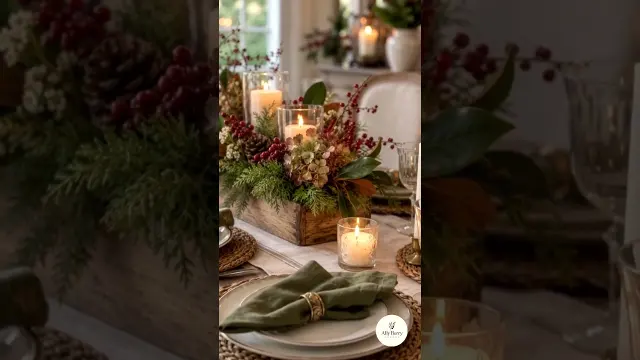
 Rustic Christmas Centerpiece With Cedar and Magnolia
#Holiday Table
1 ideas
Rustic Christmas Centerpiece With Cedar and Magnolia
Get new #Holiday Table ideas by email
Every Thursday: the week's best ideas, with the newest from #Holiday Table.
Related tags
Holiday Table Styling Ideas
What a holiday table is
A holiday table is more than a place to eat. It is a setting for gathering, sharing food, and making a celebration feel special. Whether you are hosting a formal dinner or a simple family meal, the table helps create the mood of the occasion. It can be elegant, rustic, traditional, or relaxed, but its purpose is the same: to bring people together in a warm and inviting way.
Holiday tables have long been part of seasonal celebrations in many cultures. They often reflect local traditions, family customs, and the foods being served. Some tables are built around candlelight and fine dishes, while others use natural greenery, familiar textiles, and everyday plates. There is no single right way to do it.
Common elements of a holiday table
Read more
A well-styled table usually starts with a few basic layers:
- A tablecloth, runner, or placemats to define the space
- Plates, glasses, cutlery, and napkins arranged neatly
- A centerpiece that adds height, color, or texture
- Candles, greenery, flowers, or seasonal objects for atmosphere
- Small finishing touches such as name cards, ribbon, or folded napkins
The best tables feel thoughtful without being crowded. If the table is for eating, make sure there is enough room for dishes and conversation. Beauty should not get in the way of comfort.
Styles you can choose from
Holiday tables can take many forms. A classic look often uses white, gold, silver, deep red, or evergreen tones. A rustic style might include wood, linen, simple ceramics, and natural foliage. A softer look can use pale colors, glass, candles, and delicate flowers. For a more contemporary feel, you might keep the palette limited and focus on clean lines and one or two strong materials.
You can also let the meal guide the table. A family-style feast may suit a generous centerpiece and shared serving pieces. A plated dinner might call for a more structured setting. For breakfast or brunch, the table can feel lighter and more casual, with simple flowers and informal seating.
Practical tips for beginners
If you are new to table styling, begin with what you already have. A few well-chosen pieces often look better than too many decorations. Repeating one color or material can help everything feel coordinated. Natural items such as branches, herbs, fruit, pinecones, or seasonal flowers can add charm without much effort.
A few useful habits:
- Keep centerpieces low enough for people to see one another
- Mix textures for interest, such as linen, glass, ceramic, and wood
- Use candles carefully and never place them too close to anything flammable
- Choose napkins and tableware that suit the meal, not just the look
- Leave breathing room so the table feels calm, not crowded
Making it feel personal
The most memorable holiday tables usually include something personal. That might be a favorite family plate, a handwritten place card, or a simple arrangement made from what you find nearby. The details do not need to be elaborate to feel special. When the table reflects your home and your way of celebrating, it naturally feels more welcoming.
A holiday table is really about atmosphere, care, and hospitality. With a few thoughtful choices, you can create a setting that feels beautiful, comfortable, and ready for the people you love.
#Holiday Table: frequently asked questions
How do I start styling a holiday table without buying everything new?
Begin with the layer closest to the table — a cloth, runner, or placemats — and then build upward with the plates, glasses, and cutlery you already own. Shopping your own cupboards first usually reveals more than you expect, and a small number of well-chosen pieces tends to look better than an overcrowded arrangement. Add the centerpiece and any finishing touches last, once the practical setting is in place.
What do I actually need for a holiday table?
The essentials are simple: something to define each place, the tableware for the meal, and a centerpiece that brings height, color, or texture. Atmosphere comes from candles, greenery, flowers, or seasonal objects, plus small touches like folded napkins or name cards. Comfort matters as much as looks, so leave enough room for serving dishes and for people to talk across the table.
Which style of holiday table should I choose?
Let the meal and your home guide you rather than picking a style in the abstract. A family-style feast suits a generous centerpiece and shared serving pieces, a plated dinner calls for a more structured setting, and brunch feels right with something lighter and more casual. Classic, rustic, soft, and contemporary looks all work — the point is that the table fits how you actually celebrate.
How do I keep a holiday table looking good through the whole meal?
Deal with the practical things before guests arrive: keep candles away from anything flammable, trim and condition fresh greenery so it doesn't wilt onto the setting, and protect linens from hot dishes. Serve from a side surface where possible so the table doesn't fill up with pans and bottles mid-meal. Leaving breathing room at the start is what keeps the table calm later on.
What are common holiday table mistakes?
The most frequent one is over-decorating — too many objects leave no room for the food or for conversation. Tall centerpieces that block eye contact are another common misstep, along with choosing tableware that doesn't suit the meal being served. Repeating a color or material and mixing a few textures usually does more than adding another decoration.
How can I make a holiday table feel personal?
Bring in something that belongs to your own home — a favorite family plate, handwritten place cards, or an arrangement made from branches and greenery you found nearby. The details don't need to be elaborate to read as thoughtful. When the table reflects your customs rather than a picture from somewhere else, it naturally feels more welcoming.
Videos come from YouTube and posts from Instagram; titles and summaries are our own. All rights belong to their creators.