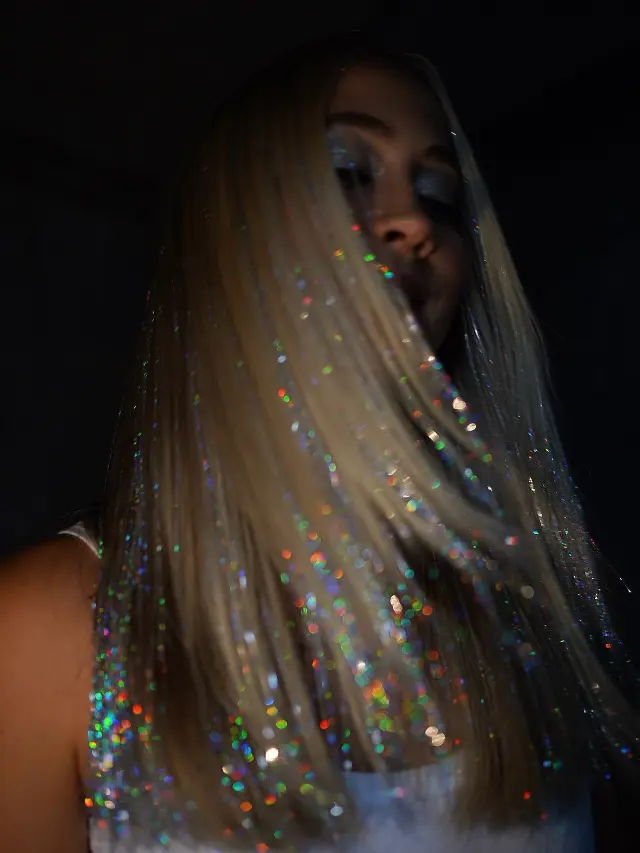
 Holographic hair tinsel installation for a sparkly finish
#Holographic Hair
1 ideas
Holographic hair tinsel installation for a sparkly finish
Get new #Holographic Hair ideas by email
Every Thursday: the week's best ideas, with the newest from #Holographic Hair.
Related tags
Holographic Hair: Iridescent Colour, Tinsel and Care
Holographic hair describes any finish designed to shift colour as light and angle change, the way a hologram or a soap bubble splits white light into a spectrum. Rather than one fixed shade, it reads as several at once: pink tipping into lilac, then blue or pale green, with a metallic sheen over the top. It can be bold and rainbow-bright or soft and pearl-like, and it can be permanent, semi-permanent or gone by bedtime.
Where the idea comes from
The word comes from optics, where a hologram records and reconstructs light so that the image changes depending on where you stand. Hair colourists borrowed the vocabulary because the effect is the same: no single colour, but a surface that answers to movement. Alongside the dye techniques sits an older tradition of hair wrapping and thread work, in which fine metallic strands are knotted into the hair, and it is from that craft that modern hair tinsel descends.
The main ways to wear it
Read more
- Colour. Pastel rainbow blends, "oil slick" gradients built from several tones, or a single iridescent shade with a metallic cast. These usually need the hair lightened first so the tones show true.
- Glosses and toners. A sheer, temporary layer of iridescent tone over already-lightened hair, fading within a few washes.
- Hair tinsel. Very fine metallic strands tied to individual hairs with a small slip knot near the root. Washable, brushable with care, and removable.
- Clip-in extensions, braiding hair and wigs, for a version that requires no commitment at all.
- Temporary sprays, waxes and glitter, for an evening.
What to know before you commit
Iridescent colour is layered, so it takes time. Lightening dark hair enough to hold pastel tones may take more than one appointment, and the result depends on the underlying pigment, so the same formula looks different on different heads. Ask for a strand test rather than choosing from a photograph. Expect the spectrum to soften with washing; the palest tones go first, usually leaving a gentler version behind.
Practical tips
Wash less often, in cooler water, with a gentle sulphate-free shampoo, and rinse thoroughly after swimming. Use heat protection before styling, since lightened hair is more fragile. Tinsel should be tied snugly but not tightly, brushed around rather than through the knot, and retied as the hair grows out. Sleeping on a smooth pillowcase reduces friction. And if you are trying a strong colour, think about how it will look as it fades: an iridescent blend that melts into your natural tone will always wear better than one that ends in a hard line.
The pleasure of holographic hair is that it never sits still. Move your head, and it changes.
#Holographic Hair: frequently asked questions
What exactly is holographic hair, and how do I know if it's what I want?
It's any finish that shifts colour as light and angle change, so you see several tones at once rather than one flat shade — pink sliding into lilac, then blue or a pale green, often with a metallic sheen on top. It can be loud and rainbow-bright or quiet and pearly, which is why it suits very different tastes. If you like colour that reads differently in every photo and every mirror, that's the effect.
What are my options if I'm not ready to commit to dye?
You can wear it for an evening with temporary sprays, waxes and glitter, or for a few washes with a sheer iridescent gloss or toner over already-lightened hair. Hair tinsel — fine metallic strands knotted to individual hairs near the root — is washable, brushable with care and completely removable, and clip-in extensions, braiding hair or a wig give you the look with no change to your own hair at all. Many people start there to see how the colour suits them before booking anything permanent.
Why does iridescent colour take so long, and why does the result vary from person to person?
The effect is built from layers, and the pale pastel tones only show true over hair that has been lightened enough to hold them, which for dark hair can mean more than one appointment. The underlying pigment in your hair also changes how any formula reads, so the same mix lands differently on different heads. Asking for a strand test rather than choosing from a photograph is the reliable way to know what you'll get.
How do I keep the colour looking good after it's done?
Wash less often, in cooler water, with a gentle sulphate-free shampoo, and rinse thoroughly after swimming. Lightened hair is more fragile, so use heat protection before styling and sleep on a smooth pillowcase to cut down on friction. Expect the palest tones to fade first, leaving a softer version of the spectrum behind — and if you choose a strong colour, pick a blend that melts into your natural tone so it fades gracefully rather than ending in a hard line.
How do I look after hair tinsel once it's in?
Tinsel is tied with a small slip knot close to the root, so it should sit snug without pulling — if it feels tight, have it adjusted. Brush around the knot rather than straight through it, and have the strands retied as your hair grows out and the knot drifts down. It handles washing and careful brushing, and it comes out easily when you're done with it.
What's a common mistake people make with holographic hair?
Choosing from a photo instead of how the shade behaves on their own hair, and forgetting to think about the fade. An iridescent blend that dissolves into your natural colour keeps looking intentional for weeks, while one with a sharp edge soon shows a line. Testing first, and planning the in-between stage as carefully as the first day, avoids most disappointment.
Videos come from YouTube and posts from Instagram; titles and summaries are our own. All rights belong to their creators.