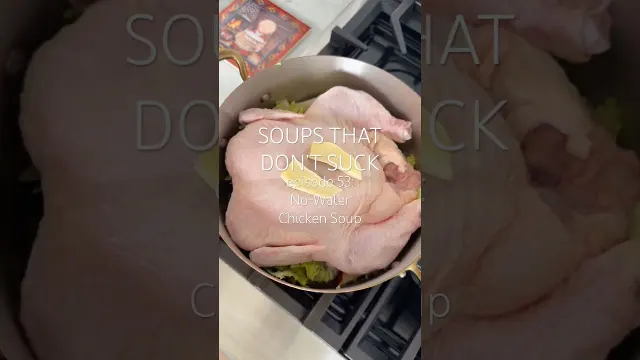
 Unique Waterless Chicken Soup With Natural Broth
#Homemade Broth
2 ideas
Unique Waterless Chicken Soup With Natural Broth
 Turn One Whole Chicken Into Three Different Soups
Get new #Homemade Broth ideas by email
Every Thursday: the week's best ideas, with the newest from #Homemade Broth.
Related tags
Homemade Broth Guide
What homemade broth is
Homemade broth is a flavorful liquid made by simmering meat, poultry, fish, vegetables, herbs, or bones in water. It is one of the oldest kitchen basics, used to build soups, sauces, stews, risottos, gravies, and many everyday dishes. Because it is made slowly and gently, broth captures flavor in a soft, balanced way that is useful in both simple and more elaborate cooking.
Broth has long been part of home cooking in many cuisines. People have traditionally made it from ingredients they already had on hand, especially leftovers such as chicken bones, vegetable trimmings, or herbs. That practical use is still one of its biggest strengths: it helps reduce waste while creating a useful base for many meals.
Broth, stock, and other kinds
Read more
The words broth and stock are often used in similar ways, though some cooks distinguish them. Broth is usually lighter and more seasoned, while stock is often made for depth and body, especially when bones are used. In everyday cooking, the difference is not always strict, and either can work in many recipes.
You can make broth from many ingredients:
- Chicken or other poultry
- Beef or veal bones
- Fish and seafood scraps
- Mixed vegetables
- Mushrooms for a deep, savory flavor
- Herbs and aromatics such as onion, carrot, celery, garlic, bay leaf, and parsley stems
Vegetable broth is a good option when you want a lighter base or prefer not to use meat. Chicken broth is one of the most versatile, while beef broth tends to be fuller and more robust. Fish broth is usually cooked for a shorter time because seafood flavors can become strong quickly.
How it is made
A basic broth starts with water, your main ingredients, and a few aromatics. Everything is brought to a gentle simmer, not a hard boil. Slow simmering helps the broth stay clear and gives the flavors time to infuse. Foam or impurities may rise to the surface at first and can be skimmed off if you want a cleaner result.
Once the broth tastes ready, it is strained to remove the solids. It can be used right away, cooled for later use, or frozen in portions for convenience. If you make broth often, you may find it helpful to keep a container in the freezer for vegetable peels, herb stems, or bones until you have enough to cook with.
Practical tips for beginners
Keep the seasoning light at first. It is easier to add salt later in the dish than to correct an overly salty broth. Use fresh water, a pot large enough to hold everything comfortably, and enough time for the ingredients to release their flavor without rushing.
A few simple tips can help:
- Cut ingredients into roughly similar sizes so they cook evenly
- Use cold water at the start for a more gradual extraction
- Avoid boiling hard, which can make the broth cloudy
- Taste toward the end and adjust carefully
- Strain well for a smoother texture
How to use it
Homemade broth is useful far beyond soup. You can use it to cook rice, grains, beans, and lentils, to loosen pan sauces, or to add depth to braises and vegetable dishes. A good broth gives a dish a fuller taste without needing many extra ingredients.
If you are new to making it, start simple. One pot, a few ingredients, and a gentle simmer are enough. Over time, you will learn which combinations you enjoy most and how strong you like the flavor.
Videos come from YouTube and posts from Instagram; titles and summaries are our own. All rights belong to their creators.