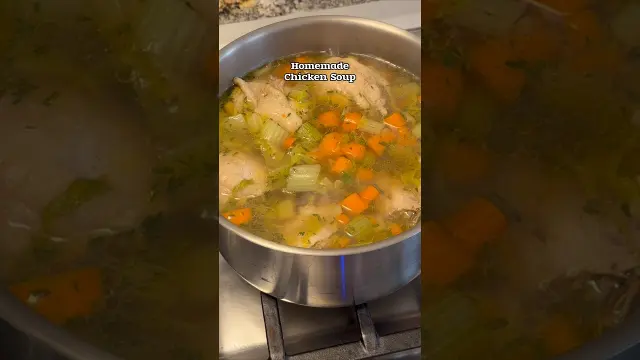
 Simple Homemade Chicken Soup With Fresh Thyme
#Homemade Soup
3 ideas
Simple Homemade Chicken Soup With Fresh Thyme
 Alex Guarnaschelli Go-To Classic Chicken Soup Recipe
 Homemade Cream Of Chicken Soup From Scratch
Get new #Homemade Soup ideas by email
Every Thursday: the week's best ideas, with the newest from #Homemade Soup.
Related tags
Homemade Soup: A Warm Guide to Making It Well
Homemade soup is one of the simplest and most rewarding dishes you can make. At its heart, soup is a mixture of liquid, vegetables, grains, legumes, meat, fish, or pasta, gently cooked together so the flavours blend. It has been part of home cooking in many cultures for centuries because it makes good use of basic ingredients, stretches a meal, and is easy to adapt to what you have available.
What homemade soup is
Soup can be light and clear, thick and creamy, smooth and blended, or chunky and rustic. Some soups are built on a broth or stock, while others begin with vegetables cooked slowly in a little fat to build flavour. Many traditional soups start with simple pantry ingredients and become something comforting through patient cooking rather than complicated technique.
You can make soup from almost any combination of ingredients, which is part of its appeal. A few vegetables, a handful of herbs, leftover cooked meat, beans, lentils, or grains can all become a satisfying bowl. It is also a good way to use seasonal produce, though homemade soup does not need to follow the seasons to be useful.
Read more
Main styles of soup
There are several common styles you may want to know:
- Clear soups, which are based on broth or stock and often include vegetables, noodles, or small dumplings.
- Vegetable soups, which may be chunky or blended and rely on the natural sweetness and texture of vegetables.
- Puréed soups, which are cooked until soft and then blended smooth.
- Cream-style soups, which are made richer with milk, cream, or a similar ingredient, though they can still be light if handled carefully.
- Bean, lentil, and grain soups, which are hearty and filling.
- Meat or poultry soups, which often use stock, simmered meat, and aromatic vegetables.
Basic methods and good habits
Most soups begin with an aromatic base such as onion, garlic, celery, or carrot cooked gently until soft. From there, you add liquid and the main ingredients, then simmer until everything is tender and the flavour has developed.
A few practical tips help a lot:
- Cut ingredients into similar sizes so they cook evenly.
- Add delicate vegetables later so they do not turn mushy.
- Taste near the end and adjust with salt, herbs, or a little acid such as lemon juice or vinegar if needed.
- If you want a thicker soup, blend part of it, mash some of it, or add ingredients like potatoes, beans, or grains.
- If you want a lighter soup, keep the broth clear and avoid overcooking.
What beginners should know
If you are new to homemade soup, start simple. Use a short ingredient list and focus on one main flavour, such as chicken, tomato, lentil, or vegetable. Soup does not need to be elaborate to be satisfying. In fact, it often improves when you keep it straightforward.
Pay attention to seasoning in layers rather than all at once. Ingredients release flavour as they cook, so a final taste check matters. Also, remember that soup usually tastes better after it has rested a little, once the flavours have settled.
Serving and storing
Homemade soup is often served with bread, rice, crackers, or a simple salad, but it can also stand alone as a light meal. Let it cool safely before storing, and keep it covered in the refrigerator for a short time or freeze it if you want to save it longer. If the soup thickens after standing, you can loosen it with a little water or broth when reheating.
With a few good ingredients and a gentle hand, homemade soup can become one of the most dependable dishes in your kitchen.
Videos come from YouTube and posts from Instagram; titles and summaries are our own. All rights belong to their creators.