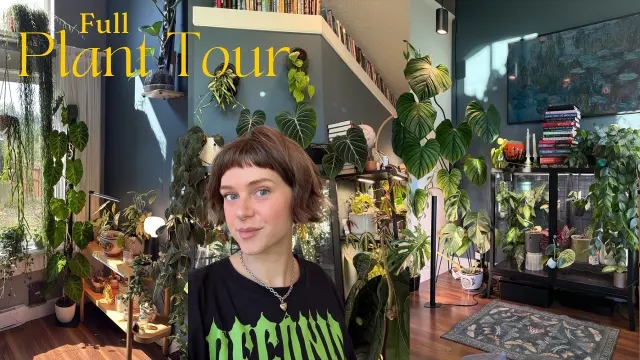
 Full Tour of a 150-Plant Houseplant Collection in a Small House
#Hoya
1 ideas
Full Tour of a 150-Plant Houseplant Collection in a Small House
Get new #Hoya ideas by email
Every Thursday: the week's best ideas, with the newest from #Hoya.
Related tags
Hoya: A Guide to Growing Wax Plants at Home
Hoya is a large group of tropical evergreen vines grown for two things at once: thick, glossy foliage and clusters of small, star-shaped flowers that look almost as if they were cut from wax. That waxy quality is why the group is commonly called wax plants. Most are slow, well-mannered growers with a trailing or climbing habit, which makes them unusually adaptable indoors — happy in a hanging pot by a window, wrapped around a hoop, or trained up a trellis.
Where they come from
Hoyas are native to tropical and subtropical Asia, Australia and the Pacific islands. In the wild many grow as epiphytes, rooting in moss and leaf litter on tree branches high in the canopy rather than in soil on the ground. This tells you a great deal about how to keep them: they want air around their roots, plenty of light filtered through leaves, and warmth all year.
Leaves and flowers
Read more
The leaves are the reason many people start collecting. They can be narrow and needle-like or broad and fleshy, plain green, silver-flecked, or edged and splashed with cream and pink. Some are fuzzy; a few are almost round.
The flowers appear in rounded clusters called umbels, opening from short, knobby stalks known as spurs. Many are intensely fragrant, especially in the evening, and most release a drop or two of clear nectar. Each cluster lasts a short while, but the spur stays behind and can bloom again — so resist the urge to tidy it away.
- Hoya carnosa and its variegated forms: the classic, tolerant wax plant
- Hoya kerrii: thick heart-shaped leaves, often sold as a single rooted leaf
- Hoya bella: small leaves and flowers, lovely in a hanging pot
- Hoya linearis: trailing stems of soft, needle-like foliage
Getting the basics right
Light is the difference between a plant that merely survives and one that flowers. Bright, indirect light suits most hoyas, and a little gentle morning sun is welcome. A position that is too dim gives you long, pale growth and no blooms.
Water when the top of the potting mix has dried, then water thoroughly and let the excess drain away. Never leave the pot standing in water; hoyas rot quickly when their roots stay wet. A chunky, airy mix — something with bark, perlite or coco chips — is far better than dense compost, and a pot with drainage holes is essential.
Average room warmth is fine, but keep plants away from cold draughts and radiators. Humidity helps the tropical species; a bathroom with good light or a group of plants clustered together will often do.
A few practical tips
Hoyas bloom best when slightly pot-bound, so repot only when the roots have filled the pot. Feed lightly during the growing season rather than heavily. When a plant is in bud, leave it where it is — moving it can make the buds drop.
Check the undersides of leaves and the joins between stems for mealybugs, which are the most common pest, and wipe them away when you spot them. The sap is milky, so wash your hands after pruning and keep plants out of reach of pets and small children who might chew them.
Propagation is straightforward: take a cutting with a couple of leaves and a node, root it in water or a light mix, and pot it on once roots appear.
#Hoya: frequently asked questions
What exactly is a hoya, and why is it called a wax plant?
Hoyas are tropical evergreen vines grown both for their thick, glossy leaves and for clusters of small star-shaped flowers. The blooms have a smooth, waxy look and often release a drop of clear nectar, which is where the common name comes from. In the wild many of them grow on tree branches rather than in soil, rooting into moss and leaf litter high in the canopy.
Which hoya is the best one to start with?
The classic wax plant and its variegated forms are the most forgiving choice, tolerating ordinary room conditions and bouncing back from the odd mistake. If you want something smaller for a hanging pot, look for a compact type with fine leaves and little flowers. Heart-leaf types are charming but often sold as a single rooted leaf, which will stay decorative rather than grow into a full vine, so buy one with a stem if you want it to climb.
What kind of light and watering does a hoya actually need?
Bright, indirect light is the key to both healthy leaves and flowers, with a little gentle morning sun being welcome. Water only once the top of the mix has dried, then soak it well and let the surplus drain away completely. A chunky, airy potting mix and a pot with drainage holes matter more than any schedule, since these plants rot quickly if their roots sit wet.
My hoya grows plenty of leaves but never flowers. What am I doing wrong?
The usual culprit is not enough light, which gives you long, pale, leafy growth and no blooms at all. These plants also flower best when slightly pot-bound, so repotting into a bigger container too often can keep them in permanent leaf-making mode. Once buds appear, leave the plant where it is, because shifting it can cause the buds to drop.
Why does my hoya have bare knobby stalks left after flowering, and should I cut them off?
Those short knobs are called spurs, and the flowers emerge from them again in future seasons. Trimming them away for tidiness costs you the next round of blooms, so the best habit is to leave them alone. Just remove spent petals and any fallen nectar, which can otherwise mark leaves or furniture.
What mistakes do new hoya growers most often make?
Overwatering in dense compost is the biggest one, followed by keeping the plant in a dim corner and expecting flowers. Watch the undersides of leaves and the joints between stems for mealybugs, which are the most common pest, and wipe them off as soon as you notice. Finally, bear in mind that the sap is milky, so wash your hands after pruning and keep the plant out of reach of pets and small children.
Videos come from YouTube and posts from Instagram; titles and summaries are our own. All rights belong to their creators.