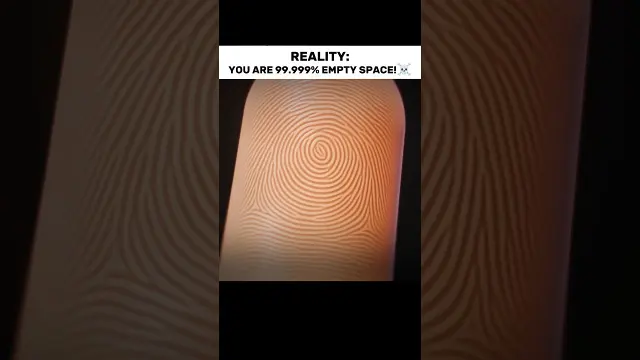
 Why the Human Body Is Almost Entirely Empty Space
#Human Body
2 ideas
Why the Human Body Is Almost Entirely Empty Space
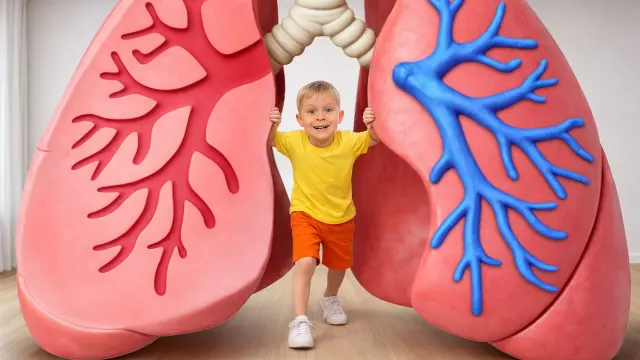 Kids Learn How the Body Works and Build Healthy Habits
Get new #Human Body ideas by email
Every Thursday: the week's best ideas, with the newest from #Human Body.
Related tags
The Human Body: Anatomy, Art and Everyday Care
The human body is the physical organism each of us lives in: a single connected whole, built from parts that only make sense together. Understanding it a little — its structure, its systems, the way it is depicted in art and teaching — makes the subject less abstract and far more interesting to look at.
What it is made of
Anatomy describes structure; physiology describes function. The body is organised in layers: cells gather into tissues, tissues form organs, and organs work in systems. A skeleton gives shape and support, muscles pull on it to create movement, skin wraps and senses, blood carries and delivers, lungs exchange gases, the gut takes in and breaks down food, nerves carry signals, and hormones coordinate slower changes over time. No system works alone, which is why diagrams of the body so often look like maps of trade routes rather than lists of parts.
How the body has been pictured
Read more
Depicting the body is one of the oldest visual traditions there is, and it has produced several distinct genres worth knowing.
- Anatomical illustration, where accuracy matters more than beauty: cross-sections, layered diagrams, and the écorché figure, shown without skin so the muscles beneath are visible.
- Life drawing, where an artist works from a living model and learns proportion, weight and gesture rather than named parts.
- Classical proportion, the old convention that measures the figure in head-lengths and relates it to simple geometry. Useful as a scaffold, never as a rule about real people.
- Medical and scientific imaging, which shows the body as slices, signals and densities rather than outlines.
- Children's diagrams, simplified on purpose — big bright organs, arrows for flow — and often the version most of us remember.
Where a beginner should start
Learn the large masses first — head, ribcage, pelvis — and only then the limbs that join them. Look for the bony landmarks you can actually feel through the skin: the collarbone, the point of the elbow, the kneecap, the ankle bone. They anchor everything else. Draw short poses to catch gesture before detail, and sketch hands and feet often, since they are where attention usually fails first. Photographs help, but a mirror or a living model teaches more.
Everyday care
Steady habits do more than dramatic ones: sleep you can rely on, varied meals, water through the day, movement you genuinely enjoy, daylight, and breaks from long stretches in one position. Bodies differ enormously, so treat any general advice as a starting point rather than a prescription, and take persistent discomfort or worry to a qualified professional rather than working it out alone.
#Human Body: frequently asked questions
How should a complete beginner start learning about the human body?
Start with the big shapes rather than the fine details: the head, the ribcage and the pelvis, then the limbs that attach to them. Feel the landmarks you can locate through your own skin — collarbone, elbow, kneecap, ankle — because they give you fixed points to build everything else around. Once those feel familiar, you can add systems and names without getting lost.
Is it better to study anatomy from books or from a live model?
They teach different things, so ideally you use both: books and diagrams give you names and structure that a model cannot show, while a person in front of you teaches proportion, weight and gesture. A mirror works well as a stand-in when no model is available. Photographs are useful too, but a living body shows you how movement flows through the figure.
Which style of body depiction should I choose — anatomical illustration or life drawing?
Choose by purpose: anatomical illustration is for showing how structure actually works, so accuracy beats prettiness, while life drawing is about capturing proportion and gesture from a living person. Many artists keep both in their practice, using one to understand and the other to observe. Try a short session of each and notice which one holds your attention longer.
What are the common mistakes people make when drawing the body?
The usual one is jumping to facial features and fingers before the large masses are placed correctly, which makes everything above them drift. Hands and feet get avoided because they are hard, and then they become the weakest part of the drawing, so sketch them often and early. Working only from flat photographs is another trap, since it hides the depth you would see from a model.
How can I look after my body without turning it into a rigid routine?
Reliable everyday habits tend to matter more than intense efforts: sleep you can count on, varied meals, water through the day, daylight, and movement you actually enjoy rather than endure. Bodies vary enormously, so treat general guidance as a starting point and adjust it to what suits you. If something persists or worries you, take it to a qualified professional instead of trying to solve it alone.
How do I make the human body interesting for children?
Children respond to simplified diagrams with big bright organs and arrows showing flow, which is why that style sticks in memory. Pair the picture with a simple habit conversation — sleep, food, movement, washing hands — so the diagram connects to something they do. Building healthy routines early is easier when the explanation is visual and the tone is curious rather than instructive.
Videos come from YouTube and posts from Instagram; titles and summaries are our own. All rights belong to their creators.