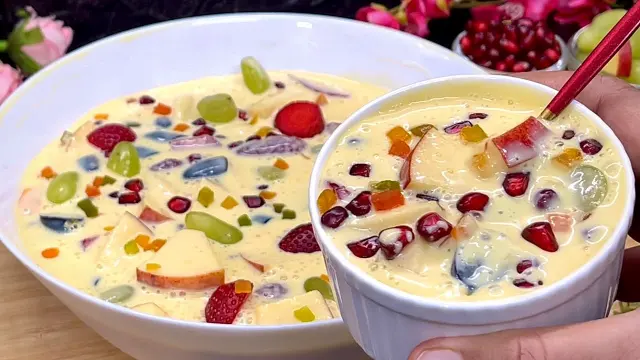
 Ramzan Special Creamy Fruit Custard Recipe
#Iftar Dessert
1 ideas
Ramzan Special Creamy Fruit Custard Recipe
Get new #Iftar Dessert ideas by email
Every Thursday: the week's best ideas, with the newest from #Iftar Dessert.
Related tags
Iftar Dessert Ideas: Sweet Traditions for Breaking the Fast
Iftar is the meal that ends the daily fast during Ramadan, and it carries a rhythm of its own: water and dates first, then something warm, then the dishes that make the table feel like a celebration. Dessert is rarely an afterthought at that table. For many families it is the part everyone plans around, and the sweets served after sunset have become one of the most recognisable corners of Islamic food culture.
The reasons are partly practical and partly cultural. After a long day without food, something sweet is a gentle way to bring the body back to eating, and dates — the traditional first bite — set that tone. From there, each region built its own vocabulary. In parts of the Middle East and North Africa, syrup-soaked pastries and cheese desserts such as kunafa share the table with semolina cakes and nut-filled sweets. In South Asia, iftar is unthinkable without sheer khurma, a milk and vermicelli pudding with dates and nuts, alongside jalebi, gulab jamun and fruit custards. In Turkey and the Levant, flaky pastry layers and milk puddings appear; in West Africa, millet and rice-based porridges and fried doughs take the role; in Southeast Asia, colourful layered cakes and sweet drinks round off the meal.
What these desserts have in common is a few simple building blocks: milk, sugar or syrup, grains or flour, dried fruit and nuts, and warm spices such as cardamom, saffron and cinnamon. Once you recognise those, the recipes stop looking foreign. There are three broad families worth knowing. Milk-based puddings, from rice pudding to custard to sheer khurma, are stirred on the stove and served chilled. Fried sweets, such as luqaimat, jalebi or small doughnuts, are dropped into hot oil and then soaked in syrup. And baked or layered pastries and semolina cakes, like baklava or basbousa, are built from thin sheets or coarse semolina and finished with sugar syrup.
If you are new to making them, start with a milk pudding. They forgive small mistakes, need no special equipment, and can be made a day ahead — a real advantage when the evening is busy. A few habits help with everything else. Let hot syrup meet cooled pastry, or the layers turn soft instead of crisp. Add rose water or cardamom off the heat so the perfume survives. Taste fruit-based desserts before adding all the sugar, since ripe fruit does much of the work. And serve small portions: iftar tables are generous, and a little of something rich goes far.
Read more
Balance matters too. Offer fresh fruit, dates stuffed with nuts, or a light yogurt-based sweet next to the heavier ones, and keep water and cool drinks close by. The point of the iftar dessert is not abundance for its own sake but the pleasure of a shared, unhurried table after a long day.
#Iftar Dessert: frequently asked questions
How do I start making iftar desserts if I have never made one before?
Begin with a stirred milk pudding such as rice pudding, custard or sheer khurma, because it tolerates small slips and needs no special equipment. These can also be cooked ahead and chilled, which takes pressure off a busy evening. Get comfortable with that rhythm before moving on to fried or layered sweets.
What basic ingredients and equipment should I keep on hand?
Most of these sweets are built from milk, sugar or syrup, grains or flour, dried fruit and nuts, and warm spices like cardamom, saffron and cinnamon. Beyond those, a heavy pan for stirring puddings and a wide pot for frying cover nearly everything. Thin pastry sheets and coarse semolina are worth having once you move on to baked and layered desserts.
Which kind of iftar dessert should I choose for my table?
Think in families rather than individual recipes: chilled milk puddings, syrup-soaked fried sweets, and baked or layered pastries and semolina cakes. A pudding suits a table that already has rich fried food, while a crisp pastry works well when the rest of the meal is light. Many hosts serve a small amount of something heavy alongside fresh fruit or a yogurt-based sweet to keep the table balanced.
How should I store and serve these desserts so they stay at their best?
Milk-based puddings are happiest made ahead and kept chilled, with nuts and fruit folded in shortly before serving. Fried sweets and layered pastries lose their character quickly, so syrup them close to the meal and keep them away from moisture. Add rose water or cardamom off the heat so the perfume is not cooked away.
What are common mistakes people make with iftar sweets?
Pouring hot syrup over warm pastry is the usual culprit behind layers that turn soft instead of staying crisp. Adding all the sugar to a fruit dessert before tasting it is another, since ripe fruit already carries plenty of sweetness. Serving very large portions is the last one to watch, as a little of something rich goes a long way after a day of fasting.
Any ideas for a celebration table or for feeding a crowd?
Set out a couple of contrasting sweets rather than many similar ones, such as a creamy pudding beside a crisp syrup-soaked pastry or a semolina cake. Stuff dates with nuts, add fresh fruit and keep cool drinks within reach so guests can move between rich and light. A creamy fruit custard is a friendly centrepiece that scales easily and can be assembled ahead.
Videos come from YouTube and posts from Instagram; titles and summaries are our own. All rights belong to their creators.