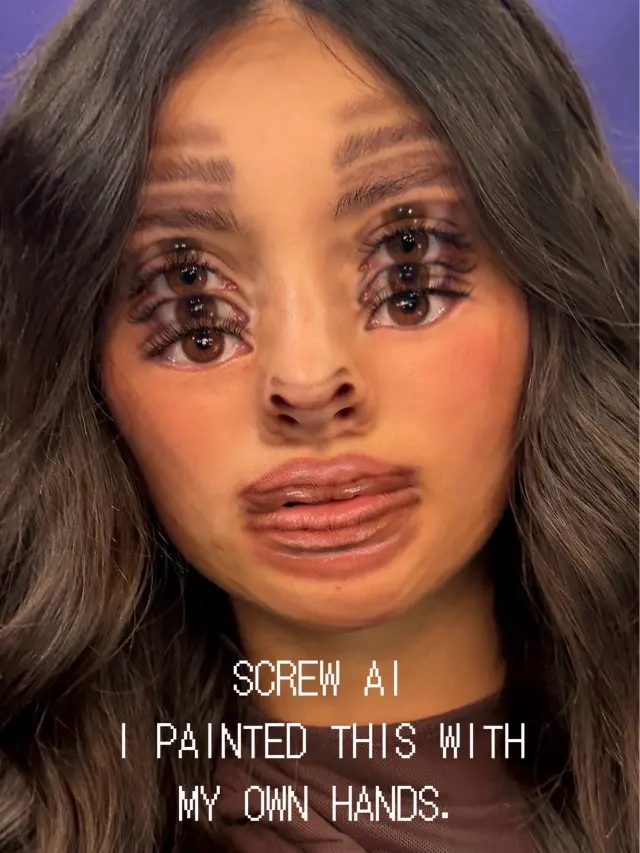
 Behind-the-scenes look at a spontaneous surreal illusion makeup transformation
#Illusion Makeup
1 ideas
Behind-the-scenes look at a spontaneous surreal illusion makeup transformation
Get new #Illusion Makeup ideas by email
Every Thursday: the week's best ideas, with the newest from #Illusion Makeup.
Related tags
Illusion Makeup: A Beginner's Guide to Painted Trickery
Illusion makeup is face and body paint used to make the eye see something that is not there — a hole in the cheek, a floating head, a mouth that disappears, a second face drawn in profile along the jaw. It borrows the old tools of drawing and stage makeup and bends them around a three-dimensional, moving surface. The result is judged not in a mirror but in a picture, which changes almost everything about how it is made.
Where it comes from
The ingredients are older than the name. Theatrical makeup has shaded and reshaped faces for the stage for centuries, and body painting traditions around the world have long treated skin as a surface for pattern and story. Film and television effects added the discipline of sculpting light and shadow to fake volume. Illusion makeup as you meet it today sits where those meet social photography: paint made to be looked at straight on, at one angle, from one side of a lens.
The main kinds
Read more
- Trompe-l'œil features: drawn-on eyes, mouths, zips, seams or buttons placed where a real feature should be.
- Displacement and distortion: a face slid sideways, doubled, split, or stretched, often using the natural symmetry of the head against itself.
- Cutouts and voids: dark shapes painted to read as gaps, missing sections or empty space.
- Broken-doll and fragmented styles: cracks, seams and peeling effects that suggest the face is an object.
- Body-and-backdrop matching: paint blended into a wall, fabric or background so the subject seems to dissolve.
The principles underneath
Almost all of it rests on three habits. First, decide where the light is coming from and keep it consistent — shadows on one side of every invented shape, highlights on the other. Second, think in values before colour: whether a shape reads as raised or hollow depends on how dark and light sit next to each other, not on hue. Third, respect the map of the face. Your real nose, brow and jaw will cast their own shadows; the painting has to agree with them or the trick collapses.
What beginners should know
Start with one illusion and one reference photograph, and work from a printed or on-screen image rather than from memory. Sketch the shape on paper first so you know where its edges fall. Photograph as you go — a phone camera at eye level shows you what the paint actually does, which the mirror cannot. Keep your light soft and in front of you, and avoid overhead light, which drops shadows that fight your drawing.
Practical tips
Work thin and build up; heavy layers crack and smudge. Use a small brush for edges and a sponge for blending. Set the paint if you plan to move around, and test anything near the eyes on a small patch of skin first. Finally, be kind to yourself about the camera: this art is designed to look wrong from every angle except one, so a strange result in real life is not a mistake — it is how the trick works.
#Illusion Makeup: frequently asked questions
How do I get started with illusion makeup?
Begin with a simple trick and a reference photograph you can look at while you paint, rather than working from memory. Sketch the shape on paper first so you know where its edges land, then build the paint up slowly in thin layers. Photographing yourself as you go shows you what the paint actually does, which is something a mirror can't tell you.
What do I need to paint an illusion on my face?
Face and body paint you can blend, a small brush for crisp edges and a sponge for softening transitions. Soft, even light placed in front of you matters as much as the paint, because the trick depends on consistent shadow and highlight. Keep your reference image within sight and have something to take photos with.
Which kind of illusion makeup should I choose?
Match the style to the effect you want to capture: drawn-on features and painted cutouts are the most forgiving to begin with, while displacement, doubled faces and broken-doll styles ask for more control of symmetry. Blending yourself into a wall or backdrop is the most ambitious, since it needs a setting that cooperates. Whatever you pick, decide where the light is coming from and keep it consistent across every invented shape.
Should I test the paint before using it on my face?
Yes — try anything you plan to put near your eyes on a small patch of skin first, and keep paint out of the eye itself. Remove it gently with a remover suited to the product rather than scrubbing at your skin, and give your face a rest afterwards. Setting the paint helps it survive a shoot, but it doesn't make it something to sleep in.
What mistakes do beginners make with illusion makeup?
Overhead light is the usual culprit, dropping shadows that fight the drawing you have just made. Laying the paint on thick is another, since heavy layers crack and smudge instead of blending. Judging the result in a mirror rather than through a camera is the last big one: this art is built to look wrong from every angle except the one the lens sees.
What are good illusion makeup ideas for a party or a photo shoot?
Drawn-on features, cracks and peeling effects, or a face split and slid sideways all read clearly in a photograph and work well as a first project. Matching your paint to a background so you seem to dissolve is a striking choice when you control the setting. A spontaneous surreal transformation captured behind the scenes is also fun, because the reveal becomes part of the effect.
Videos come from YouTube and posts from Instagram; titles and summaries are our own. All rights belong to their creators.