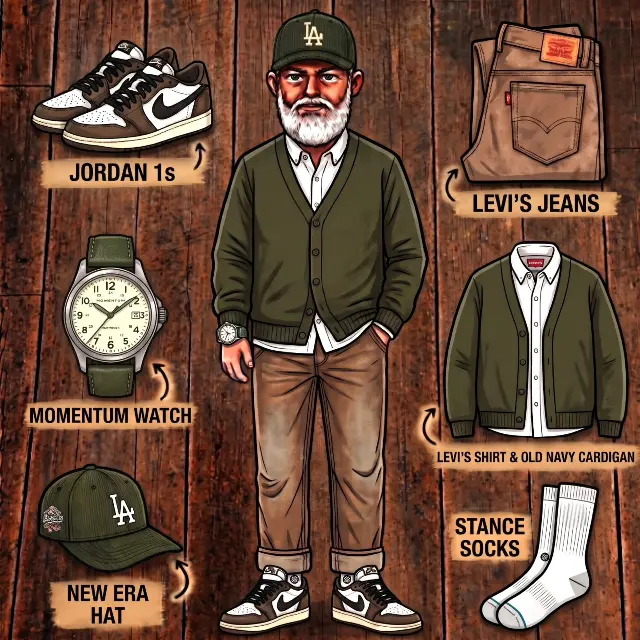
 Cartoon-style illustrated outfit inspiration for a playful everyday look
#Illustrated Fashion
1 ideas
Cartoon-style illustrated outfit inspiration for a playful everyday look
Get new #Illustrated Fashion ideas by email
Every Thursday: the week's best ideas, with the newest from #Illustrated Fashion.
Related tags
Illustrated Fashion: A Beginner's Guide to Drawing Style
Fashion illustration is the art of drawing clothes, bodies and attitude instead of photographing them. Where a photograph records what was worn, an illustration shows how it felt to wear it: a lifted chin, a swaying hem, a sleeve caught mid-gesture. That freedom is why the form has survived every change in how fashion is sold and shown.
Where it comes from
Long before cameras, drawings were how garments travelled. Fashion plates — small, carefully coloured prints of dresses and suits — circulated among dressmakers, tailors and their clients so a silhouette invented in one city could be copied in another. Illustrated magazines carried the same work into ordinary homes. When photography became cheap and quick, drawing lost its practical job, but it never disappeared, because a drawing can exaggerate, simplify and dream in ways a lens cannot. Today illustration sits happily alongside photography, used for editorial pages, packaging, textiles, invitations and personal sketchbooks.
The main kinds
Read more
- Editorial illustration: expressive, loose and character-driven, often built around a mood rather than an accurate garment.
- Technical drawing: flat, precise sketches of a garment with seams, darts and proportions, used to communicate a design to someone who will make it.
- Cartoon and character illustration: stylised figures with big heads, bold shapes and playful proportions, loved for outfit ideas and storytelling.
- Mixed media and collage: drawing combined with cut paper, fabric scraps or digital brushes for texture.
What beginners should know
Almost every illustrator starts with the croquis, the quick figure sketch that clothing is built on. Traditional fashion figures are drawn tall and elongated, with the leg line lengthened and the shoulders broadened, so a garment reads clearly. You do not have to follow that convention, but it helps to try it once, because it teaches you to see the body as a structure of simple shapes.
Start with a pencil and a light hand. Block in the pose with a single flowing gesture line before you add any detail, then build the outfit shape by shape. Fabric is the second skill: practise how cotton falls stiffly, how jersey clings, how a coat swings. Copy from photographs until the shapes feel familiar, and keep a sketchbook of silhouettes you notice in the street.
Practical tips
- Work small and often; ten quick sketches teach more than one laboured drawing.
- Limit your palette to three or four colours so the drawing stays coherent.
- Draw the pose first and the clothing second; a good stance carries a simple outfit.
- Exaggerate one thing only — a shoulder, a hem, a sleeve — and let the rest stay quiet.
- Keep your early sketches. They are the clearest record of how your eye is changing.
Illustrated fashion asks for curiosity more than talent. Draw what you actually see, then draw it a little braver.
#Illustrated Fashion: frequently asked questions
How do I start with fashion illustration if I've never drawn figures before?
Begin with the croquis, the quick gesture sketch of a figure that clothing is built around. Draw the stance first with a single flowing line and only then block in the outfit shape by shape, working small and often rather than labouring over one finished drawing. Copying poses from photographs is a normal way to train your eye until the shapes feel familiar.
What supplies do I actually need to begin?
A pencil and a sketchbook are enough to start, with a light hand so early lines stay easy to adjust. As you go you can add colour, cut paper, fabric scraps or digital brushes, but texture and colour variety matter far less than regular practice. Keep a small book of silhouettes you notice so you always have something to draw from.
Which kind of illustrated fashion should I choose?
It depends on what the drawing is for: expressive editorial work carries a mood, technical drawing communicates seams and proportions to whoever will make the garment, and cartoon or character styles suit playful outfit ideas and storytelling. Mixed media and collage work well when you want texture rather than accuracy. Try more than one and notice which feels natural in your hand.
How do I look after an illustrated piece, like a print or a garment with drawn motifs?
Keep paper works out of direct sunlight and store them flat or framed, since light and damp are what dull drawn surfaces over time. For anything printed or embroidered on fabric, wash gently and turn the piece inside out so the surface is protected from rubbing. When in doubt, follow the care label or the maker's own guidance rather than guessing.
Where can I use illustrated fashion for a special occasion?
Illustrations work beautifully for invitations, menus, place cards and save-the-dates, where a drawn dress or figure sets a mood faster than a photograph. They also suit wedding stationery, packaging for gifts and personal sketchbook records of outfits worn on the day. Drawing one exaggerated detail, like a sleeve or a hem, keeps the piece lively without cluttering it.
What mistakes do beginners make most often?
The common ones are drawing the clothing before the pose is settled, and trying to render every fold and detail at once. Exaggerating everything flattens a drawing, so pick one feature to push and let the rest stay quiet, and limit your palette so the image holds together. Keeping your early sketches is worth it, because they show plainly how your eye is changing.
Videos come from YouTube and posts from Instagram; titles and summaries are our own. All rights belong to their creators.