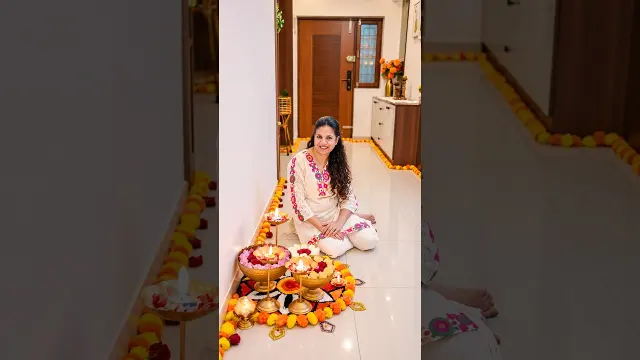
 Complete Festive Home Makeover for Diwali Celebrations
#Indian Decor
1 ideas
Complete Festive Home Makeover for Diwali Celebrations
Get new #Indian Decor ideas by email
Every Thursday: the week's best ideas, with the newest from #Indian Decor.
Related tags
Indian Decor: A Guide to Colour, Craft and Character
Indian decor is less a single style than a way of filling a home with things made by hand. It grows out of a long craft tradition in which ordinary objects — a water pot, a bed, a lamp — are also decoration, and where colour is used generously rather than sparingly. Because India holds many regions, climates and communities, there is no one correct look; what ties it together is an affection for texture, pattern and the visible mark of the maker.
The main elements
Certain pieces recur. Carved or turned wooden furniture, low seating and woven charpai-style cots. Metalwork in brass and copper, often hammered or engraved, used for lamps, trays and vessels. Terracotta pots and tiles. Flatwoven dhurrie rugs and layered cotton textiles. Carved window screens and arched niches that frame a view rather than close it off. At doorways, a toran — a hanging garland of fabric, beads or mango leaves — welcomes guests, while floor drawings made from powder, rice paste or flower petals mark festivals and thresholds.
Textile work is where the variety shows most. Block printing with hand-carved wooden blocks, tie-and-dye resist patterns, embroidered mirror work, running-stitch quilting, counted-thread embroidery in strong silks: each is a regional language of its own.
Read more
Colour and pattern
The palette tends toward saturated colour — indigo, turmeric yellow, deep red, emerald, ochre — set against warm neutrals of mud, sand and off-white. Pattern is layered boldly, and mismatched prints often sit happily together. If that feels like a lot, the rule is to keep the walls and floors calm and let the textiles do the talking.
Where to begin
Start with one piece you genuinely love: a rug, a rug-sized textile, a brass lamp, a carved chest. Build the room around it in a muted base colour. Add a second and third element that share a material or a hue, so the eye finds a thread running through. Mixing handmade with plain, modern things keeps a room from feeling like a museum.
Practical tips
- Buy fewer, better things, and favour pieces whose making you can see.
- Rotate textiles with the seasons rather than storing them away.
- Dust brass and copper with a soft dry cloth; keep them away from prolonged damp.
- Wash block-printed and dyed cotton cold and separately at first, and dry it in shade.
- Use warm, low light — lamps and candles — to bring out the glow of metal and the depth of colour.
- Hang a toran or a textile on a plain wall; empty space makes pattern read more clearly.
Above all, Indian decor rewards use. Let the cushions be sat on, the trays be carried, the lamps be lit.
#Indian Decor: frequently asked questions
How do I start decorating my home in an Indian style without redoing everything?
Begin with a single handmade piece you honestly love — a flatwoven rug, a brass lamp, a carved chest — and build the room around it against calm, muted walls. Then add a couple more elements that share a material or a colour with it, so the eye finds a thread rather than a jumble. Mixing those handmade things with plain modern furniture keeps the result warm instead of museum-like.
What are the essential elements of Indian decor?
Carved or turned wooden furniture, low seating, hammered brass and copper vessels, terracotta pots and tiles, flatwoven dhurrie rugs and layered cotton textiles are the pieces that recur. Carved screens and arched niches frame a view, and a toran at the doorway or a floor drawing at the threshold marks the entrance. Textiles carry most of the variety — block printing, tie-and-dye, mirror work, quilting and counted-thread embroidery each speak a regional language.
Which colours and patterns should I choose, and how do I keep them from clashing?
Saturated tones like indigo, turmeric yellow, deep red, emerald and ochre sit well against warm neutrals of mud, sand and off-white, and mismatched prints can be layered without much fuss. The reliable approach is to keep walls and floors quiet and let the textiles do the talking. If a room starts to feel busy, remove pattern from the big surfaces rather than adding more of it.
How should I care for brass, copper and block-printed cotton?
Dust metal pieces with a soft dry cloth and keep them out of prolonged damp, since moisture dulls the surface far faster than handling does. Wash block-printed and naturally dyed cotton cold and separately at first, then dry it in shade so the colour holds. Warm, low light from lamps and candles flatters both metal and dyed cloth far better than bright overhead lighting.
What is a good way to decorate for a festival like Diwali?
Work outward from the entrance, since the doorway is where a toran garland and a threshold floor drawing set the tone for everything inside. Bring out the lamps, trays and brighter textiles you already own rather than buying new, and group them where people gather. Swapping cushions or a rug for the season refreshes the room while keeping the pieces you have in use.
What mistakes do people make when styling an Indian-inspired room?
Buying many small decorative objects instead of a few pieces whose making is visible leaves a room feeling cluttered rather than crafted. Treating everything as too precious to touch is the other common slip — the style rewards use, so cushions should be sat on and lamps lit. Filling every surface with pattern also flattens the effect; a little empty wall makes the design read more clearly.
Videos come from YouTube and posts from Instagram; titles and summaries are our own. All rights belong to their creators.