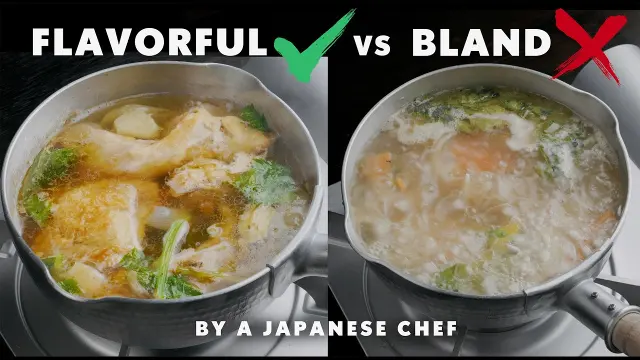
 Japanese Chef Technique For Rich And Tender Chicken Soup
#Japanese Cooking
1 ideas
Japanese Chef Technique For Rich And Tender Chicken Soup
Get new #Japanese Cooking ideas by email
Every Thursday: the week's best ideas, with the newest from #Japanese Cooking.
Related tags
Japanese Cooking: Flavours, Methods and Basics
Japanese cooking is known for its balance, seasonality, and attention to simplicity. At its heart, it uses a few carefully chosen ingredients to create clean, satisfying flavours. Rather than relying on heavy sauces or complicated preparation, Japanese food often highlights the natural taste of each ingredient.
What Japanese cooking is
Japanese cooking includes the traditional home cooking of Japan as well as regional dishes shaped by local climate, geography, and customs. It is built around rice, vegetables, fish, soy-based seasonings, seaweed, and fermented ingredients. Many dishes aim for harmony in flavour, texture, and appearance, with an emphasis on freshness and restraint.
A classic Japanese meal often combines rice, soup, a main dish, and several small side dishes. This style gives variety without excess and makes it easier to enjoy different textures and tastes in one meal.
Read more
Common ingredients and flavours
Some of the most familiar ingredients in Japanese cooking are rice, noodles, tofu, miso, soy sauce, dashi, seaweed, mushrooms, daikon, ginger, and sesame. Fish and seafood are common, but there are also many vegetable-based dishes and comforting everyday meals made with tofu or eggs.
The flavour profile often moves between savoury, lightly sweet, salty, and umami-rich. Instead of masking ingredients, Japanese seasoning usually supports them. That is why even simple foods can feel layered and complete.
Main techniques and styles
Japanese cooking uses several basic methods that are worth learning first. Simmering is common for broths, soups, vegetables, and braised dishes. Grilling and pan-frying are used for fish, meat, and some vegetables. Steaming is gentle and keeps ingredients delicate. Deep-frying appears in crisp dishes, while raw preparations, such as sashimi, depend on freshness and careful handling.
There are also many styles of cooking within Japan. Home cooking is often straightforward and comforting. Kaiseki is a more refined style focused on seasonal presentation and balance. Street and casual foods are usually quicker and more relaxed, while regional dishes reflect local ingredients and traditions.
What beginners should know
If you are new to Japanese cooking, start with a few core seasonings and techniques rather than trying to make everything at once. Learning how to prepare rice well, make a simple soup, and season gently will already give you a strong foundation.
It helps to taste as you go, since Japanese dishes often depend on subtle balance. Try not to overpower the food with too much sauce or spice. Use fresh ingredients when possible, and cut vegetables into pieces that cook evenly. If a recipe calls for something unfamiliar, focus first on the role it plays in the dish: richness, saltiness, aroma, or texture.
Practical tips for home cooking
- Keep the seasoning simple and adjust gradually.
- Pay attention to texture as well as flavour.
- Use a sharp knife for clean cuts and even cooking.
- Serve dishes in smaller portions to create balance.
- Let warm foods stay warm and crisp foods stay crisp.
Japanese cooking is approachable once you understand its rhythm. With a few basic ingredients and a calm, careful approach, you can make meals that feel both simple and deeply satisfying.
Videos come from YouTube and posts from Instagram; titles and summaries are our own. All rights belong to their creators.