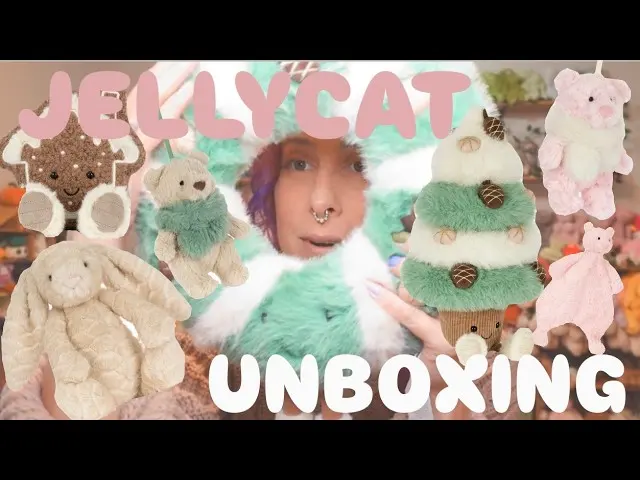
 Unboxing the new Jellycat winter collection plushies
#Jellycat
1 ideas
Unboxing the new Jellycat winter collection plushies
Get new #Jellycat ideas by email
Every Thursday: the week's best ideas, with the newest from #Jellycat.
Related tags
Jellycat Plush Toys: A Guide to Collecting and Care
Jellycat is a British soft-toy maker whose plush characters have grown far beyond the nursery. What began as a small company making comfort objects for babies now produces a wide universe of animals, foods and objects with faces, bought as much by adults for themselves as by parents for children. The appeal is hard to pin down and easy to feel: round shapes, long floppy limbs, weighted beads, and fabrics that are unusually soft even by plush-toy standards.
What makes them recognisable
Most plush toys aim for realism. Jellycat characters tend towards the deliberately odd: a smiling croissant, a gloomy cloud, a bashful bunny with ears longer than its body. The designs share a soft, slightly goofy expression and a palette of muted, natural colours, which is part of why they sit comfortably on a sofa or a shelf rather than looking out of place outside a playroom.
The main families
Read more
The range is large, but a few groups recur. Animal characters form the backbone, from tiny pocket-sized companions to large huggable ones. The food and object designs turn everyday things into characters, and these tend to be the ones collected and displayed rather than carried around. There are also softer, flatter comfort toys designed for very small hands, and textured "board book" style pieces that combine fabric and simple patterns. Sizes usually run from small grab-and-go formats up to large decorative pieces.
Collecting
Many people buy one and then find themselves with a shelf full. Collecting is informal: there are no fixed series to complete, and designs come and go over the years, which is part of the draw. If you are starting out, buy what you actually like rather than trying to acquire everything, and handle the toys before buying when you can. Softness and weight vary noticeably between pieces, and the ones that feel right in your hands are usually the ones you keep.
Choosing for a child
For babies and toddlers, look for stitched features rather than plastic eyes or small attached parts, and check the age guidance on the label. Avoid anything with long ribbons or loose trim for very young children. A plush toy should be easy to wash and sturdy enough to survive being dragged around.
Care and keeping
Most fabric plush toys can be surface-cleaned with a damp cloth and mild soap, then air-dried away from direct heat. Hand-washing in cool water suits many pieces; always check the care label first, since some fabrics and filling types behave differently. Give toys a gentle squeeze back into shape while still damp. If a toy lives on a shelf, keep it out of direct sunlight, which fades fabric over time, and dust it occasionally with a soft brush.
Whether you are buying a first comforter or adding another character to a growing collection, the pleasure is the same: something soft, slightly ridiculous, and made to be held.
#Jellycat: frequently asked questions
How do I get started with Jellycat?
Start with one piece you genuinely like rather than trying to map out the whole range. The collections shift over time and there is no set series to complete, so a collection tends to grow from affection rather than from a checklist. If you can, handle a few in person first, because softness, weight and size vary a lot between designs.
What should I look for when choosing a first one?
Think about where it will live and who will hold it. Small, light companions suit bags and hands of all sizes, while larger, heavier pieces are better as decorative characters for a sofa, shelf or bed. Pick a face that makes you smile, since the slightly odd, goofy expressions are the whole point.
Which type is best for a baby or toddler?
Look for stitched features rather than plastic eyes or small attached parts, and read the age guidance on the label before buying. Very young children do best with simple, flatter comfort toys that have no long ribbons or loose trim. Choose something sturdy and easy to clean, since it will be dragged around.
How do I clean and care for a plush toy?
Most fabric plush can be surface-cleaned with a damp cloth and mild soap, then air-dried away from direct heat. Some pieces tolerate hand-washing in cool water, but always check the care label first because fabrics and fillings behave differently. While it is still damp, squeeze it gently back into shape, and brush off dust on shelf-bound toys with a soft brush, keeping them out of direct sunlight.
Are Jellycat toys only for children?
Not at all; a large part of the appeal is adult. The food and object characters in particular tend to be collected and displayed rather than played with, and they sit comfortably on a sofa or shelf instead of looking out of place. Many people buy their first one for themselves.
What mistakes should I avoid when collecting?
The common ones are buying in bulk to chase completeness and ordering online without ever feeling the piece. Designs come and go anyway, so buying what you actually like leaves you with a shelf you still enjoy. Also skip anything with loose trim or plastic parts if the toy is meant for a very small child.
Videos come from YouTube and posts from Instagram; titles and summaries are our own. All rights belong to their creators.