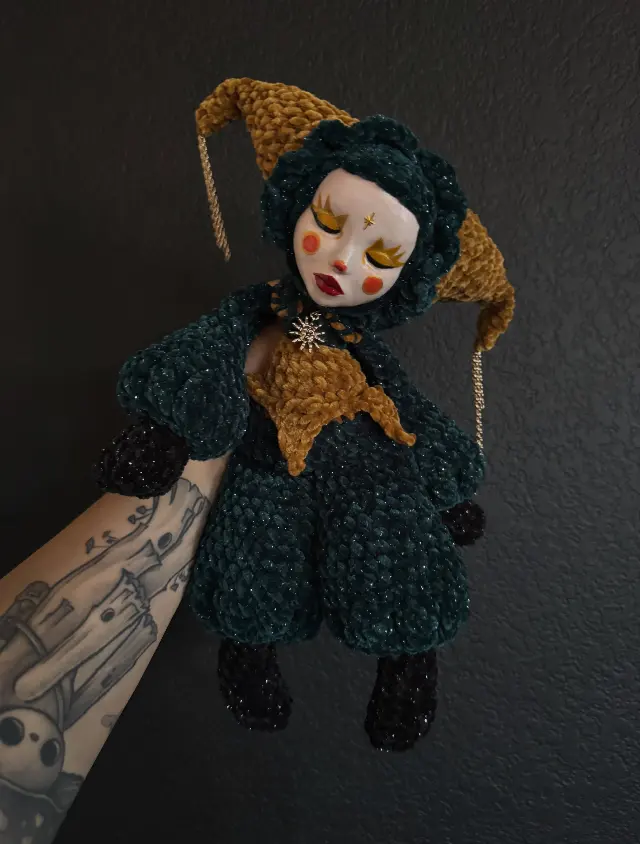
 Handmade Jester Doll With a Sculpted Clay Face
#Jester Doll
1 ideas
Handmade Jester Doll With a Sculpted Clay Face
Get new #Jester Doll ideas by email
Every Thursday: the week's best ideas, with the newest from #Jester Doll.
Related tags
Jester Dolls: Handmade Playful Dolls and Decor
What a jester doll is
A jester doll is a decorative or collectible doll inspired by the costume and spirit of the court jester. These dolls are usually recognizable by their pointed hats, bells, bright clothes, and playful expressions. Some are whimsical and theatrical, while others feel traditional, nostalgic, or a little mysterious. You may see them made as soft dolls, porcelain figures, cloth sculptures, or mixed-media handmade pieces.
The idea comes from the historic jester, a performer in courts and public entertainment who used humor, music, and satire. Over time, the jester became a symbolic figure in art and craft: cheerful, mischievous, and slightly extravagant. That same image now appears in dolls made for display, collecting, seasonal decorating, or as unique handmade gifts.
Common styles and materials
Read more
Jester dolls can take many forms. Some are small and simple, while others are detailed and highly expressive. You might find:
- Cloth dolls with painted or stitched faces
- Porcelain or ceramic dolls with fine costume details
- Sculpted dolls with clay heads and fabric bodies
- Art dolls with mixed materials, beads, lace, or wire
- Vintage-inspired dolls with old-fashioned clothing and a folk-art feel
The costume is often the most important feature. Classic jester clothing may include a cap with points, a ruffled collar, striped or diamond-patterned fabric, and tiny bells. Colors are often lively, but some dolls use muted tones for a more antique or elegant look.
Why people enjoy them
Jester dolls are popular because they combine humor and artistry. They can feel playful without being childish, which makes them appealing as display pieces. Some people collect them for their connection to theatrical tradition; others enjoy them simply as charming handmade objects.
They also fit well into many settings. A jester doll may be part of a holiday arrangement, a collector’s cabinet, a nursery shelf, or a room styled with folk art and handmade decor. Because the figure is so distinctive, it often becomes a conversation piece.
What to look for in a handmade jester doll
If you’re choosing or making one, pay attention to the overall balance of the figure. A well-made doll usually has a clear silhouette, neat finishing, and costume details that feel intentional rather than crowded. The face is especially important, since it gives the doll its personality.
It also helps to think about scale and placement. A small doll may suit a shelf or tabletop, while a larger one can stand out as a centerpiece. If the doll is handmade, slight irregularities can add charm and show the maker’s hand.
Care and display tips
Because jester dolls are often made from delicate materials, they should be kept away from dampness, strong sunlight, and rough handling. Dust them gently with a soft brush or dry cloth. If the doll has fabric, beads, or fragile paint, handle it carefully and avoid cleaning with water unless you know the materials can take it.
For display, give the doll a stable base and a protected spot where it won’t be knocked over. Many people like to pair jester dolls with books, masks, antique-style objects, or other handmade pieces that echo their theatrical character.
A jester doll is more than a costume figure. It is a small work of imagination, shaped by craft, tradition, and the enduring appeal of playful design.
#Jester Doll: frequently asked questions
How do I start making a jester doll if I've never made a doll before?
Begin with a simple cloth body, since fabric is forgiving and easy to reshape as you go. Sketch the silhouette and the costume first, then build the head and outfit around that plan rather than improvising both at once. Keeping the first attempt small and uncluttered makes the finishing steps far easier to learn.
What supplies do I need to make a jester doll?
The basics are fabric for the body and costume, stuffing, thread and needles, and something for the head, whether that is cloth, clay or a sculpted base. Small bells, trim, beads and patterned fabric scraps give the costume its character. A soft brush for dusting and a stable base for display are worth having on hand too.
Which style of jester doll should I choose?
It depends on whether you want it handled, collected, or simply displayed: cloth and mixed-media dolls are warm and forgiving, while porcelain and ceramic figures read as more formal and antique. Consider the room it will live in and match the palette and scale to that space. Handmade pieces with slight irregularities often feel more charming than perfectly uniform ones.
How should I care for and display a jester doll?
Keep it out of damp areas and direct sun, since moisture and strong light are the usual causes of fading and fabric damage. Dust gently with a soft dry brush instead of washing it, especially if it has beads, fragile paint or glued trim. Give it a firm, level base in a spot where it won't be brushed or knocked over.
What are common mistakes to avoid when making a jester doll?
Overloading the costume is the usual one: too many trims, bells and patterns crowd the figure and hide its shape. A weak or unclear silhouette is another, along with a face that hasn't been planned before the head is finished. Test the balance and pose before final assembly so the doll stands or sits convincingly.
What occasions suit a jester doll as a gift or decoration?
Its theatrical character makes it a natural fit for festive arrangements, themed parties and seasonal decorating. Collectors and people who love folk art or handmade objects tend to appreciate it as a display piece rather than a toy. Paired with masks, books or antique-style objects, it works well as a conversation piece in a styled room.
Videos come from YouTube and posts from Instagram; titles and summaries are our own. All rights belong to their creators.