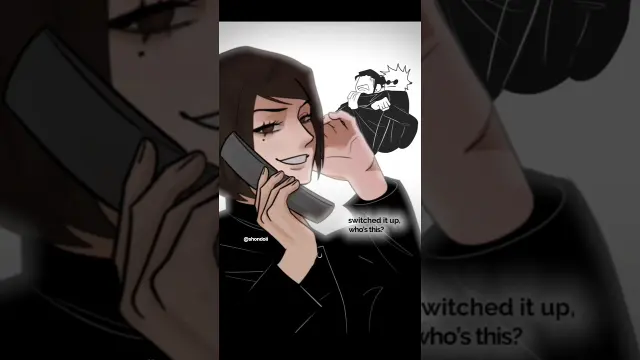
 Jujutsu Kaisen Fan Animation Set to NewJeans' Buggin
#Jujutsu Kaisen
1 ideas
Jujutsu Kaisen Fan Animation Set to NewJeans' Buggin
Get new #Jujutsu Kaisen ideas by email
Every Thursday: the week's best ideas, with the newest from #Jujutsu Kaisen.
Related tags
Jujutsu Kaisen: A Beginner's Guide to Curses and Sorcerers
Jujutsu Kaisen is a Japanese manga series that grew into one of the most widely followed anime of its era, and it has since become a fixture of fan art, cosplay, fan animation and discussion online. At its centre is a simple, unsettling idea: human fear and resentment do not vanish. They accumulate, and eventually they take shape.
The world it builds
In this story, negative emotion leaks out of people constantly — grief, envy, spite, dread — and pools into something called cursed energy. Where enough of it gathers, a cursed spirit is born, a creature that harms the living without reason. The only people who can see and fight them are jujutsu sorcerers, a small, secretive and chronically understaffed profession that quietly keeps ordinary life running.
The premise is classic shonen structure with an unusually bleak edge. A teenager with unusual physical strength swallows a cursed object to save a friend and finds himself sharing a body with a legendary, deeply malevolent curse. Sentenced to die eventually anyway, he is offered a delay: find and consume the remaining fragments of that curse before the execution is carried out.
Read more
The characters and what they represent
The main trio carries the story's different answers to the same question of what a life is worth. There is the boy who wants a good death rather than a meaningless one, the reserved student from a sorcery family who believes the strong exist to protect the weak, and the confident newcomer from the countryside who refuses to be anyone's accessory. Around them sits a supporting cast of teachers, upperclassmen and rivals whose abilities and philosophies keep expanding the story's range.
The mentor figure deserves a note of his own: he is the strongest sorcerer alive, and the series uses him less as a solution than as a problem — what happens when one person is so powerful that everyone else builds their plans around him.
Techniques, and why the fights read the way they do
Combat here is built on rules rather than raw force. Each sorcerer has an innate technique, an ability that works in a specific and often narrow way, and the drama comes from watching people find the loophole inside their own limits. "Domain expansion" is the series' signature idea: a sorcerer manifests an enclosed space where their technique is guaranteed to land, and the result is closer to a philosophical duel than a brawl.
Where newcomers usually start
- Read the manga from the beginning or watch the animated adaptation; both follow the same story, and the adaptation is generally faithful.
- The prequel, Jujutsu Kaisen 0, is a self-contained film and manga volume about a different protagonist. It works as an introduction, though many prefer it after the first season, when its references land.
- Give the early chapters a little patience. The opening is deliberately conventional; the tone hardens as the cast grows.
- Subtitles versus dubbing is purely preference — the pace of dialogue is dense either way.
Why it draws so much creative energy
The series is unusually generous to fan work. Techniques are modular, characters have distinct silhouettes and colour palettes, and the story leaves emotional gaps worth filling — friendships, grief, unfinished rivalries. That is why it turns up so often in fan animation, illustration, cosplay and jewellery-making alike: there is room to add something rather than only copy.
Content note for the cautious: the story deals with death, body horror and loss in fairly direct ways.
#Jujutsu Kaisen: frequently asked questions
How should someone new to Jujutsu Kaisen actually start?
Either read the manga from its opening chapter or watch the animated adaptation — the two tell the same story, and the animation stays faithful to the source. The prequel film works as a standalone entry, but most people enjoy it more once they already know the main cast, since its references land harder that way.
Do I need to watch the prequel before the main series?
No. The prequel follows a different protagonist and stands on its own, so it is not a prerequisite for understanding anything. Treating it as a companion piece rather than a starting point usually makes for a smoother introduction to the world.
Is it better to read the manga or watch the anime?
It comes down to how you like to take in a story: the manga gives you the pacing and artwork as originally drawn, while the adaptation adds motion, sound and voice performance. Both cover the same events, so pick whichever format you naturally stick with and don't feel obliged to do both.
What should I expect from the early part of the story?
The opening is deliberately conventional and eases you into the premise before the tone hardens as the cast grows. Give it some patience rather than judging it on the first few chapters or episodes — the bleakness people talk about arrives gradually.
What kinds of creative projects does the series inspire?
Because the powers are modular and the characters have strong, distinct silhouettes and colour palettes, the series lends itself to illustration, fan animation, cosplay and even jewellery or accessory making. The story also leaves emotional gaps around friendship and grief, which gives makers room to add something of their own rather than just copying.
What common mistakes do newcomers make with it?
The biggest one is starting with the prequel and then feeling lost, or giving up during the intentionally ordinary opening. Another is worrying about subtitles versus dubbing — dialogue is dense either way, so it is purely personal preference and not something worth deliberating over.
Videos come from YouTube and posts from Instagram; titles and summaries are our own. All rights belong to their creators.