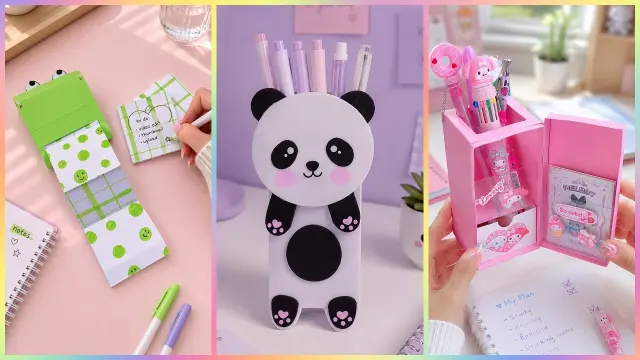
 Twelve DIY Stationery Crafts for Back to School
#Kawaii Crafts
1 ideas
Twelve DIY Stationery Crafts for Back to School
Get new #Kawaii Crafts ideas by email
Every Thursday: the week's best ideas, with the newest from #Kawaii Crafts.
Related tags
Kawaii Crafts: A Beginner's Guide to Making Cute Things
Kawaii is the Japanese word for "cute," and as a style it is much more than a preference for sweet things. It is a whole visual language built on softness, roundness and friendliness: pastel colours, big eyes, small mouths, chubby proportions, and the habit of giving a cheerful little face to objects that have no business having one. Kawaii crafts are simply the handmade side of that language — objects made or decorated in this spirit, usually with inexpensive materials and a lot of patience for small details.
Where it comes from
The style grew out of Japanese youth culture, where handwriting, stickers and decorated school supplies became a way for young people to express personality. Over the decades it spread through stationery, character design, toys and illustration, and eventually travelled worldwide through craft blogs, online shops and social media. What began as a way of personalising a pencil case is now an international hobby with its own materials, tools and vocabulary.
The main kinds of kawaii crafts
Read more
Almost any technique can be made cute, which is part of the appeal. The most common ones are:
- Clay work: polymer and air-dry clay shaped into tiny animals, pastries, fruit and characters, then painted with a fine brush.
- Felt and fabric: hand-sewn plushies, keychains, brooches and hair clips, often with simple embroidery for the face.
- Paper and stationery: decorated notebooks, handmade stickers, letter sets, bookmarks and mini envelopes.
- Amigurumi: small crocheted or knitted figures with round bodies and oversized heads.
- Decoden and embellishing: covering a phone case, mirror or box with charms, beads and a piped "whipped cream" texture.
- Beads, charms and resin: tiny sweets and shapes cast or threaded into jewellery and bag charms.
What beginners should know
Start with one technique rather than trying everything at once. Clay and felt are forgiving because mistakes can be reshaped or hidden; resin and decoden need more equipment and a bit more care. Keep a limited palette of two or three soft colours and one accent, since cute designs usually fail from too much variety rather than too little.
A few practical habits help a lot. Work on a clean, well-lit surface with a mat underneath. Use the smallest tools you can handle — a fine brush, a toothpick, a small pair of scissors — because kawaii details live at the millimetre level. Draw the face last, and sketch it on paper first: two dots and a tiny curve is often enough, and it is easy to make an expression look sad or angry by accident. Let clay and paint dry fully before sealing, and check the label of any glaze or resin for ventilation and curing instructions.
Finally, keep small parts, sharp tools and any craft material away from very young children, and treat handmade jewellery and charms as decorative rather than something to chew or wash frequently.
The pleasure of these crafts is in the scale: a whole afternoon can produce a handful of tiny, slightly imperfect things that make you smile. That is exactly the point.
#Kawaii Crafts: frequently asked questions
What exactly are kawaii crafts?
They are the handmade side of the Japanese cute style, where softness, roundness and friendliness shape what you make, not just what you buy. In practice that means small objects, pastel colours, simple happy faces and plenty of attention to tiny details. Almost any technique can be adapted, from clay and felt to paper and crochet.
How do I start if I have never made anything cute before?
Pick one technique and give it a proper try before adding another, because spreading yourself across clay, resin and sewing at once makes it hard to notice what you are actually learning. Clay and felt are the friendliest places to begin, since a wobbly shape can be smoothed or hidden rather than thrown away. Set up a clean, well-lit surface with a mat underneath and keep your tools small.
Which kind of kawaii craft should I choose?
Choose by what you enjoy holding and looking at: figures and pastries suit clay, plushies and accessories suit felt or amigurumi, and stationery or stickers suit paper work. Work that involves resin or embellishing looks spectacular but asks for more equipment and a careful reading of curing and ventilation instructions. If you want results quickly with little kit, paper and felt win.
What are the most common beginner mistakes?
Overloading the design is the big one, since cute things usually go wrong from too much variety rather than too little, so keep to a small soft palette with a single accent. Drawing the face straight onto the finished piece is another, as it is easy to make an expression look sad or angry by accident. Sketch it on paper first, apply it last, and let clay and paint dry fully before sealing.
How do I care for handmade charms, jewellery and small figures?
Treat them as decorative pieces rather than everyday objects, so avoid chewing, bathing or frequent washing with them. Keep them away from very young children because the parts and tools involved are small and sometimes sharp. Store delicate pieces where they will not be crushed, and follow the label of any glaze or sealant you used.
Are kawaii crafts good for gifts or for making with other people?
They work well as small handmade presents, especially bookmarks, keychains, brooches, letter sets and decorated notebooks, which suit almost any occasion without needing expensive materials. Group sessions also go smoothly because each person can pick a different technique and still finish something in an afternoon. What people remember is the slightly imperfect, clearly handmade scale of it.
Videos come from YouTube and posts from Instagram; titles and summaries are our own. All rights belong to their creators.