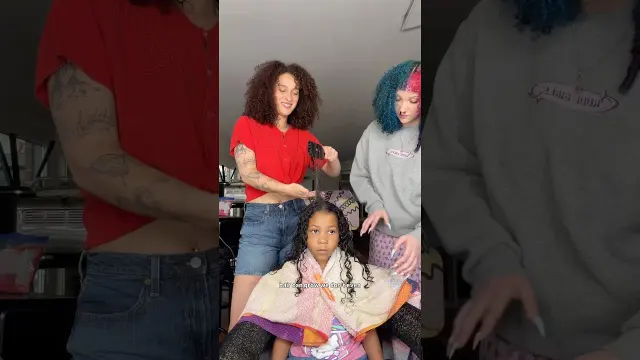
 Transforming and Styling Curly Hair for Kids
#Kid Hair
1 ideas
Transforming and Styling Curly Hair for Kids
Get new #Kid Hair ideas by email
Every Thursday: the week's best ideas, with the newest from #Kid Hair.
Related tags
Kid Hair: Gentle Care and Easy Styling
What kid hair needs
Children’s hair is often finer, softer, and more sensitive than adult hair, although every child’s texture is different. Some children have straight hair that tangles easily, while others have waves, curls, coils, or a mix of textures. The main goal is the same in all cases: keep hair clean, comfortable, and easy to manage without causing unnecessary pulling or breakage.
Kid hair care usually starts with a gentle routine. A mild shampoo, a soft touch, and patient detangling go a long way. Many children do best with simple care that respects their natural hair texture instead of trying to fight it.
Washing and detangling
Read more
How often you wash depends on hair type, activity level, and scalp needs. There is no single rule that suits every child. Some hair types feel best with more frequent washing, while drier or curlier hair may do better with less frequent shampooing and more conditioning.
A few practical tips can help make wash day easier:
- Use lukewarm water rather than very hot water.
- Work a small amount of shampoo mainly into the scalp.
- Use conditioner to help soften lengths and make tangles easier to release.
- Detangle gently with fingers or a wide-tooth comb, starting at the ends and moving upward.
- If hair is very tangled, take your time and work in small sections.
Rushing through detangling can lead to tears and breakage, so a calm routine matters as much as the products you choose.
Choosing styles that suit children
The best hairstyles for children are comfortable, secure, and not too tight. Styles should protect the hair without pulling at the scalp. For many children, simple braids, twists, ponytails, buns, or half-up styles are easy options for everyday wear. For curlier textures, leaving hair loose with a little leave-in conditioner or using soft sections can help reduce tangling.
When styling kid hair, keep these points in mind:
- Avoid tight hairstyles that cause discomfort.
- Use soft accessories that do not snag or break hair.
- Change styles regularly so the same areas are not pulled all the time.
- Choose styles that suit the child’s daily routine, activity level, and comfort.
Caring for different textures
Straight, wavy, curly, and coily hair all need gentle handling, but the details can differ. Straight hair may need lighter conditioning to avoid looking flat. Wavy hair often benefits from minimal handling so its shape stays intact. Curly and coily hair usually needs extra moisture, careful detangling, and styles that protect the ends.
Whatever the texture, it helps to work with the hair’s natural pattern. Trying to force one texture into another often creates more friction and frustration.
Keeping hair healthy over time
Regular trims can help remove split ends and keep hair neat. A silk or satin pillowcase or bonnet may help reduce friction while sleeping, especially for longer or curlier hair. It also helps to teach children to be gentle with their own hair so they learn good habits early.
Most of all, kid hair care should feel manageable. A routine that is calm, simple, and kind is usually the one that works best for both you and your child.
Videos come from YouTube and posts from Instagram; titles and summaries are our own. All rights belong to their creators.