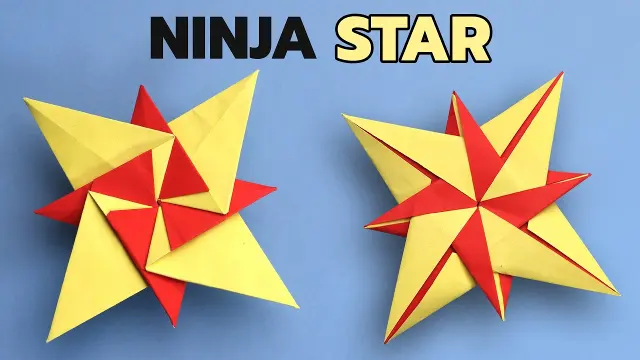
 Origami Ninja Star: A Simple Paper Craft Project for Kids
#Kids Paper Craft
1 ideas
Origami Ninja Star: A Simple Paper Craft Project for Kids
Get new #Kids Paper Craft ideas by email
Every Thursday: the week's best ideas, with the newest from #Kids Paper Craft.
Related tags
Kids Paper Craft: A Beginner's Guide to Paper Fun
Paper is one of the most forgiving materials a child can work with. It is cheap, it is everywhere, and a mistake costs nothing more than a fresh sheet. That is a large part of why paper craft has stayed a fixture of childhood for generations, long before anyone thought to call it a hobby.
What paper craft actually covers
The term is broad. It includes folding, where the paper is creased and never cut, as in origami. It includes cutting and assembling, from paper chains and snowflakes to simple cardboard buildings and masks. It includes collage, where torn or cut shapes are glued down to make a picture. And it includes printing and stamping, using sponges, vegetables, or folded paper to make repeating patterns. Some projects are flat, some stand up, and some move.
Where it comes from
Read more
Paper itself reached Europe from China by way of the Islamic world, and paper folding developed independently in several cultures, most famously in Japan, where origami grew into a formal art with its own vocabulary of folds. Paper cutting has its own traditions in many countries, from Chinese jianzhi to Polish wycinanki to the silhouette portraits once cut by travelling artists. Children's paper craft as we know it grew out of these traditions, simplified for small hands and short attention spans.
What children gain from it
Folding a square into a shape teaches symmetry, sequence, and patience, because a crease made in the wrong place cannot easily be undone. Cutting along a line builds fine motor control and hand-eye coordination. Gluing shapes into a picture encourages planning and spatial thinking. Perhaps most valuably, paper craft offers something rare in a child's day: a project that can be finished in one sitting and held in the hand.
Getting started
Beginners need very little. A stack of ordinary paper, a pair of children's scissors with rounded tips, a glue stick, and a flat surface are enough. Coloured paper, card stock, and old magazines add variety. Keep a box for scraps, since small offcuts become the raw material for later projects.
Start with folds that need only a few steps, such as a paper boat, a fan, or a simple hat. Move on to cutting exercises like folded snowflakes, which reward even rough scissor work with something pleasing. Only then try projects with many steps, such as modular shapes assembled from several folded units.
Practical tips
- Work on a surface you do not mind marking, and keep a damp cloth nearby for sticky fingers.
- Show a fold once slowly, then let the child do it, even if the result is crooked. Neatness comes with practice.
- Choose paper suited to the task: thin paper folds crisply, heavier card holds a standing shape.
- Keep sessions short. A finished small thing beats an abandoned large one.
- Let the child decide what the finished object is. A folded shape can be a hat, a boat, or something with no name at all.
Paper craft asks almost nothing and gives back a great deal: quiet concentration, a sense of accomplishment, and a shelf slowly filling with things made by hand.
#Kids Paper Craft: frequently asked questions
How do I start paper crafting with a child who has never tried it?
Begin with something small enough to finish in a single sitting, so the child ends up holding a completed object rather than an unfinished pile. Demonstrate the first fold or cut slowly, then hand the paper over and let them do it themselves, even if the result comes out lopsided. A crooked fold the child made is worth more than a perfect one you made for them.
What supplies do I actually need for kids paper craft?
Ordinary paper, rounded children's scissors, a glue stick, and a flat work surface cover the basics, and everything else is optional. Coloured paper, heavier card, and old magazines add variety, and a scrap box keeps the offcuts useful instead of wasted. A damp cloth within reach saves a lot of sticky fingerprints on furniture.
Which kind of paper craft should I choose first: folding, cutting, or collage?
Folding is usually the gentlest entry point, since it needs no tools and works with any sheet on hand. Cutting comes next, because projects like folded snowflakes look good even when the scissor work is rough. Save multi-step builds assembled from several folded units for a child who has already had some success with the simpler ones.
How do I store or look after finished paper crafts so they survive?
Paper is fragile, so keep finished pieces flat and somewhere dry, away from damp and direct sun that warp and fade them. Standing shapes hold up better when made from heavier card rather than thin paper. It also helps to let go of some pieces cheerfully, since part of the pleasure is making them rather than keeping every one.
What are the common mistakes when crafting with paper and kids?
The biggest one is starting too ambitious, which leaves a child with an abandoned project and a dented sense of what they can do. Another is correcting every imperfect fold instead of letting neatness arrive through repetition over time. Matching paper weight to the project matters too, since thin sheets will not hold a standing shape and stiff card will not crease cleanly.
What paper craft ideas work well for a party or a rainy afternoon?
Simple folded shapes that become hats or boats, cut paper chains, and star-like folded shapes all suit a group because they need little space and no special equipment. Collage from torn magazine pages keeps younger children busy while older ones attempt something with more steps. Let each child decide what the finished object is, rather than insisting it match the example.
Videos come from YouTube and posts from Instagram; titles and summaries are our own. All rights belong to their creators.