 Essential Baking Tools And Equipment For Beginners
#Kitchen Tools
2 ideas
Essential Baking Tools And Equipment For Beginners
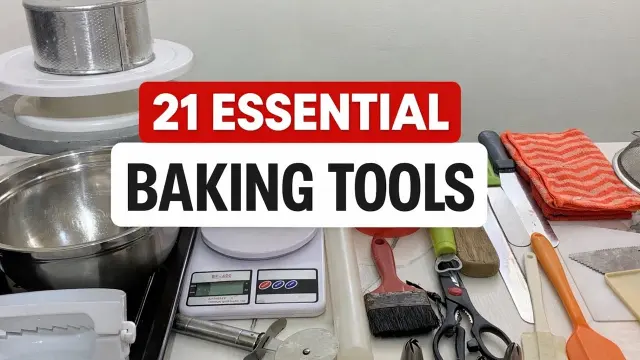 Twenty One Essential Baking Tools Every Baker Needs
Get new #Kitchen Tools ideas by email
Every Thursday: the week's best ideas, with the newest from #Kitchen Tools.
Related tags
Kitchen Tools Guide for Every Home Cook
What kitchen tools are
Kitchen tools are the everyday items you use to prepare, cook, serve, and store food. They range from the simplest spoon or knife to more specialised tools for baking, peeling, measuring, mixing, or opening jars. Good kitchen tools make food preparation easier, safer, and more consistent.
The idea of kitchen tools is as old as cooking itself. People have always relied on practical objects shaped for chopping, stirring, heating, and carrying food. Over time, tools have become more varied and more refined, but the purpose has stayed the same: to help you work efficiently in the kitchen.
The main types
Read more
Most kitchen tools fall into a few broad groups:
- Cutting tools: knives, peelers, scissors, graters, and slicing tools
- Measuring tools: measuring cups, spoons, scales, and jug sets
- Mixing tools: bowls, whisks, spatulas, spoons, and beaters
- Cooking tools: pans, pots, ladles, tongs, sieves, and strainers
- Baking tools: rolling pins, baking tins, pastry brushes, piping tools, and scrapers
- Serving and storage tools: serving spoons, tongs, containers, lids, and wraps
Some tools are general-purpose, while others are made for a specific job. A simple wooden spoon, for example, can stir sauces, scrape pans, and mix batters. A specialised tool may save time when you use it often, but it is usually best to build your collection gradually.
What beginners should know
If you are starting from scratch, focus on a few reliable basics rather than buying everything at once. A small set of good-quality tools can cover most everyday cooking tasks.
Useful essentials often include:
- A sharp chef’s knife or general-purpose knife
- A cutting board
- A mixing bowl or two
- Measuring spoons and cups
- A whisk
- A spatula
- A saucepan and frying pan
- Tongs or a serving spoon
- A peeler and grater
Choose tools that feel comfortable in your hand and suit the way you cook. A tool that is awkward to hold or hard to clean will likely stay in the drawer. Simple designs are often easier to use and care for.
Materials and quality
Kitchen tools are made from many materials, including metal, wood, silicone, glass, and plastic. Each has its place. Metal tools are often sturdy and long-lasting. Wooden tools are gentle on cookware and pleasant to use. Silicone can be useful for heat resistance and flexibility. Glass and stainless steel are common choices for measuring and mixing.
Quality is not only about appearance. Look for tools that are well balanced, smooth where they should be smooth, and strong enough for repeated use. For cutting tools, sharpness matters more than size. For cookware and utensils, durability and ease of cleaning are important.
Care and practical tips
- Wash tools soon after use, especially if they have touched sticky or oily ingredients
- Dry them well before storing, particularly wood and metal items
- Keep blades protected and stored safely
- Replace worn-out tools that no longer work properly
- Match the tool to the task instead of forcing one item to do everything
A tidy, well-chosen set of kitchen tools can make cooking feel calmer and more enjoyable. Start with the essentials, add only what you truly use, and let your collection grow with the way you cook.
Videos come from YouTube and posts from Instagram; titles and summaries are our own. All rights belong to their creators.