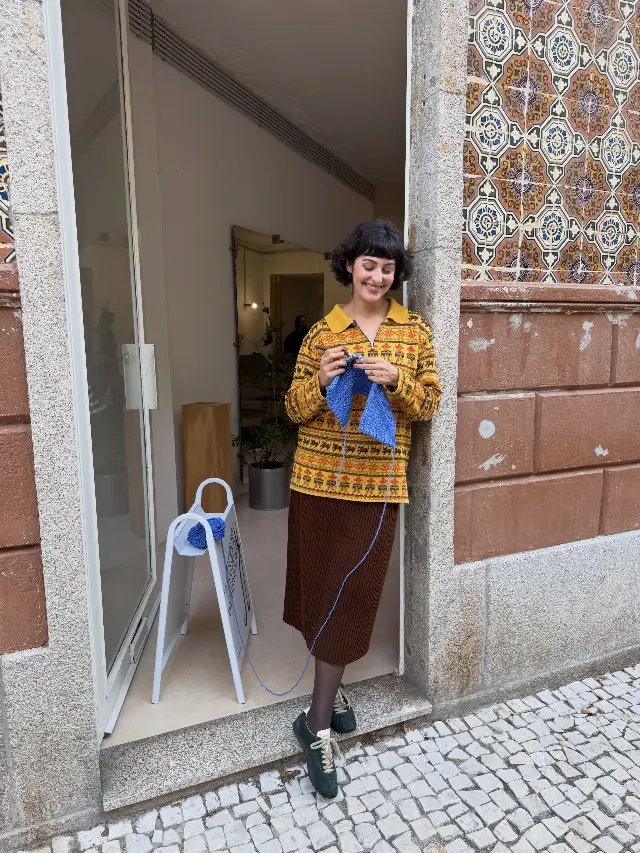
 A Nudge to Start Crocheting and Join a Knit-and-Sip Meetup
#Knit and Sip
1 ideas
A Nudge to Start Crocheting and Join a Knit-and-Sip Meetup
Get new #Knit and Sip ideas by email
Every Thursday: the week's best ideas, with the newest from #Knit and Sip.
Related tags
Knit and Sip: A Guide to Social Crafting Gatherings
A knit and sip is a simple idea with a long tail: people bring their needles, yarn and something to drink, sit down together and work on their projects while they talk. The craft is the reason to gather, but the conversation is often the point. Some groups meet in a living room, some in a café corner or a pub back room, and some in a library or community hall. What they share is a rhythm — a couple of hours of steady stitching, cups refilled, questions asked across the table.
Where the idea comes from
Group needlework has old roots. Knitting and sewing circles have existed for centuries as practical gatherings where work was shared, techniques were passed on and company made the task lighter. The modern version keeps the circle and loosens the format: fewer rules, more choice of craft, and a drink in hand. The name itself is a description rather than a prescription — the "sip" can be coffee, tea, wine or water, and the "knit" often welcomes crochet, embroidery and other portable handwork.
What actually happens
Read more
Most gatherings follow a similar shape. People arrive, settle in, and get their work out. There is usually a stretch of quiet concentration early on, then conversation drifts in. Someone hits a tricky row and asks for help; someone else finishes an object and holds it up. Beginners often find they learn more in one evening of watching other hands than in a week of videos, because you can see how the yarn is held and how a stitch is formed, and ask about it immediately.
Styles of meetup
Some groups are purely social, with no teaching attached. Others are structured around a skill share, where one person demonstrates a technique and everyone tries it. There are charity knitting circles making blankets and hats, stitch-along groups working through the same pattern at their own pace, and informal drop-ins with no commitment at all. Some are large and lively, others are three people around a kitchen table, and both work.
If you are new to it
Start with something forgiving. A simple scarf, a dishcloth or a granny square lets you knit and talk at the same time; a lace pattern with a chart does not. Bring more yarn than you think you need, a spare set of needles or hook, and a small bag for scraps. If you are joining a group for the first time, message ahead to check the venue and whether there is a cost or a booking.
Making it pleasant for everyone
Keep projects portable and the table clear of drinks where yarn sits — a spill is the classic end to a good evening. Ask before photographing anyone's work. Offer help gently and accept a no. Groups tend to become welcoming or cliquey depending on small habits like these.
Hosting your own
Pick a time that suits slow craft rather than a rushed hour, choose a space where you can stay a while without feeling watched, and tell people what to bring. Keep the first one small. A knit and sip needs very little to work: a table, a light bright enough for dark yarn, a kettle or a bar, and someone willing to say hello first.
Videos come from YouTube and posts from Instagram; titles and summaries are our own. All rights belong to their creators.