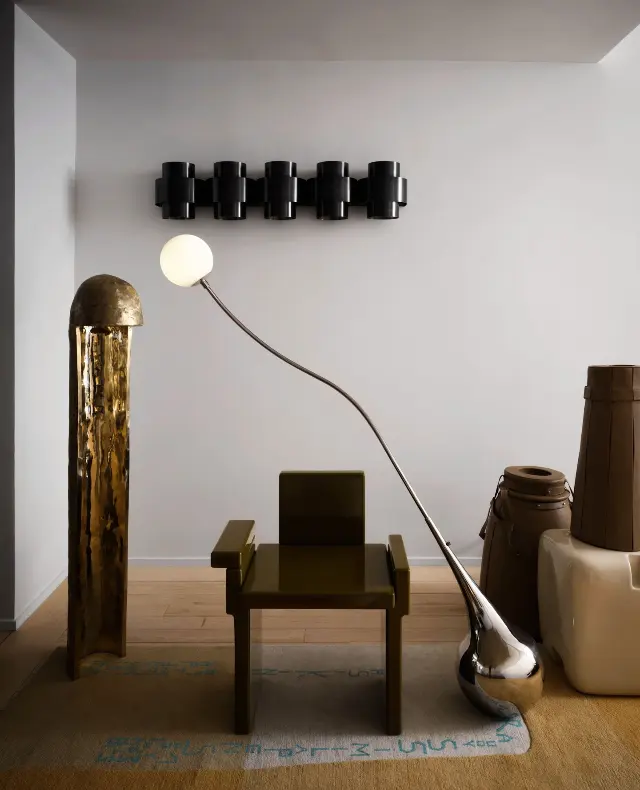
 Layered Materials at a New York Design Showroom
#Lacquered Wood
1 ideas
Layered Materials at a New York Design Showroom
Get new #Lacquered Wood ideas by email
Every Thursday: the week's best ideas, with the newest from #Lacquered Wood.
Related tags
Lacquered Wood: A Guide to Its Craft and Care
Lacquered wood is wood that has been sealed and coated with lacquer — a resin-based finish brushed on in many thin layers until it forms a hard, smooth film over the surface. That film is what you see and touch: it can be glass-bright or softly satin, deep black, oxblood red, pale ivory, or a bright colour laid over a lighter ground. The word covers two quite different things, and it helps to know which one you are looking at. True lacquer is made from the sap of the lacquer tree; modern lacquer is usually a synthetic finish such as nitrocellulose, acrylic or polyurethane. Both give a similar look, but they age, repair and cost very differently.
Where the craft comes from
The use of tree sap as a coating developed in East Asia, where it was applied to bowls, boxes, furniture, musical instruments and armour over many centuries. The raw sap is collected, filtered and built up in repeated layers, each one left to cure before the next. Curing is not drying in the ordinary sense: the finish hardens in warm, humid air, which is why the craft is so closely tied to the climates where it began. From there the decorated pieces travelled along trade routes, and European workshops began producing their own imitations — black and gilt surfaces built from shellac and resins, often with painted scenes in an imagined Eastern style. That imitation is the reason so much antique European furniture is described as japanned rather than lacquered.
The main kinds
Read more
- Natural lacquer, built up slowly in many layers, admired for its depth and the way it wears.
- Synthetic lacquer, practical and quick, available in a very wide range of colours and sheen levels.
- High-gloss finishes, which reflect the room and show every mark; satin and matte finishes, which are more forgiving.
- Carved lacquer, where dozens of layers are built up and then cut back into patterns — a slow and highly skilled technique.
- Inlay, with eggshell, mother-of-pearl or metal set into the surface before the final coats.
If you are starting out
The finish rewards patience more than speed. Many thin coats beat one thick one, and each layer needs to dry fully before the next. Sand lightly between coats, work in a place as free from dust as you can manage, and seal the bare wood first so it does not drink the finish unevenly. Test on an offcut before committing to a piece. Solvent-based lacquers give off strong fumes: work with ventilation, wear gloves, and keep flames away.
Living with it
Dust with a soft dry cloth, and avoid harsh cleaners, alcohol and ammonia, which dull the surface. Wipe spills promptly, especially anything hot, acidic or alcoholic. Keep pieces out of direct sun and away from radiators, since strong heat and light can crack or fade the finish. Do not stack lacquered items or drag them across a surface. Small scuffs can sometimes be disguised with a little wax; for real damage, especially on natural lacquer, a restorer is the safer choice.
#Lacquered Wood: frequently asked questions
How do I get started with lacquered wood if I've never done it before?
Start small, on an offcut or a simple object, so you can learn how the finish behaves before you commit to a good piece. The craft rewards patience rather than speed: build up many thin layers, letting each one cure fully, and sand lightly between coats. Sealing the bare wood first helps it take the finish evenly instead of drinking it in unevenly.
What do I need to lacquer a piece of wood at home?
You need the lacquer itself, a soft brush or applicator, fine abrasive for sanding between coats, a sealer for the bare wood, and a space as free from dust as you can manage. Solvent-based lacquers give off strong fumes, so work with good ventilation, wear gloves and keep any flame well away. A test offcut is worth keeping on hand to check how the coats are building up.
Should I choose natural lacquer or a synthetic finish?
Natural lacquer is built up slowly in many layers and is prized for the depth it gives and the way it wears over time, but it asks for skill and patience. Synthetic finishes such as acrylic or polyurethane are quicker, more forgiving and available in a very wide range of colours and sheen levels. The two look similar at first glance, but they age and repair quite differently, so it is worth knowing which one you are working with.
How should I care for a lacquered piece day to day?
Dust with a soft dry cloth and avoid harsh cleaners, alcohol and ammonia, which will dull the surface. Wipe up spills promptly, especially anything hot, acidic or alcoholic, and keep pieces out of direct sun and away from radiators, since strong heat and light can crack or fade the finish. Do not stack lacquered items or drag them across a surface, as both invite scuffs.
What are the most common mistakes people make with lacquered wood?
The usual one is trying to save time by applying a single thick coat, which never cures as well as many thin layers. Working in a dusty or badly ventilated space, or failing to seal the bare wood first, also causes patchy results and a rough surface. Once the piece is finished, the common mistake is reaching for a household cleaner rather than a soft dry cloth, which can permanently dull the sheen.
What kinds of lacquered pieces work well as gifts or for a special occasion?
Small objects tend to suit the craft best: boxes, trays, bowls and keepsake pieces show off the depth of the finish without demanding much room. A high-gloss piece reads as a statement, while a satin or matte finish is quieter and more forgiving in everyday use. Carved and inlaid work, where patterns are cut into built-up layers or set with shell or metal, makes a particularly considered present.
Videos come from YouTube and posts from Instagram; titles and summaries are our own. All rights belong to their creators.