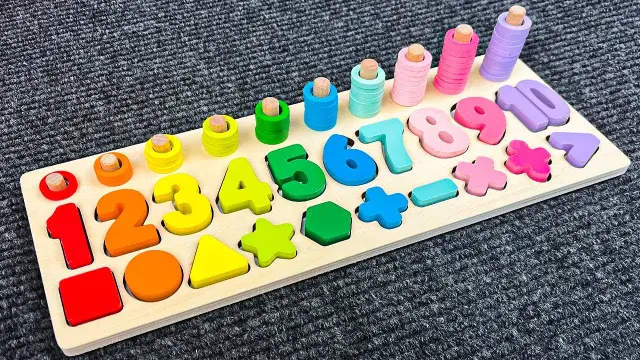
 Montessori Inspired Learning with Numbers and Shapes
#Learning Toys
1 ideas
Montessori Inspired Learning with Numbers and Shapes
Get new #Learning Toys ideas by email
Every Thursday: the week's best ideas, with the newest from #Learning Toys.
Related tags
Learning Toys for Curious Kids
Learning toys are playthings designed to support a child’s development while still feeling fun and open-ended. They can help with counting, sorting, matching, building, language, fine motor skills, and imaginative play. At their best, they invite children to explore, repeat, test ideas, and learn at their own pace.
The idea of learning through play has been around for a long time. Children naturally make sense of the world by touching, moving, stacking, fitting, naming, and pretending. Learning toys simply give that instinct a form. Some are simple and familiar, like blocks, nesting cups, puzzles, or shape sorters. Others encourage role play, drawing, early literacy, or sensory exploration. What matters most is not how complicated the toy looks, but how much it lets a child think, try, and discover.
Common kinds of learning toys
There are many kinds of learning toys, and each supports different skills.
Read more
- Construction toys, such as blocks or magnetic shapes, help with spatial awareness, balance, and problem-solving.
- Puzzles support memory, concentration, and matching skills.
- Sorting and stacking toys build early logic, hand-eye coordination, and pattern recognition.
- Alphabet and number toys introduce letters, sounds, counting, and simple ordering.
- Pretend play toys, such as kitchen sets, dolls, or tool sets, support language, storytelling, and social understanding.
- Sensory toys offer textures, sounds, or movement that encourage exploration.
- Art and drawing toys support creativity and early fine motor control.
Many toys do more than one thing at once. A set of blocks may teach balance, vocabulary, and cooperation. A toy kitchen may lead to counting, sorting, and storytelling. That is part of what makes learning toys so valuable: they grow with the child.
What to look for
When choosing a learning toy, think about the child’s age, interests, and current stage of development. A toy should be engaging without being too difficult or too simple. If it is slightly challenging, it can encourage patience and persistence.
Good learning toys often have these qualities:
- They invite more than one way to play.
- They are sturdy and easy to handle.
- They encourage active participation, not just watching.
- They can be used again and again in different ways.
- They match the child’s attention span and abilities.
It also helps to choose toys that leave room for imagination. The best learning often happens when a child can make their own rules, invent stories, or try new combinations.
Practical tips for parents and caregivers
You do not need many toys to support learning. A small, varied collection is often enough. Rotate toys occasionally so they stay interesting. Sit nearby at times, but let the child lead the play. A simple question like “What happens if you try that?” can be more useful than giving instructions.
If you are buying for a baby or toddler, focus on safe, large, easy-to-grasp toys with simple actions. For older children, look for toys that encourage solving, building, reading, or creative play. And remember that everyday objects can also become learning tools when children are allowed to sort them, stack them, count them, or use them in pretend play.
Learning toys work best when play feels relaxed. The goal is not to rush a child toward a result, but to give them opportunities to explore, repeat, and grow with confidence.
Videos come from YouTube and posts from Instagram; titles and summaries are our own. All rights belong to their creators.