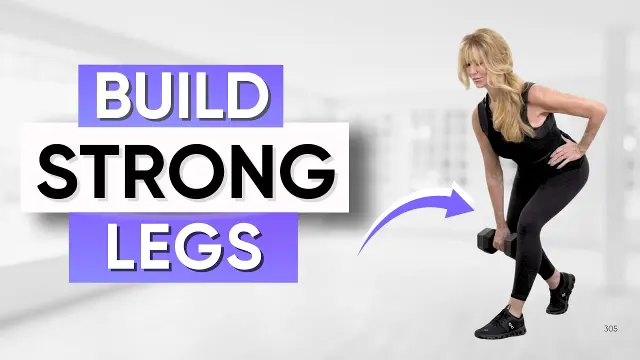
 10-Min Lower Body Strength Workout for Leg Strength After 50
#Leg Strength
1 ideas
10-Min Lower Body Strength Workout for Leg Strength After 50
Get new #Leg Strength ideas by email
Every Thursday: the week's best ideas, with the newest from #Leg Strength.
Related tags
Leg Strength: A Practical Guide to Stronger Legs
Leg strength is the capacity of the muscles in your lower body to produce force and control movement against resistance — whether that resistance is your own body weight, a loaded barbell or simply a flight of stairs. It is one of the most practical forms of fitness there is, because almost everything upright depends on it: walking, standing up from a chair, climbing, carrying, catching yourself when you stumble.
What is actually working
The legs are not one muscle but a chain of them. The quadriceps at the front of the thigh straighten the knee. The hamstrings at the back bend it and help drive the hip. The glutes extend the hip and stabilise the pelvis. The calves and the small muscles around the ankles handle the final push and the balance corrections. Most leg training is really coordination training: the goal is to make these groups work together under load rather than to isolate any single one.
The main kinds of training
Read more
Strength work usually means relatively few repetitions against meaningful resistance — squats, deadlift variations, split squats, step-ups, hip thrusts, calf raises. Because the load is high, the repetitions stay low and the rest between sets is generous.
Hypertrophy work uses moderate loads and higher repetitions, and it is the approach usually associated with building muscle size rather than pure force.
Muscular endurance training — higher repetitions, shorter rest, circuits, walking lunges — improves the ability to keep going, which matters for daily life and for sports that run long.
Power and plyometric work, such as jumps and fast step-ups, trains the legs to produce force quickly. It is demanding on joints and tendons and belongs later, once a base of strength exists.
Single-leg work deserves its own mention. Lunges, split squats and step-ups expose and correct the left-right differences that two-legged movements can hide, and they train balance at the same time.
What beginners should know
Start with body-weight versions of the basic patterns and learn the shapes before adding load: a squat you can sit into and stand out of with a neutral spine, a hinge where the hips travel back and the knees stay soft, a lunge where the front knee tracks over the foot. Two or three sessions a week is plenty at first, with at least a day between them.
Progress by small steps — a few more repetitions, a slower lowering phase, a slightly deeper range, then added resistance. Warm up with easy movement before loading, and expect mild muscle soreness in the days after a new stimulus; it fades as the body adapts.
Technique beats volume. Stop a set when your form starts to break down rather than pushing through it, and give yourself rest days, since legs grow and strengthen while you recover, not while you train. If you have an injury, joint pain or a health condition, get individual advice before starting loaded leg work.
Consistency over months, not intensity over days, is what makes legs strong.
#Leg Strength: frequently asked questions
How do I start training leg strength if I've never done it before?
Begin with body-weight versions of the basic patterns — the squat, the hip hinge and the lunge — and learn the shapes before adding any resistance. Keep sessions to a few per week with a rest day in between, and warm up with easy movement first. Once the patterns feel natural and controlled, add a little more work rather than jumping straight to heavy loads.
What equipment do I actually need for leg strength work?
Nothing beyond floor space to start, since your own body weight provides plenty of resistance for the early stages. As you progress, added resistance can come from a loaded barbell, dumbbells, kettlebells or resistance bands, depending on what you have access to. What matters far more than the equipment is controlling the movement through a full, comfortable range.
Which type of leg training should I choose — strength, muscle size, endurance or jumping?
Choose based on your goal: few repetitions against meaningful resistance for raw force, moderate loads with higher repetitions for size, and circuits or longer sets for the ability to keep going. Jumping and fast, explosive work are best left until a base of strength exists, because they place heavy demands on joints and tendons. Single-leg movements such as lunges and step-ups are worth including whatever your goal, since they expose left-right differences that two-legged work can hide.
How do I look after my legs between training sessions?
Expect mild soreness after a new stimulus and treat it as normal — it fades as the body adapts. Give yourself rest days, because legs strengthen during recovery rather than during the session itself, and keep easy movement going on the days in between. If soreness turns into joint pain or persists, back off and get individual advice before continuing with loaded work.
What are the most common mistakes beginners make with leg training?
The usual ones are adding load before the movement pattern is clean, and pushing a set past the point where form breaks down. Another is chasing hard sessions for a few days instead of steady work over months, which is what actually builds strength. Consistency and technique beat volume every time.
Can I build leg strength with short workouts at home?
Yes — a short session built around squats, split squats, step-ups, hip thrusts and calf raises covers the main muscle groups without a gym. Because the legs respond to controlled effort rather than to length of session, a brief but focused routine done regularly works well. Progress by small steps: a few more repetitions, a slower lowering phase or a slightly deeper range.
Videos come from YouTube and posts from Instagram; titles and summaries are our own. All rights belong to their creators.