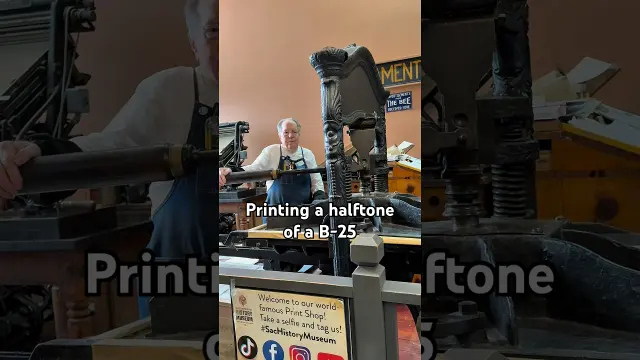
 Letterpress Printing a Donated B-25 Aircraft Halftone
#Letterpress
1 ideas
Letterpress Printing a Donated B-25 Aircraft Halftone
Get new #Letterpress ideas by email
Every Thursday: the week's best ideas, with the newest from #Letterpress.
Related tags
Letterpress Printing: A Guide to the Craft
Letterpress is a form of relief printing. The image to be printed stands up above the surface of the printing block, and the ink is rolled only onto those raised areas. When paper is pressed against the inked surface, the image transfers onto the sheet. Everything else on the block stays below the ink roller and stays white. It is one of the oldest ways of printing with movable type, and it is still practised today by both enthusiasts and small studios.
Where it comes from
Movable type was developed in East Asia and appeared in Europe in the middle of the fifteenth century, where it was combined with the screw press. For several centuries afterwards, most books, newspapers and handbills were printed from raised metal and wooden type. Letterpress gradually gave way to faster methods, but it never quite disappeared: it survived in small jobbing shops and has since returned as a craft, valued for the physical quality of its results rather than for speed.
What it is used for now
Read more
Today you will mostly see letterpress on wedding stationery, business cards, bookplates, posters, broadsides and short-run cards. The impression it leaves, a slight indentation in the paper, is part of its character. Many studios combine traditional type with plates made from digital artwork, so that letterpress can print designs drawn on a computer while keeping the tactile result.
The main techniques
- Handset type. Individual pieces of metal or wood type are picked and assembled letter by letter, reading backwards, then locked into a frame called a chase.
- Photopolymer plates. A light-sensitive plate is exposed from a film or digital negative, and the unexposed areas are washed away, leaving a raised printing surface that can be mounted on a base.
- Wood type. Larger display letters, historically cut from long-grain wood such as maple or beech, allow sizes far beyond what metal type can offer.
- Blind deboss. Printing with no ink at all, so that only the impression shows.
Presses
Two families are most common. Platen presses work like a clamshell: the forme of type sits on a flat bed, and the paper is carried on a hinged platen that closes down against it. Cylinder presses roll the sheet across the forme, which makes them gentler on very large or delicate work. Both are operated by hand or by motor, with pressure adjusted rather than forced.
Paper, ink and impression
Choose uncoated paper: it takes ink well and shows the impression. Cotton and other soft, bulky sheets are popular, while hard, glossy papers resist the bite. Letterpress inks are fairly stiff and are applied thinly. As for depth of impression, many printers now prefer a light, even kiss rather than a heavy bite, which can distort the paper and stress type and plates over time.
Tips for beginners
Take a class before buying anything, so you understand the sequence of setting, locking up, inking, printing and cleaning. Keep your forme tightly locked, or letters will shift between pulls. Work with clean hands and mind the press as it closes, since the pinch points are unforgiving. Print on scrap first and adjust the packing behind the sheet before committing to good stock. Clean ink off type and plates as soon as you finish, store type in its case, and label your work.
#Letterpress: frequently asked questions
How do I get started with letterpress printing?
The usual first step is to take a hands-on class or workshop rather than buying equipment straight away, so you can see the whole sequence of setting, locking up, inking, printing and cleaning before committing to anything. Once you understand how a press feels and how much pressure it needs, you can decide whether to rent time at a studio or set up something small at home. Printing on scrap paper first and adjusting the packing behind the sheet will teach you more than any amount of reading.
What do I actually need to begin printing at home?
At minimum you need a press or a way to apply firm, even pressure, a forme locked into a chase, ink, a roller for applying it thinly, and uncoated paper that will take both the ink and the impression. Soft, bulky sheets such as cotton show the bite well, while hard glossy papers tend to resist it. Beyond tools, you need patience for setup and a habit of cleaning type and plates the moment you finish.
Should I use handset type, wood type or photopolymer plates?
Handset metal type teaches the craft properly and gives you the classic look, but it takes time to assemble letter by letter in reverse and requires a good stock of type. Wood type is the choice for big display letters, since it allows sizes metal simply cannot reach. Photopolymer plates let you print artwork drawn digitally while keeping the tactile result, which is why many studios combine them with traditional type.
How much impression should I leave in the paper?
Many printers now favour a light, even kiss rather than a deep bite, because heavy impression distorts the sheet and puts strain on type and plates over time. The right depth depends on the paper: soft, bulky stock will show a mark with modest pressure, while hard papers need more and give less. Adjust pressure gradually and check your result on scrap before printing on good stock.
How do I look after my type, plates and press?
Clean ink off type and plates as soon as you finish a run, since dried ink is far harder to remove and will clog fine detail. Store type in its case, keep it away from damp, and label your work so you can find a setting again later. Work with clean hands and keep the press free of grit, minding the pinch points as it closes.
What is letterpress best suited to today?
It shines on wedding stationery, business cards, bookplates, posters, broadsides and short-run cards, where the physical quality of the result matters more than speed. The slight indentation left in the paper, or a blind deboss with no ink at all, is a large part of the appeal. It is a craft choice rather than a production method, so it rewards designs that suit restraint and good paper.
Videos come from YouTube and posts from Instagram; titles and summaries are our own. All rights belong to their creators.