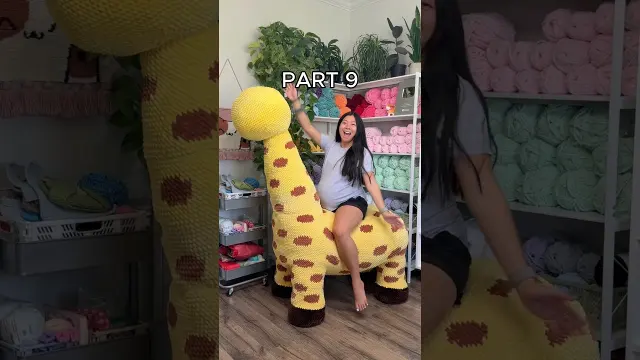
 Crocheting a Life-Size Baby Giraffe: Part 9, the Head
#Life-Size Crochet
1 ideas
Crocheting a Life-Size Baby Giraffe: Part 9, the Head
Get new #Life-Size Crochet ideas by email
Every Thursday: the week's best ideas, with the newest from #Life-Size Crochet.
Related tags
Life-Size Crochet: Making Things at True Scale
Life-size crochet means working at true scale: a dog the height of a real dog, a chair you can sit in, a sunflower that reaches your shoulder. Instead of the palm-sized pieces most crocheters begin with, the finished object is measured against the world rather than against a hand.
The approach grows out of two traditions that meet in the middle. Amigurumi taught crocheters to shape three-dimensional figures from simple stitches, while soft sculpture brought yarn and fabric into galleries and living rooms at human scale. Life-size work sits between the two: the stitches are familiar, the ambition is not.
What people make
Animals are the most common subject, worked in pieces — body, limbs, head, ears — and joined afterwards. Plants and flowers follow closely, since a stem and a bloom can be built up in sections and wired upright. Some makers turn to furniture and household objects: poufs, floor cushions, baskets, lamp bases. Others make deliberately oversized wearable pieces, or figures and busts that sit closer to sculpture than to toy-making.
Read more
How scale changes the craft
Everything that works small has to be reconsidered large. Gauge matters more, because a small error in tension multiplies across a metre of fabric. Stitches that look neat at five centimetres can look coarse at fifty, so many makers move to thicker yarn and larger hooks, or hold several strands together.
Structure becomes the real problem. A life-size piece rarely holds its shape on stuffing alone; internal frames, wire or dowelling give limbs and necks something to lean on, and a weighted base keeps tall pieces from tipping. Seams and joins carry more load, so they need to be worked firmly and checked as you go.
Starting out
You do not have to begin with something enormous. Choose a subject you can measure easily and build it in sections: one limb, one leaf, one cushion. Work a gauge swatch and compare it honestly to your reference measurements, then write down every change you make, because a project at this scale takes weeks and memory is unreliable.
Estimate yarn generously, buy enough of a single dye lot to finish, and weigh your work as it grows — the finished piece will be heavier than you expect, and so will the filling. Keep a tape measure and a real object nearby for comparison, and step back to look at the piece from across the room now and then; small distortions are easier to spot from a distance than up close.
Above all, be patient with yourself. Life-size crochet asks for the stitches you already know, only far more of them, and it rewards the maker who plans before the first chain.
#Life-Size Crochet: frequently asked questions
How do I start a life-size crochet project without getting overwhelmed?
Pick a subject you can measure easily against a real object, and build it in sections rather than trying to work the whole thing at once — one limb, one leaf, one cushion. Work a gauge swatch, compare it honestly to your reference measurements, and write down every change you make, since a project at this scale stretches over weeks and memory is unreliable. Starting small within a large plan keeps the work manageable and lets you correct course early.
What do I need for life-size crochet that I wouldn't need for a small amigurumi?
Alongside thicker yarn and larger hooks — or several strands held together — you'll want materials for structure: wire, dowelling or an internal frame for limbs and necks, and something weighted for the base of tall pieces. A tape measure and a real object kept nearby for comparison matter more than usual, because the piece is judged against the world rather than against your hand. Buy enough yarn of a single dye lot to finish, and expect the filling to add substantial weight.
Which kind of life-size piece is best to choose — an animal, a plant, or furniture?
Animals are the most common choice and are worked in pieces that are joined afterwards, which suits a section-by-section approach. Plants and flowers are similarly forgiving because a stem and bloom can be built separately and wired upright. Furniture and household objects such as poufs, floor cushions and baskets are a good option if you want something with a practical use, while figures and busts sit closer to sculpture and demand more structural planning.
How do I stop a large crochet piece from slumping or tipping over?
Stuffing alone rarely holds a life-size piece in shape, so internal frames, wire or dowelling are usually needed to give limbs and necks support, and a weighted base keeps tall work upright. Seams and joins carry far more load than in small pieces, so work them firmly and check them as you go rather than at the end. Stepping back to view the piece from across the room helps you catch distortions that are hard to see up close.
What are the most common mistakes people make with life-size crochet?
Underestimating yarn and filling is the classic one — the finished piece is heavier and hungrier than expected, so buy generously and weigh your work as it grows. The second is skipping the gauge swatch, since a small tension error multiplies across a metre of fabric. The third is leaving seams and joins until the end, when they really need to be worked firmly and checked continuously.
How should I care for a life-size crochet piece once it's finished?
Because these pieces are large, stuffed and often built over a frame, spot cleaning and gentle surface care are usually safer than machine washing, and any wire or dowelling should be checked for rust or shifting over time. Keep the piece out of prolonged direct sun and damp, and support tall items so they don't lean and distort. Check seams, joins and the base periodically, since they take the most strain.
Videos come from YouTube and posts from Instagram; titles and summaries are our own. All rights belong to their creators.