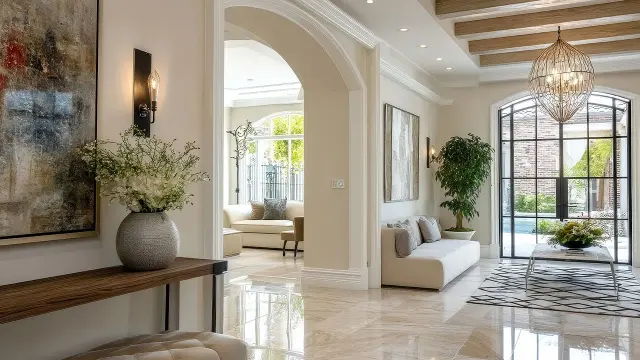
 Quiet luxury design ideas for entryway and living room transitions
#Living Room Design
1 ideas
Quiet luxury design ideas for entryway and living room transitions
Get new #Living Room Design ideas by email
Every Thursday: the week's best ideas, with the newest from #Living Room Design.
Related tags
Living Room Design Ideas and Basics
What living room design is
Living room design is the planning of a home’s main shared sitting space so it feels comfortable, practical, and visually balanced. A good living room supports everyday life: relaxing, talking, reading, watching TV, hosting guests, or simply passing through. Because the room often serves more than one purpose, design choices usually focus on flexibility, comfort, and a clear sense of order.
Traditionally, the living room developed as a formal gathering space, but in many homes it now works as a more casual family room. That means there is no single correct formula. A well-designed living room reflects how you live, how much space you have, and what atmosphere you want to create.
Common styles and approaches
Read more
Living room design can be calm and minimal, warm and traditional, layered and eclectic, or soft and natural. Some rooms use clean lines and a restrained color palette, while others feel more personal with patterns, textures, and collected objects. What matters most is consistency. When furniture, colors, and materials speak the same design language, the room feels cohesive.
A simple approach is often the easiest to live with:
- Choose one main style direction.
- Repeat a few colors or materials.
- Mix smooth surfaces with softer textures.
- Leave some open space so the room can breathe.
Layout and furniture placement
The layout is the heart of living room design. Start by deciding how you want the room to function. If conversation matters most, arrange seating so people can face each other easily. If the room centers on a television or fireplace, build the seating around that focal point without letting it dominate everything.
A few practical ideas help the room feel comfortable:
- Keep main pathways clear.
- Use furniture sizes that match the room.
- Avoid crowding the center with too many pieces.
- Anchor seating with a rug if the space feels open or disconnected.
Scale is especially important. Oversized furniture can overwhelm a small room, while pieces that are too small may look scattered in a larger one.
Color, light, and texture
Color sets the mood, but it does not have to do all the work. Soft neutrals can feel calm and timeless, while deeper tones can make a room feel cozy and grounded. You can add interest through texture instead of relying only on strong color contrast.
Lighting is just as important as furniture. A comfortable living room usually has more than one light source, such as overhead light, a floor lamp, and a table lamp. This makes the room more flexible and pleasant at different times of day.
Texture brings warmth. Think of woven fabrics, wood, stone, ceramic, linen, velvet, or boucle. A mix of finishes keeps the room from feeling flat.
What beginners should know
If you are starting from scratch, begin with the biggest decisions first: how the room is used, where the main seating goes, and what the focal point is. Then build slowly. It is usually better to choose a few good pieces and refine the room over time than to fill it too quickly.
A few final tips:
- Measure before buying anything.
- Let the room have both open space and inviting softness.
- Use art, books, and textiles to add personality.
- Keep comfort in mind as much as appearance.
A successful living room does not have to look perfect. It should feel easy to use, pleasant to enter, and true to the way you live.
Videos come from YouTube and posts from Instagram; titles and summaries are our own. All rights belong to their creators.