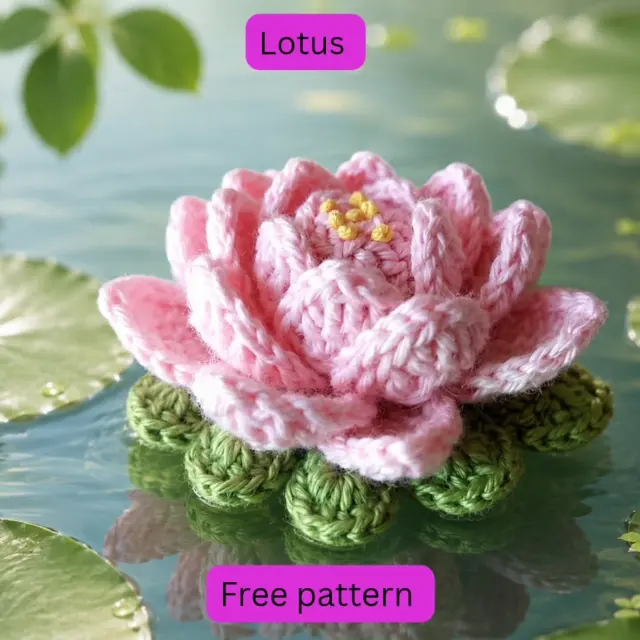
 Crochet Lotus Flower Worked in Rustic Yarn for Diwali
#Lotus
1 ideas
Crochet Lotus Flower Worked in Rustic Yarn for Diwali
Get new #Lotus ideas by email
Every Thursday: the week's best ideas, with the newest from #Lotus.
Related tags
Lotus: Symbol, Plant and Craft Guide
The lotus is an aquatic plant of the genus Nelumbo, best known as the sacred lotus. It grows rooted in the mud at the bottom of still water, sending long stalks upward so that its round leaves and layered flowers stand clear of the surface. That habit is the easiest way to tell a true lotus from a water lily: lily leaves and flowers rest on the water, while lotus leaves hover above it on stiff stems, sometimes high enough to catch the wind.
Lotus leaves are nearly circular and slightly cupped, and water beads and rolls off them, carrying dust away — a quality that has fascinated observers for centuries and given its name to the idea of self-cleaning surfaces. The flowers appear in white, pink and occasionally deeper red tones, opening in the morning and closing again for the first few days before the petals fall. The seed pod that follows is a distinctive cone shape, and the seeds inside remain viable for a remarkably long time.
Where the lotus comes from
The plant is native to Asia and has been cultivated there for so long that it is woven into daily life. In Hindu and Buddhist traditions it is a symbol of purity and awakening — a flower that rises unstained from muddy water. It appears in temple art, sculpture, painting, textiles and architecture across India, China, Japan and Southeast Asia, and it remains a common motif in bridal decoration and religious observance.
Read more
Growing it
A lotus needs sun, warmth and still water. It can be grown in a small tub or half-barrel on a patio as well as in a garden pond, provided the container is wide and shallow and holds a layer of heavy soil beneath the water. Plant the rhizome horizontally just under the surface of the soil, weigh it down with a stone if it floats, then add water gently so the soil is not disturbed. Keep the water topped up as it evaporates. In cold climates the rhizomes need protection from hard frost, either by moving the container somewhere sheltered or by lifting and storing them.
In the kitchen and the workshop
The rhizome is eaten as a vegetable in many Asian cuisines, and the seeds are used in sweets and soups. The large leaves are sometimes wrapped around food before steaming. In crafts, the lotus is a favourite subject for origami, crochet and embroidery, for block-printed fabric and for paper lanterns, and it is a natural subject for watercolour because of its simple, generous shapes.
Getting started
If you are new to the plant, start with one container and one rhizome, keep it in the sunniest spot you have, and be patient: the first leaves may take weeks to appear. If you are here for the crafts, begin with a single origami fold or a simple crochet motif and let the flower's symmetry do most of the work for you.
#Lotus: frequently asked questions
How do I start growing a lotus if I've never grown one before?
Begin with a single rhizome in one wide, shallow container and place it in the sunniest, warmest spot you have. Settle the rhizome horizontally into a layer of heavy soil under the water rather than burying it deep, and then leave it alone apart from keeping the water level up. Expect the first leaves to take a while to show, so patience matters more than fussing.
What does a lotus actually need to thrive?
Sun, warmth and still water are the essentials, along with a container broad and shallow enough for the rhizome to spread. Heavy garden soil beneath the water suits it far better than light potting mix, which tends to float and cloud the water. If you garden somewhere with hard frost, plan ahead for how you will shelter or store the rhizomes over winter.
How can I tell a lotus apart from a water lily?
Look at where the leaves and flowers sit: a lotus lifts them well clear of the surface on stiff, upright stems, while a water lily lets them rest on the water. Lotus leaves are round, slightly cupped, and often stand high enough to move in the wind, which gives the plant its distinctive silhouette.
What care does a lotus need once it is growing?
Keep the water topped up as it evaporates, since the plant wants consistent still water rather than drying out and refilling. Give it the brightest position available and shelter it from strong moving water, which disturbs the soil and the stems. In cold climates the main job is protecting the rhizomes from frost, either by moving the container to a sheltered spot or lifting and storing them.
What are the common mistakes people make with lotus?
The usual ones are planting too deep, using a container that is too narrow or too deep, and choosing a spot that is shady or windy. Another frequent slip is disturbing the soil by pouring water in too quickly at the start. Overhandling a new plant also slows it down, when it mostly wants warmth and to be left in peace.
I'd like to make lotus-themed things rather than grow the plant — where should I begin?
Pick one craft and one small project: a single origami fold, a simple crochet motif, or a watercolour study of the flower's shape. The lotus is forgiving because its symmetry does much of the work, and the layered petals read well in yarn, paper, thread and print. It also makes a natural motif for seasonal and festival decoration, so the finished piece tends to have a use beyond practice.
Videos come from YouTube and posts from Instagram; titles and summaries are our own. All rights belong to their creators.