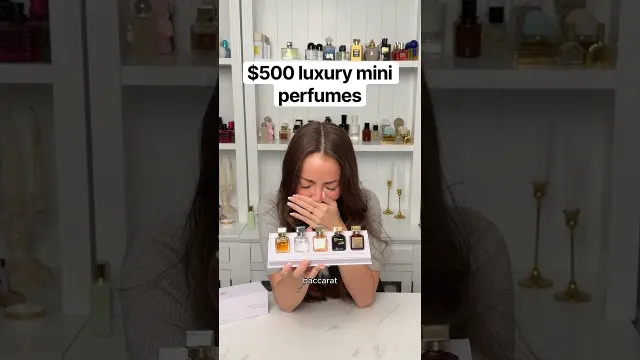
 Unboxing and Reviewing Mini Luxury Perfumes
#Luxury Fragrance
1 ideas
Unboxing and Reviewing Mini Luxury Perfumes
Get new #Luxury Fragrance ideas by email
Every Thursday: the week's best ideas, with the newest from #Luxury Fragrance.
Related tags
Luxury Fragrance Guide
Luxury fragrance is more than a pleasant smell. It is a carefully composed scent made with attention to balance, quality, and character. For many people, it is part of personal style in the same way that clothing or jewellery can be. A fragrance may feel intimate, elegant, fresh, bold, or comforting, but its purpose is always the same: to leave an impression and to be worn close to the body.
What luxury fragrance means
At its core, luxury fragrance is about craftsmanship. A perfume is built from notes that unfold over time, creating an opening impression, a middle heart, and a dry-down that lingers longest on the skin. Luxury scents often feel more rounded and refined because the composition is carefully blended. They may use classic perfume structures, distinctive natural materials, or subtle combinations that reveal themselves slowly.
Fragrance has a long history, with roots in ancient rituals, personal adornment, and ceremonial use. Over time, it became closely linked with self-expression, fashion, and gift-giving. Today, luxury fragrance is used not only for special occasions, but also as part of everyday grooming and style.
Read more
Main fragrance families
When you choose a perfume, it helps to think in families rather than individual names alone. Some of the most common types include:
- Floral: built around notes such as rose, jasmine, peony, or orange blossom
- Woody: often warm, dry, or earthy, with cedar, sandalwood, or vetiver-style notes
- Oriental or amber: richer, softer, and more enveloping, often with spice, resin, or vanilla-like warmth
- Fresh: light, clean, citrusy, airy, or green in character
- Chypre and leather styles: more structured, elegant, and often deeper in feel
These families can overlap. A fragrance may begin fresh and become woody, or open with florals and settle into amber warmth.
How to choose a scent
The best fragrance is the one that feels natural on your skin and suits the way you want to present yourself. Do not judge a perfume only by the first spray. Let it settle for a while, because the dry-down often tells you the most about its true character. Skin chemistry, temperature, and even how much you apply can change the effect.
A few practical tips can help:
- Test fragrance on skin, not only on paper
- Wait before deciding, because the scent evolves
- Try only a few at a time so your nose does not become tired
- Think about when you will wear it: daily use, evening wear, or special moments
- Store fragrance away from heat, light, and humidity to help preserve it
Wearing fragrance well
Luxury fragrance is often best worn with restraint. A smaller amount can create a softer, more elegant trail and allow the scent to develop properly. Apply it to pulse points or areas where warmth helps the fragrance bloom, but avoid rubbing it in, as that can alter the opening.
If you are new to fragrance, start with styles that feel familiar and comfortable. As you learn what you enjoy, you may find that your taste changes with the seasons, your mood, or the occasion. A well-chosen luxury fragrance can become part of your identity: subtle, memorable, and entirely your own.
#Luxury Fragrance: frequently asked questions
How do I start exploring luxury fragrance if I have never really worn perfume before?
Start with scent families that already feel familiar and pleasant to you, such as light florals or clean fresh notes, and try them slowly rather than sampling everything at once. Wear one scent for a full day so you can notice how it changes from the first spray to the way it settles, and let your taste develop naturally from there.
How can I tell whether a particular perfume actually suits me?
Test it on your own skin rather than on a paper strip, since a fragrance reacts with your body and can smell quite different on you than on someone else. Give it time to settle before deciding, because the later stage of a scent usually reveals its true character more honestly than the opening.
Which kinds of fragrance work best for everyday wear compared with evening occasions?
Lighter, fresher styles with citrus, green or airy floral notes tend to feel right for daytime and close quarters. Richer woody, amber or spiced compositions usually carry better into the evening, where a deeper and more enveloping scent has room to unfold.
How should I store a fragrance so it stays in good condition?
Keep bottles away from direct sunlight, heat and damp, since those conditions break a scent down faster than anything else. A closed box in a cool, dry cupboard is generally kinder to a perfume than a sunny bathroom shelf, and keeping the cap on limits exposure to air.
How much fragrance should I apply, and where?
A restrained amount usually reads as more elegant than a heavy application, and it lets the composition develop as intended. Apply to pulse points or other warm areas where the scent blooms gently, and avoid rubbing it in, which can distort the opening notes.
What mistakes do people commonly make when choosing or wearing fragrance?
Judging a perfume from the first spray, testing many at once until the nose tires, and over-applying are the most frequent slips. Buying quickly without letting a scent settle on your skin, or storing it badly afterwards, are the other easy ones to avoid.
Videos come from YouTube and posts from Instagram; titles and summaries are our own. All rights belong to their creators.