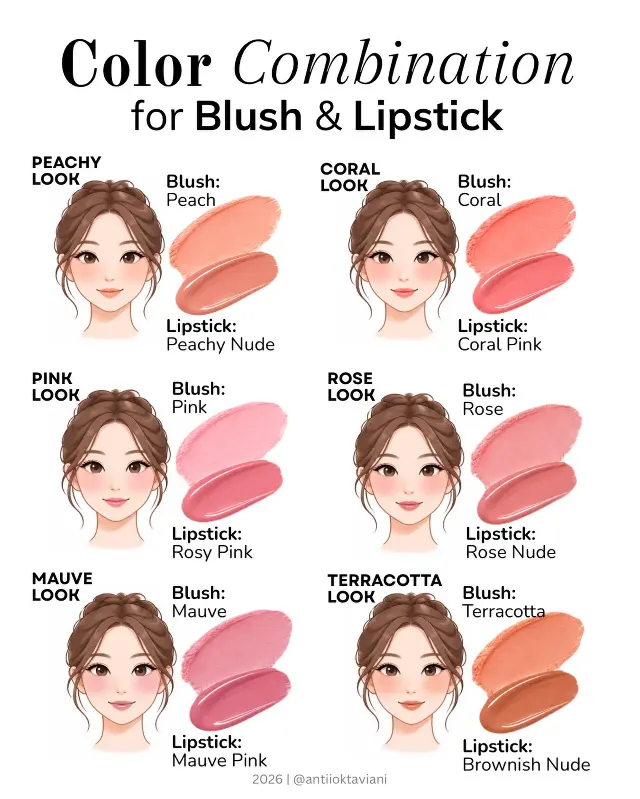
 Perfect blush and lipstick pairings for a fresh and glowing look
#Makeup Guide
1 ideas
Perfect blush and lipstick pairings for a fresh and glowing look
Get new #Makeup Guide ideas by email
Every Thursday: the week's best ideas, with the newest from #Makeup Guide.
Related tags
Makeup Guide for Everyday Looks
Makeup is the practice of using colour and texture to enhance, define, or transform the features of the face. People have used face decoration for centuries in many cultures, for reasons that include beauty, ceremony, self-expression, and performance. Today, makeup can be as simple as a touch of tint or as detailed as a full face look.
Understanding the basics
At its core, makeup is built from a few main groups of products: base, colour, and finishing products. Base makeup helps even out the skin and create a smoother surface. Colour products bring life to the face through blush, lipstick, and eye colour. Finishing products help set the look and make it feel complete.
If you are new to makeup, it helps to start with the areas that matter most to you rather than trying to use everything at once. A small routine can be just as polished as a full one.
Read more
Common makeup categories
Foundation, tinted moisturiser, or concealer can be used to create an even complexion. The right choice depends on how much coverage you want and how natural you want the finish to look. Powder may be added to reduce shine or help makeup last longer.
Blush adds warmth and freshness to the cheeks. It can make the face look more awake and lively. Lipstick, lip stain, and gloss are used to colour and shape the lips. Eye makeup includes eyeliner, mascara, brow products, and eyeshadow, each of which can subtly or strongly change the expression of the face.
Styles and techniques
Makeup styles vary from very natural to more dramatic. A natural look usually focuses on skin that looks balanced, softly defined brows, a touch of colour on the cheeks, and gentle lip colour. A more polished look may include stronger eyes, defined contour, or a bolder lip.
Blending is one of the most important techniques in makeup. Soft edges often look more natural and forgiving than harsh lines. Matching colour tones is also useful: warm shades tend to create a sunlit effect, while cooler tones can look more subtle or defined. When choosing blush and lipstick, many people find that similar colour families create a harmonious result.
What beginners should know
Good makeup starts with skin that feels comfortable. Cleansing and moisturising before makeup can help products sit better, though it is wise to keep skincare simple and suited to your skin type. Always remove makeup thoroughly at the end of the day.
A few practical tips can make learning easier:
- Use a small amount of product first, then build slowly.
- Choose tools that feel easy to control, such as fingers, a sponge, or a basic brush.
- Test colours in natural light when possible.
- Focus on one feature at a time so the look stays balanced.
Making it your own
Makeup is not about following one fixed rule. It is a creative tool that can be adapted to your face shape, skin tone, and personal style. Over time, you will learn which textures and shades feel most comfortable and flattering for you. The best makeup is the kind that helps you feel like yourself, only a little more defined.
#Makeup Guide: frequently asked questions
How do I start learning makeup if I am a complete beginner?
Start with a simple routine and focus on one or two features first, such as skin and lips or brows and cheeks. Use small amounts of product, blend well, and build the look slowly so it feels easy to control and stays natural.
What basic products do I need for a simple makeup routine?
A beginner-friendly kit often includes a base product to even out the skin, a colour product like blush or lipstick, and something to finish or set the look. Tools such as fingers, a sponge, or a basic brush can also make application easier without needing a full collection.
Should I choose foundation, tinted moisturiser, or concealer?
The best choice depends on how much coverage you want and how natural you want the finish to look. A lighter product works well for a fresh, everyday look, while foundation or concealer can help create a more even complexion when you want more coverage.
How can I choose makeup that suits my face and style?
Think about your skin tone, face shape, and the look you want, whether that is soft and natural or more defined and polished. Matching shades within similar colour families, especially for blush and lipstick, can help the face look balanced and harmonious.
What are common mistakes people make when applying makeup?
One common mistake is using too much product too quickly, which can make the look heavy or uneven. Another is skipping blending or choosing colours without checking them in natural light, both of which can make makeup look less smooth and less flattering.
Videos come from YouTube and posts from Instagram; titles and summaries are our own. All rights belong to their creators.