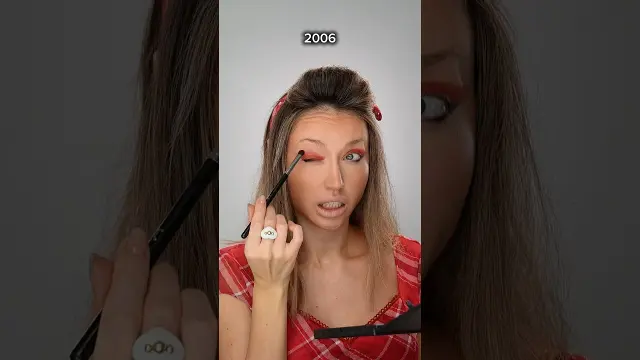
 2006 vs 2026 Makeup: Comparing Two Eras of Beauty Looks
#Makeup History
1 ideas
2006 vs 2026 Makeup: Comparing Two Eras of Beauty Looks
Get new #Makeup History ideas by email
Every Thursday: the week's best ideas, with the newest from #Makeup History.
Related tags
A Short History of Makeup Through the Ages
Makeup is one of humanity's oldest forms of self-expression. Long before it became a shelf of bottles and compacts, people were grinding minerals, mixing plant dyes and painting their faces for reasons that had little to do with vanity alone. Understanding that history helps explain why the same gestures — darkening the eyes, reddening the lips, evening out the skin — keep returning in different forms.
The earliest cosmetics
Archaeological finds show that pigment use predates written history. Ochre, ground into powder and mixed with fat, appears in burials and body-painting traditions on several continents. In ancient Egypt, eye paint made from mineral powders served ritual and practical purposes at once: it framed the gaze, signalled status, and was used in daily life as well as ceremony. Elsewhere, plant-based dyes, chalk, ashes and clay served similar ends. What these traditions share is that cosmetics were rarely purely decorative; they belonged to ritual, to social rank, or to protection from sun and insects.
Status, health and suspicion
Read more
In classical and medieval societies, a pale complexion often signalled privilege, since it suggested a life lived indoors. Face powders and creams aimed at that look, sometimes with ingredients we would now consider harmful. The same period produced a lasting ambivalence: cosmetics were fashionable and also criticised as deceitful or morally suspect. Moralists and doctors periodically condemned painted faces, while portraits and household manuals show that people went on using them. This tension — pleasure in adornment alongside worry about honesty and safety — is one of the oldest threads in the story.
The stage and the photograph
Theatre and court culture kept cosmetics in the public eye, and later the camera changed the rules. Once faces were recorded in black and white, contrast mattered more than subtlety, and heavier definition became normal in front of a lens. This is when many conventions of modern makeup — defined brows, shaped lips, contouring for light — began to solidify as techniques rather than novelties.
The modern era
Industrial production turned cosmetics from a homemade craft into a consumer category, and the twentieth century brought the familiar formats: the lipstick bullet, the pressed powder, the mascara wand. Fashion cycles accelerated, and each decade left a recognisable signature — a strong brow here, a bare lip there. Toward the end of the century, interest in ingredients, skin comfort and inclusivity reshaped both products and attitudes, and cosmetics became a form of play as much as obligation.
What beginners can take from it
History is useful mainly as permission. Almost every "new" look has an ancestor, and techniques were improvised with far humbler materials than ours. If you are starting out, keep the routine small: a product for the skin, one for the eyes or lips, and a way to remove it all gently at night. Practise at home where mistakes cost nothing, and look at faces from the periods you admire to see how they handled light and shape. Cosmetics are a long conversation, not an exam — you are allowed to join it late and in your own way.
#Makeup History: frequently asked questions
How do I start learning about makeup history if I know nothing about it?
Start with the everyday gestures you already recognise — darkening the eyes, reddening the lips, evening out the skin — and trace how each one has been done differently in different places. Museum collections of painting and jewellery, plus portraits from any period you like, show those gestures in use far better than a timeline does. The page's point is that this is a long conversation you are allowed to join late.
What do I actually need to begin experimenting with historic looks?
Very little, which is part of the lesson — early cosmetics were ground minerals, plant dyes, chalk, clay and ash, not packaged products. For practice, keep it small: something for the skin, something for the eyes or lips, and a gentle way to take it off at night. Practising at home where mistakes cost nothing matters more than having a full kit.
Which era or style should I choose to try first?
Pick a period whose faces you genuinely admire, then look at how they handled light and shape rather than copying a single feature. If you are drawn to strong definition and contrast, the stage and early photography traditions are a natural entry point; if you like a pale, restrained finish, look to the older complexion-focused styles. Either way, treat it as play, since almost every look described as new has an ancestor.
How should I care for makeup so it stays usable?
Practical care is mostly about keeping things clean and dry: close containers, keep brushes washed, and avoid sharing anything that touches the eyes or lips directly. Remove everything gently at night, because the page's simplest advice is that a method for taking makeup off is as essential as the makeup itself. Beyond that, general product directions on the packaging are the reliable guide.
What are the common mistakes beginners make when exploring historic makeup?
The usual ones are copying a face exactly instead of understanding the reasoning behind it, and building a huge routine before getting comfortable with a small one. Another is forgetting that much of what we see in old portraits was shaped by strong lighting, heavy pigment or, later, the demands of a camera. Start simple, adapt to your own face, and let the history be permission rather than a rulebook.
Videos come from YouTube and posts from Instagram; titles and summaries are our own. All rights belong to their creators.