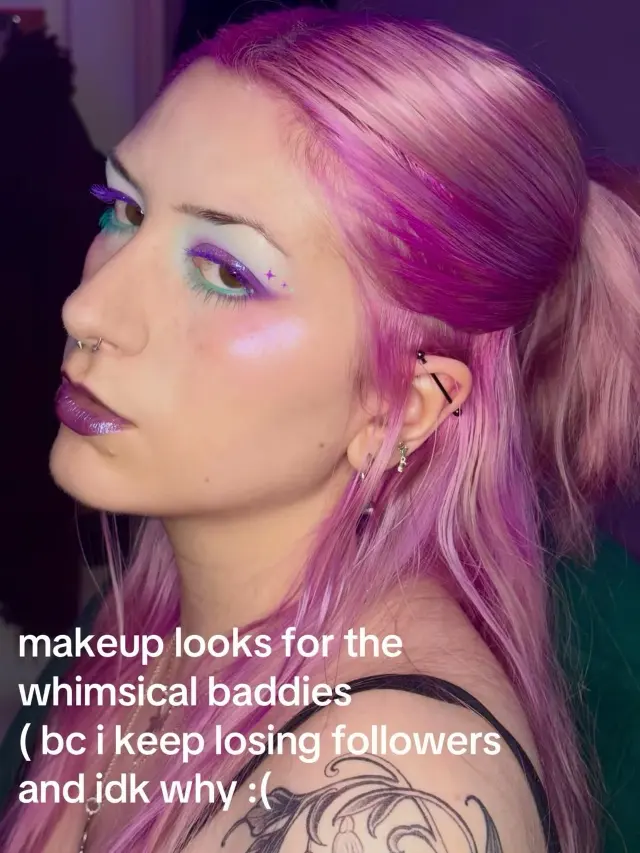
 Creative Whimsical Makeup Inspiration
#Makeuplook
1 ideas
Creative Whimsical Makeup Inspiration
Get new #Makeuplook ideas by email
Every Thursday: the week's best ideas, with the newest from #Makeuplook.
Related tags
Makeup Looks: A Guide to Styles and Techniques
A makeup look is more than a single product or a single feature. It is the whole picture a face presents: the finish of the skin, the shape of a brow, the colour on a cheek, the choice of a lip. Two people can use the same items and end up with entirely different results, because a look is really a set of decisions about balance, contrast and emphasis. Thinking in terms of a complete look, rather than a collection of separate steps, is the single most useful shift a beginner can make.
Where it comes from
People have painted and powdered their faces for thousands of years, for ceremony, status, protection and pleasure. What changes across history is not the impulse but the emphasis: some eras favour a luminous, uniform complexion, others a strong eye, a defined lip or an intentionally artificial colour. Much of what feels modern is a return to something older. Understanding that long history helps loosen the idea that there is one correct way to wear makeup — there have been many, and they have rarely agreed.
The main kinds of look
Read more
- Natural or bare: skin left looking like skin, with sheer coverage and soft colour, aiming to even out rather than transform.
- Classic or everyday: a defined brow, a neutral eye, a little blush and a comfortable lip — polished but unobtrusive.
- Evening and glamour: deeper colour, more contrast, a stronger lip or eye, and finishes that catch light.
- Editorial and creative: shapes and shades chosen for expression rather than realism, often built around a single idea.
- Vintage-inspired: a deliberate nod to a particular past decade's proportions — a flick, a matte lip, a sculpted cheek.
- Monochrome: one colour family carried from eye to cheek to lip, which reads as considered with very little effort.
What beginners should know
Start with fewer products than you think you need, and add rather than remove. Work in good, even light, ideally near a window, and check the result in a second kind of light before you leave the room. Learn the order that suits you: skin preparation, base, then colour and definition, and finally anything that sets or finishes. Build colour in thin layers, because blending upward is easy and taking down is not. Keep a clean set of brushes or sponges, and wash them regularly.
Practical tips
Choose one focal point per look — a strong eye or a strong lip, rarely both competing. Match base to the skin at your jaw rather than the back of your hand. Cream products tend to look softer and sit well on drier skin; powders last longer and control shine. Brows frame everything, so a minute spent there changes more than a minute spent anywhere else. And always remove makeup thoroughly at the end of the day; skin that is looked after is the best base any look can have.
The real skill is not in owning more, but in seeing how the parts relate.
#Makeuplook: frequently asked questions
How do I start with a makeup look if I've never really done one?
Begin with the whole face in mind rather than a checklist of steps: decide what you want the look to emphasize, then build toward it. Use fewer products than you expect and add gradually, since layering up is far easier than taking colour back down. Work near a window in even daylight and glance at the result in a different light before you commit to it.
What do I actually need to begin?
A small core set goes a long way: something to even the skin, a brow product, a cheek colour, a lip colour and a way to apply each. Cream formulas tend to look softer and suit drier skin, while powders hold longer and keep shine down, so pick according to how your skin behaves. Clean brushes or sponges matter as much as the products, so keep them washed and ready.
How do I choose which kind of look to wear?
Let the setting decide: bare and everyday looks suit daylight and casual days, while deeper colour and stronger contrast hold their own in evening light. Vintage-inspired and creative looks work best when built around a single idea rather than assembled from unrelated parts. A monochrome palette carried from eye to cheek to lip reads as deliberate with very little effort.
What are the most common beginner mistakes?
The usual ones are buying too much at once, applying colour too heavily at the start, and testing the base on the back of the hand instead of along the jaw. Another is letting a strong eye and a strong lip compete in the same look instead of choosing where the emphasis goes. Skipping brow definition and rushing removal at the end of the day are the two quiet ones that undo the rest.
How do I care for my makeup and tools?
Wash brushes and sponges regularly rather than occasionally, and let them dry fully before they go back near your products. Remove makeup thoroughly every evening, because skin that is looked after makes the best base for anything you put over it. Store products closed and away from direct heat so textures stay as they should.
Any ideas for a creative or whimsical look for a special occasion?
Build the whole look around one theme, then let shape and colour carry it — an unexpected sweep of colour, a graphic line, or a finish that catches light. Keep the rest of the face restrained so the idea reads clearly instead of getting lost. Take a photo in the light you'll actually be seen in, since creative looks often behave quite differently in daylight and in the evening.
Videos come from YouTube and posts from Instagram; titles and summaries are our own. All rights belong to their creators.