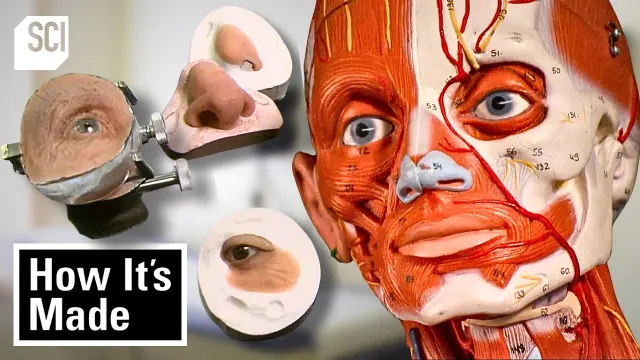
 How Essential Medical Equipment And Devices Are Made
#Manufacturing
1 ideas
How Essential Medical Equipment And Devices Are Made
Get new #Manufacturing ideas by email
Every Thursday: the week's best ideas, with the newest from #Manufacturing.
Related tags
Manufacturing: How Things Are Made
What manufacturing means
Manufacturing is the process of turning raw materials, parts, or components into finished products. It is part of how many of the things you use every day are made, from household goods and clothing to tools, electronics, and medical equipment. At its core, manufacturing combines materials, labour, machines, and planning to create items that are useful, consistent, and ready to sell or use.
The word covers a very wide field. Some manufacturing takes place in large factories with highly automated systems, while other products are made in smaller workshops or through a mix of handwork and machines. The scale may change, but the basic idea stays the same: shaping materials into something with a specific purpose.
Main types of manufacturing
Read more
There are several common ways to think about manufacturing.
- Discrete manufacturing produces separate items that can be counted individually, such as furniture, appliances, or packaged goods.
- Process manufacturing creates products by combining ingredients or materials, such as food, cosmetics, paint, or cleaning products.
- Batch production makes a set number of items at one time, which is useful when the same product is repeated in groups.
- Continuous production keeps materials moving through a system, often for high-volume output.
- Custom manufacturing focuses on made-to-order or specialised items rather than standard products.
Each type has its own way of organising work, but all aim to balance quality, cost, speed, and consistency.
Common methods and stages
Most manufacturing follows a sequence of steps. First, materials are selected and prepared. Then they are shaped, assembled, treated, or finished. Finally, the finished product is checked, packed, and distributed.
Some familiar methods include:
- Cutting, moulding, casting, or pressing materials into shape
- Assembling separate parts into a complete product
- Heat-treating, coating, polishing, or finishing surfaces
- Inspecting products for size, function, and appearance
The exact method depends on what is being made. A metal object, a textile item, and a food product all require different tools and conditions.
What to know if you are new to manufacturing
If you are learning about manufacturing, start by thinking about materials and process. Ask what the product is made from, how many units are needed, and how much precision is required. A product that must be strong, safe, or identical from one unit to the next usually needs tighter control during production.
It also helps to understand that manufacturing is rarely only about making. Planning, sourcing, quality control, packaging, storage, and transport are all part of the wider system. A good process saves time, reduces waste, and helps products meet the right standard.
Practical tips for understanding the process
- Break the product into stages: design, materials, production, finishing, and delivery.
- Notice where human skill matters and where machines improve consistency.
- Think about quality at every step, not only at the end.
- Remember that the best manufacturing method depends on the product, the quantity, and the desired finish.
Manufacturing is both practical and creative. It transforms ideas and raw materials into useful objects, and it shapes much of the material world around you.
Videos come from YouTube and posts from Instagram; titles and summaries are our own. All rights belong to their creators.