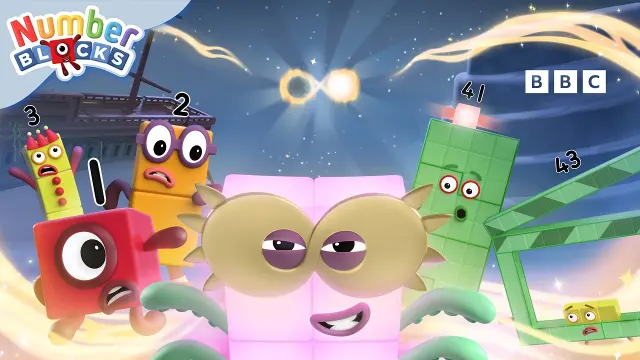
 The Rise of Infinaughty Full Movie with Numberblocks
#Math Adventure
1 ideas
The Rise of Infinaughty Full Movie with Numberblocks
Get new #Math Adventure ideas by email
Every Thursday: the week's best ideas, with the newest from #Math Adventure.
Related tags
#Math Adventure
Mathematics is often taught as a rigid set of rules, but at its heart, it is a vast landscape of patterns, puzzles, and logical wonder. A math adventure transforms abstract numbers into tangible experiences, inviting learners of all ages to explore concepts through curiosity and play. By shifting the focus from rote memorization to active investigation, mathematics becomes a dynamic journey rather than a chore.
The roots of mathematical exploration lie in ancient games, riddles, and practical measurements used by early civilizations to understand the world. Today, this tradition continues through recreational mathematics, geometry in nature, architectural design, and logical reasoning games. The primary goal is not just to find the correct answer, but to understand the path taken to get there, appreciating the elegance of the logic involved.
There are many ways to engage with mathematical concepts outside the traditional classroom setting. Spatial reasoning can be explored through building blocks, origami, and tessellations. Logic and pattern recognition thrive in board games, card games, and string puzzles. Probability and estimation come to life in nature walks, cooking measurements, and everyday budgeting. Each of these activities builds a bridge between abstract theory and physical reality.
For beginners embarking on this journey, the key is to embrace mistakes as valuable clues. Mathematics is built on trial and error, and wondering why something does not work is often more instructive than immediately knowing why it does. Start with simple puzzles, visual patterns, or games that require strategic thinking. There is no need for complex equipment; everyday objects like dice, measuring tapes, and kitchen ingredients offer endless opportunities for numerical discovery.
Read more
Practical tips for your mathematical journey:
- Play with patterns: Look for repeating sequences in art, music, and nature to train your brain to recognize underlying structures.
- Ask questions: Instead of accepting a formula, ask why it works and what happens if you change the rules.
- Connect math to art: Explore symmetry, perspective, and proportions through drawing, crafting, and building.
- Keep it hands-on: Use physical objects to represent numbers and operations whenever abstract concepts feel overwhelming.
Approaching mathematics as an adventure removes the anxiety often associated with the subject. By nurturing patience, curiosity, and a willingness to explore, anyone can uncover the hidden beauty and logic that shapes our everyday lives.
#Math Adventure: frequently asked questions
How do I begin a math adventure with someone who says they dislike math?
Start with something that feels like play rather than a lesson, such as a puzzle, a pattern hunt, or a simple strategy game, and let the math surface on its own. Skip the terminology at first and talk about what is interesting or surprising instead. Once curiosity takes hold, the formal vocabulary is much easier to add.
What supplies or setup do I actually need?
Almost nothing special is required, since everyday objects like dice, measuring tapes, playing cards, and kitchen ingredients cover a great deal of ground. Paper for folding, drawing, and tiling patterns is also useful. The real requirement is time to experiment and a willingness to follow an unexpected question wherever it leads.
Which type of math adventure fits a complete beginner?
Choose based on what the person already enjoys: builders lean toward spatial work like origami and tessellation, while competitive players respond better to logic games and puzzles. Visual pattern spotting in art, music, and nature is a gentle entry point for almost anyone. It is fine to try a few and keep only the ones that spark real interest.
How do I keep the interest alive once the first activity feels familiar?
Change one rule at a time and ask what happens next, which turns a finished activity into an ongoing investigation. Introduce a new material, a different scale, or a fresh setting rather than a harder worksheet. Rotating between hands-on building, games, and everyday estimation keeps the exploration feeling new.
What mistakes should I avoid?
The most common misstep is rushing to correct a wrong answer instead of asking how it was reached, which shuts down the trial and error that makes the process valuable. Another is treating the adventure as a hidden lesson plan with a required outcome, which drains the playfulness. Keep the focus on the reasoning and the enjoyment of the path, not on speed or accuracy.
Any ideas for making it a group activity or a special occasion?
Turn it into a puzzle hunt, a building challenge, or a cooperative board game session where the group has to reason together to succeed. Cooking a recipe as a team, or measuring and planning a shared project, turns everyday math into something social. The best occasions are the ones where everyone is investigating rather than competing for a single right answer.
Videos come from YouTube and posts from Instagram; titles and summaries are our own. All rights belong to their creators.